Heartbreak on Spanish beach as six-metre baby whale dies despite desperate efforts to save it
By Lottie Verrier • Published: 21 Nov 2026 • 15:06 • 4 minutes read
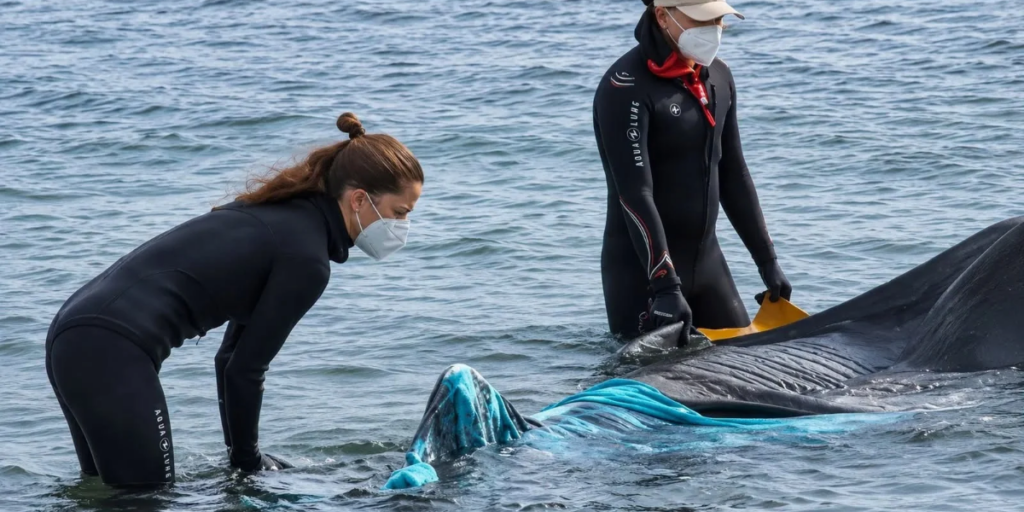
A sad discovery in Cabo de Gata Natural Park Credit: Image: @guiadelcabodegata
What began as a mysterious shape floating in the darkness off a Spanish beach ended in heartbreak, as volunteers spent hours battling to save the life of a stranded baby whale.
The enormous marine mammal, measuring approximately six metres long despite being just weeks old, was discovered on San José beach in Almería, within the protected Cabo de Gata-Níjar Natural Park.
For much of Tuesday, November 17, volunteers remained beside the helpless animal, covering its body with wet towels and protecting its delicate skin from the sun while specialist rescuers made a four-hour journey to reach it.
But despite their efforts, the young whale could not be saved.
Mysterious shape in the water turns out to be a baby whale
The extraordinary discovery began on Monday evening, November 16, when witnesses noticed something unusual floating close to the shoreline.
With darkness making it difficult to identify the object, some initially believed they were looking at a large piece of driftwood.
However, when daylight arrived the following morning, the truth became clear.
The mysterious shape was a fin whale, one of the largest animals on the planet, stranded on the beach.
According to Spanish newspaper Diario de Almería, the animal was approximately six metres long and appeared to be only a few weeks old.
Although enormous by human standards, the whale was still a calf, making its predicament particularly distressing.
An alert was raised at around 8am, and the Marine Environment Management Centre (CEGMA) in Algeciras was contacted.
The centre is authorised to intervene in marine animal strandings, but its specialists faced a journey of more than four hours to reach San José.
With the whale’s condition already a concern, local volunteers stepped in.
Volunteers spend hours trying to keep whale alive
As the morning progressed, a group of volunteers wearing wetsuits gathered around the stranded animal.
Their immediate priority was to prevent its exposed skin from drying out and becoming damaged by the sun.
They placed wet towels and other damp materials over its body, attempting to keep the whale cool and protected while waiting for professional assistance.
For an animal adapted to life in the ocean, being stranded on land presents enormous physical challenges.
Whales rely on the surrounding water to support their immense weight, and prolonged exposure can place considerable strain on their bodies.
Keeping the animal wet was therefore an important temporary measure, although it could not resolve the underlying problems caused by the stranding.
Environmental officers from the Andalusian regional government also attended, alongside personnel from Spain’s Ministry for Ecological Transition.
The rescue effort continued throughout the morning, with those present doing what they could until the specialists arrived.
Heartbreaking outcome despite rescue efforts
By early afternoon, the CEGMA team had reached the beach and assessed the young whale.
Unfortunately, its condition was extremely serious.
Specialists concluded that recovery was not possible and that euthanasia would be necessary to prevent further suffering.
However, the animal died shortly after receiving sedation, before the planned euthanasia could be carried out.
The outcome brought a devastating end to hours of work by volunteers and professionals who had attempted to keep the whale alive.
The precise cause of the stranding has not been established in the published account.
There has also been no confirmed explanation for why such a young animal became separated from its normal marine environment.
What is a fin whale and why is its size so remarkable?
The stranded animal was identified as a fin whale, scientifically known as Balaenoptera physalus.
Fin whales are the second-largest animals on Earth, surpassed only by blue whales.
Adults can grow to extraordinary lengths, with some exceeding 20 metres, making them among the most impressive creatures found in the world’s oceans.
Yet the animal discovered in Almería was already around six metres long despite its apparent young age.
Fin whale calves are born at several metres in length and depend on their mothers’ milk during their early months.
Their size can make them appear surprisingly mature, even when they are still at a vulnerable stage of development.
The species occurs in the Mediterranean Sea, where populations face pressures including collisions with vessels, underwater noise and other human activities.
However, there is no evidence in this case that any particular human activity caused the calf’s stranding.
A sad discovery in Cabo de Gata Natural Park
The incident unfolded at San José, one of the best-known coastal communities within Cabo de Gata-Níjar Natural Park.
The protected area is celebrated for its dramatic volcanic landscapes, beaches and marine biodiversity.
While sightings of whales and dolphins can offer unforgettable experiences for people visiting Spain’s Mediterranean coastline, strandings reveal a more vulnerable side of life beneath the waves.
Marine mammals can become stranded for numerous reasons, including illness, injury, navigational difficulties or separation from their mothers.
Determining what happened to an individual animal generally requires specialist examination, and the available reporting does not establish what caused this calf to come ashore.
For those who spent Tuesday trying to save it, the immediate concern was much simpler: protecting a vulnerable young animal for as long as possible.
Despite the heartbreaking outcome, their efforts demonstrated the willingness of local people and environmental professionals to respond when marine wildlife is in distress.
The six-metre calf could not be returned to the sea, but its final hours were spent surrounded by people determined to give it a chance.
Follow Euro Weekly News on Google News
Get breaking news from Spain, travel updates, and expat stories directly on your Google News feed.
Follow on Google NewsSign up for personalised news
Subscribe to our Euro Weekly News alerts to get the latest stories into your inbox!
By signing up, you will create a Euro Weekly News account if you don't already have one. Review our Privacy Policy for more information about our privacy practices.


Lottie Verrier
Lottie Verrier is a journalist and digital media specialist based in Mallorca. After a decade in London media, including a role as Deputy Editor for the MailOnline’s eCommerce division, she now combines her editorial expertise with a passion for the island to create engaging content that celebrates the best of life in Spain. Instagram @lottieinmallorca
Comments