Your car could be spying on you, and Spain’s military has sounded the alarm
By Nazario Rodriguez • Published: 22 Nov 2026 • 23:31 • 6 minutes read
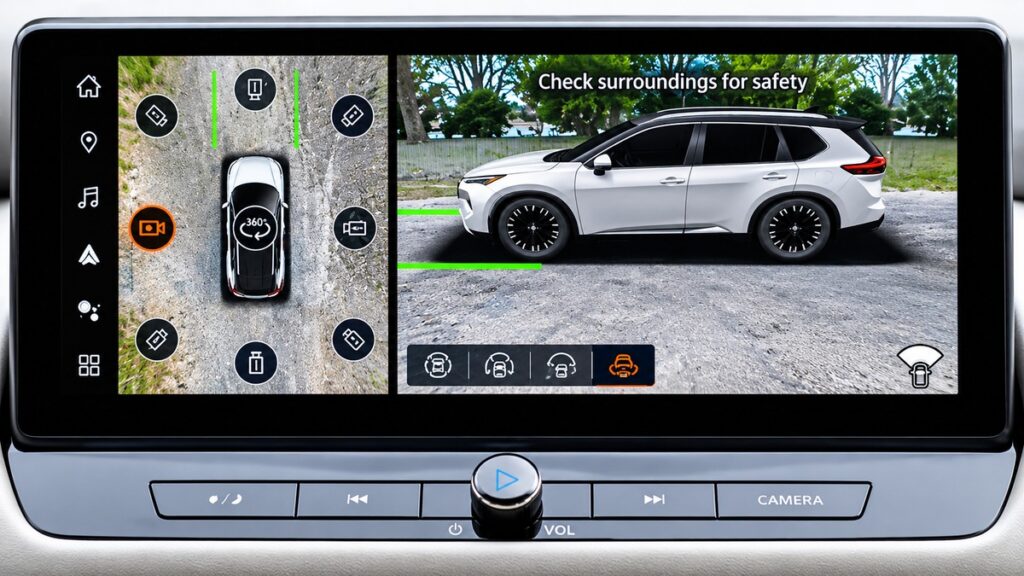
Modern vehicles use sophisticated cameras and sensors to monitor their surroundings, raising questions about what information they collect and store. Credit: Tessa Bury, CC BY 4.0
From where you sleep to where you travel, modern cars can collect a surprising amount of personal information. Now Spain’s military has raised concerns about where that information could end up.
Your car may know where you live, where you work, which shops you visit and how often you travel to certain addresses. Depending on the model, it may also collect information about your driving habits, telephone contacts and even conversations inside the vehicle.
Most motorists give little thought to this. After all, cameras, satellite navigation and voice assistants are sold as conveniences, not surveillance equipment. But a warning issued to Spain’s Armed Forces has exposed an uncomfortable truth about modern motoring.
The same technology that helps you park, navigate and make telephone calls can also collect information about your private life.
According to a report published by Moncloa.com, Spain’s Ministry of Defence has warned military personnel about the security risks posed by connected vehicles entering military installations.
The warning, reportedly circulated on November 16 by the Joint Cyberspace Command, concerns the ability of modern vehicles to collect information through cameras, microphones, GPS systems and other sensors.
The concern is that sensitive information could potentially reach outside organisations without the driver fully understanding what is being shared.
No specific manufacturer has been accused of wrongdoing, and the warning does not establish that information has been stolen. Nevertheless, it raises a question for millions of ordinary motorists.
If this technology is considered a potential security risk on military bases, what might it be revealing about the rest of us?
What exactly is your car recording about you?
Modern connected vehicles can gather considerably more information than most owners might imagine.
Depending on the manufacturer, model and activated services, this can include:
-
Where you go. GPS and navigation systems can record journeys, destinations, parking locations and frequently visited addresses.
-
How you drive. Some vehicles collect information about speed, braking, acceleration and driving behaviour.
-
Who you communicate with. Connecting your smartphone may give the vehicle access to contacts, call histories and other information, depending on permissions.
-
What happens around your car. Exterior cameras can capture pedestrians, buildings, number plates and surrounding activities.
-
What happens inside. Vehicles equipped with microphones, interior cameras or voice assistants may process audio and information about occupants.
Not every vehicle records or stores all these details, and collecting information does not automatically mean transmitting it elsewhere.
However, some information can be shared with manufacturers and external service providers.
The European Data Protection Board’s official guidelines on connected vehicles recognise that modern cars can process location information, driving behaviour and biometric data.
The European privacy authority warns that this information can be particularly sensitive and recommends that manufacturers process data inside vehicles wherever possible, rather than routinely transferring it to external servers.
Your car could know things you would rather keep private
Imagine an ordinary week, you drive to a medical appointment on Monday, visit a particular address on Wednesday evening and spend the weekend somewhere other than your usual home. Individually, those journeys mean very little. Together, they could reveal personal routines, relationships and aspects of your private life, it is not simply a question of where you go.
Information about how you drive can also be commercially valuable. Some insurance policies already assess driving behaviour, including acceleration, braking and mileage.
The European Data Protection Board has raised concerns about how insurance companies use vehicle data, recommending safeguards to prevent unnecessary access to personal information.
This does not mean every insurer is monitoring motorists or that car manufacturers routinely sell their customers’ private information. However, modern vehicles can build remarkably detailed profiles of their owners, making it increasingly important to know who has access to that data and what they are doing with it.
Why Spain’s military is taking the threat seriously
The military warning goes considerably further than concerns about navigation history. As reported by Moncloa.com, the Joint Cyberspace Command is concerned that connected vehicles entering military installations could expose sensitive information about personnel, facilities and daily activities. A more detailed account published by El Confidencial Digital describes the practical precautions reportedly recommended to military personnel. These include disabling exterior recording functions, switching off unnecessary voice activation, avoiding the synchronisation of official telephone contacts and protecting vehicle applications with strong passwords and additional authentication.
Personnel were also reportedly advised to avoid discussing classified information inside connected vehicles. Perhaps the most striking implication is that an older vehicle without sophisticated connected technology could present fewer security risks than a modern car equipped with cameras, microphones and permanent internet connectivity.
It is a curious reversal of the modern motoring sales pitch. Manufacturers spend billions developing vehicles that can communicate with everything around them, yet in sensitive environments, a car that communicates with almost nothing may be the safer option. The distinction is important. Spain’s military has not been independently confirmed as having officially recommended older vehicles. However, the security concerns explain why such vehicles might be preferable in certain circumstances and the issue is not confined to Spain.
Reports from Germany indicate that connected vehicles have faced restrictions at sensitive military installations, while British military facilities have also examined the potential risks associated with connected vehicle technology. The concern is not necessarily that a particular car is spying on its owner. It is that a vehicle capable of collecting and transmitting information could expose details that should remain private.
Spain’s connected V16 beacons have already raised privacy questions
Concerns about vehicles sharing information are not entirely new to drivers in Spain. When connected V16 emergency warning beacons became mandatory in January 2026, questions quickly emerged about whether the devices could allow authorities to monitor motorists. As previously explained in Euro Weekly News’ report on Spain’s V16 beacon privacy rules, the government clarified how information collected through connected transport systems should be handled. Spain’s Directorate General of Traffic, the DGT, states that V16 beacons only transmit a vehicle’s location when activated during a breakdown or roadside incident. They do not continuously track drivers, record their speed or transmit personal information.
Modern connected cars, however, are considerably more sophisticated. They can process a much wider range of information through numerous onboard systems. The distinction matters, but so does the underlying principle. Motorists should know what information their vehicles collect, why it is needed and who can access it.
What can you do to stop your car sharing personal information?
European privacy legislation gives motorists rights over their personal information, although some data processing remains necessary for safety, security or essential vehicle functions.
The European Data Protection Board recommends that manufacturers provide meaningful privacy controls and allow drivers to delete personal information stored in their vehicles.
There are several practical precautions worth taking.
-
Review the privacy settings in your vehicle’s dashboard and connected mobile application.
-
Disable optional location tracking, data sharing and recording functions you do not use.
-
Check what permissions you have granted when connecting your smartphone.
-
Avoid storing sensitive addresses or unnecessary personal information in the navigation system.
-
Delete saved journeys, contacts and personal profiles before selling, exchanging or returning a vehicle.
-
Keep vehicle software updated and protect connected accounts with strong passwords and additional authentication where available.
Drivers can also ask manufacturers what personal information they hold and how it is being used.
Some data collection cannot be disabled because it supports essential safety features or legal requirements. However, motorists should be able to distinguish between necessary functions and optional services.
Electric cars are not the only ones collecting information
Although electric vehicles are often associated with advanced software, these privacy concerns extend to modern petrol, diesel and hybrid cars equipped with connected technology. What matters is not the engine but the vehicle’s ability to collect, store and communicate information. A modern car is increasingly a computer on wheels, complete with cameras, microphones, navigation systems and an internet connection.
For drivers, these features can make journeys safer and more convenient. But convenience comes with questions that deserve proper answers. Spain’s military has reportedly decided those questions are serious enough to warn its own personnel. Perhaps ordinary motorists should start asking them too. After all, most of us would hesitate before giving a stranger a detailed record of our movements, conversations and daily routines. Yet we may be carrying some of that information around every time we turn the ignition key and the most unsettling part is that many drivers have little idea how much their cars actually know about them.
Follow Euro Weekly News on Google News
Get breaking news from Spain, travel updates, and expat stories directly on your Google News feed.
Follow on Google NewsSign up for personalised news
Subscribe to our Euro Weekly News alerts to get the latest stories into your inbox!
By signing up, you will create a Euro Weekly News account if you don't already have one. Review our Privacy Policy for more information about our privacy practices.




Nazario Rodriguez
I’ve worked in news media for over 10 years, previously as Production Manager at Euro Weekly News, and I now focus on audience strategy and content performance. I specialise in understanding what readers engage with and shaping content that serves them well.
Comments