World AIDS Day: How Modern Medicine Transformed HIV into a Manageable Condition
By Dr Marcus Stephan • Published: 25 Nov 2026 • 9:00 • 5 minutes read
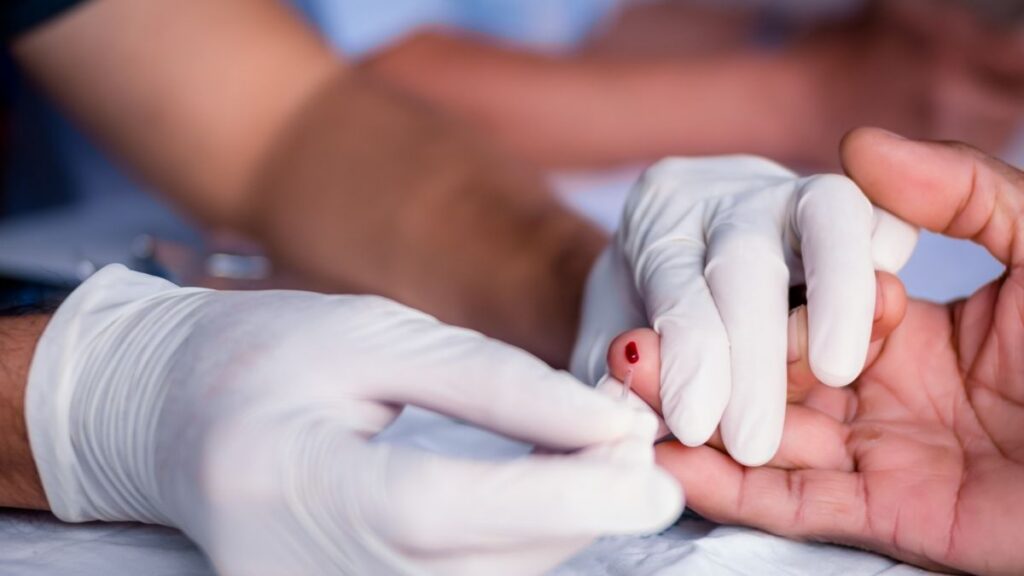
Accessible routine testing and modern antiretroviral therapies have transformed HIV from a fatal diagnosis into a manageable long-term condition. Credit: Jes2u.photo/Shutterstock
On December 1st, the world marks World AIDS Day – a moment to remember the millions lost to HIV/AIDS, reflect on one of modern medicine’s most extraordinary turnarounds, and acknowledge the challenges that remain. Once regarded as a terrifying diagnosis with very few treatment options during the 1980s, HIV is now largely a manageable, chronic condition thanks to advances in combination antiretroviral therapies, preventative medications like PrEP, and the groundbreaking medical truth that Undetectable equals Untransmittable (U=U).
On December 1st, the world will once again mark World AIDS Day, an opportunity to remember those who have lost their lives to HIV/AIDS, recognise the extraordinary progress made in treating the condition and remind ourselves that, despite everything we have achieved, the battle is far from over.
It is difficult for younger generations to appreciate quite how frightening an HIV diagnosis once was. During the 1980s and early 1990s, a diagnosis was frequently regarded as a death sentence. There were no effective treatments, our understanding of the virus was limited and patients often developed devastating infections and cancers as their immune systems progressively failed.
For those of us working in healthcare at the time, the experience was particularly challenging. We were dealing with a disease that was relatively new, poorly understood and surrounded by considerable fear, misinformation and prejudice. Patients faced not only a potentially fatal illness but often considerable discrimination from society, and occasionally from within the healthcare profession itself. I experienced discrimination and unprofessionalism from some for working in the field at the time; even now I find that hard to fully comprehend.
Today, the picture is almost unrecognisable.
Antiretroviral Breakthroughs: From AZT to Single-Tablet Regimens
HIV, or human immunodeficiency virus, attacks the body’s immune system, particularly the CD4 cells responsible for coordinating our defence against infection. Without treatment, the gradual destruction of these cells leaves the individual vulnerable to infections and certain cancers. This advanced stage of infection is known as AIDS, or acquired immunodeficiency syndrome.
The discovery of HIV in the early 1980s triggered an enormous international research effort. Scientists were faced with a particularly difficult challenge because HIV is a retrovirus, meaning it uses an enzyme called reverse transcriptase to convert its genetic material into DNA, which can then become incorporated into the genetic material of the infected cell.
The virus also has an extraordinary ability to mutate, making it particularly difficult for the immune system to recognise and eliminate it.
Early treatments offered limited success. The introduction of AZT in 1987 represented an important breakthrough, but the drug had significant side effects and, when used alone, the virus could rapidly develop resistance.
The real turning point came in the mid-1990s with the development of combination antiretroviral therapy. Rather than attacking the virus at a single point in its life cycle, doctors could now use several drugs simultaneously, making it much more difficult for HIV to reproduce.
The results were dramatic. People who had been desperately ill began recovering, hospital admissions fell and deaths declined substantially.
Over subsequent decades, treatments became increasingly effective, better tolerated and considerably easier to take. What once involved complicated combinations of tablets taken several times a day has, for many patients, become a single daily tablet. Some people can now receive long-acting injections at intervals of several months.
For someone diagnosed today who has access to treatment and takes it consistently, life expectancy can approach that of someone without HIV.
Undetectable Equals Untransmittable (U=U) and Modern Prevention
Perhaps one of the most important developments has been our understanding of viral suppression.
Modern medication can reduce the amount of HIV in the bloodstream to such a low level that routine laboratory tests cannot detect it. This is described as an undetectable viral load.
Importantly, extensive research has established that someone who maintains an undetectable viral load through effective treatment cannot transmit HIV through sexual contact.
This is commonly expressed as U=U: Undetectable equals Untransmittable.
It represents an extraordinary change, not only medically but socially. It means that people living with HIV can have relationships, marry, have children and enjoy normal family lives without the fear of passing the virus to their sexual partners, provided they maintain viral suppression.
We also have highly effective preventative medication, known as PrEP (pre-exposure prophylaxis), which can be taken by people who are at increased risk of acquiring HIV.
In other words, we have moved from a position where an HIV diagnosis was frequently devastating to one where, with appropriate medical care, it is generally a manageable long-term condition.
Global HIV Statistics: Progress Alongside Ongoing Inequalities
The scale of this transformation becomes apparent when we look at the figures.
According to UNAIDS, approximately 41 million people worldwide were living with HIV in 2025, with more than 32 million receiving antiretroviral treatment.
Since the peak of the epidemic, annual AIDS-related deaths have fallen by around 73 per cent. This is an extraordinary achievement when we consider that more than 44 million people have died from AIDS-related illnesses since the beginning of the epidemic.
However, there is an important qualification:
- Around 1.2 million people acquired HIV during 2025.
- Approximately 570,000 died from HIV-related causes.
- Access to treatment remains particularly unequal, especially in parts of sub-Saharan Africa where HIV continues to place an enormous burden on individuals, families and healthcare systems.
- There is still no generally available cure, and despite decades of research, an effective preventive vaccine remains elusive.
How Decades of HIV Research Accelerated COVID-19 Vaccines
There is another aspect of the HIV story that deserves recognition, particularly following our experience of the COVID-19 pandemic.
The extraordinary speed with which scientists developed effective COVID-19 vaccines was not simply the result of a sudden scientific breakthrough in 2020. Much of the groundwork had been laid over several decades, and a considerable amount of that work had been driven by research into HIV.
The challenge of developing an HIV vaccine had forced scientists to investigate viruses, their genetic structures and the complicated ways in which they interact with the human immune system in unprecedented detail:
- Vaccine Platforms: Researchers had explored new vaccine technologies, including messenger RNA (mRNA) and viral vector approaches, for years in the search for an HIV vaccine before adapting them for COVID-19.
- Protein Stabilisation: Techniques developed to stabilise three-dimensional HIV proteins helped inform the design of the coronavirus spike protein used in COVID-19 vaccines.
- Global Trial Infrastructure: International networks of researchers, laboratories and clinical trial centres established through HIV research were quickly mobilised to recruit participants and test COVID-19 treatments safely.
The relationship between the two fields has also worked in the opposite direction. Scientists are now exploring whether the mRNA technology that proved so successful against COVID-19 might eventually help produce an effective HIV vaccine.
Looking Forward: The Lasting Lessons of Medical Persistence
Perhaps the most important lesson from the HIV experience is that medical progress rarely happens overnight.
It takes sustained investment, international cooperation, scientific curiosity and, occasionally, a willingness to pursue ideas that initially appear to lead nowhere.
The failure to develop an effective HIV vaccine has not been a waste of time or resources. The knowledge gained has helped transform the treatment of HIV itself and contributed significantly to our ability to respond to other infectious diseases.
It has also taught us something about the importance of public education. Fear and prejudice were major obstacles during the early AIDS epidemic. We must not allow misinformation and stigma to undermine the progress that has been made.
World AIDS Day is therefore about much more than remembering the past. It is an opportunity to recognise the scientists, healthcare professionals, researchers, campaigners and, above all, the patients whose participation and determination have helped change the course of medical history.
Forty years ago, HIV was a terrifying diagnosis with very few treatment options. Today, millions of people are living long and productive lives with the virus.
That is one of modern medicine’s greatest achievements. And when we consider how much of the scientific knowledge gained through HIV research subsequently helped us tackle COVID-19, it becomes clear that investment in medical research benefits far more people than those suffering from the particular disease being investigated.
Sometimes the greatest discoveries come from questions we have been trying, unsuccessfully, to answer for decades.
Follow Euro Weekly News on Google News
Get breaking news from Spain, travel updates, and expat stories directly on your Google News feed.
Follow on Google NewsSign up for personalised news
Subscribe to our Euro Weekly News alerts to get the latest stories into your inbox!
By signing up, you will create a Euro Weekly News account if you don't already have one. Review our Privacy Policy for more information about our privacy practices.





Dr Marcus Stephan
With a career spanning more than 35 years in both the UK and internationally, Dr Marcus' passion lies in empowering individuals through knowledge, enabling them to care for themselves and others. He simplifies the science behind medicine by removing unnecessary jargon, explains common health conditions, and shares updates on the latest advances and developments in medicine.
Comments