Robotaxis invade London: What’s the true human cost?
By Tarek Salame • Updated: 10 Jun 2025 • 18:20 • 3 minutes read
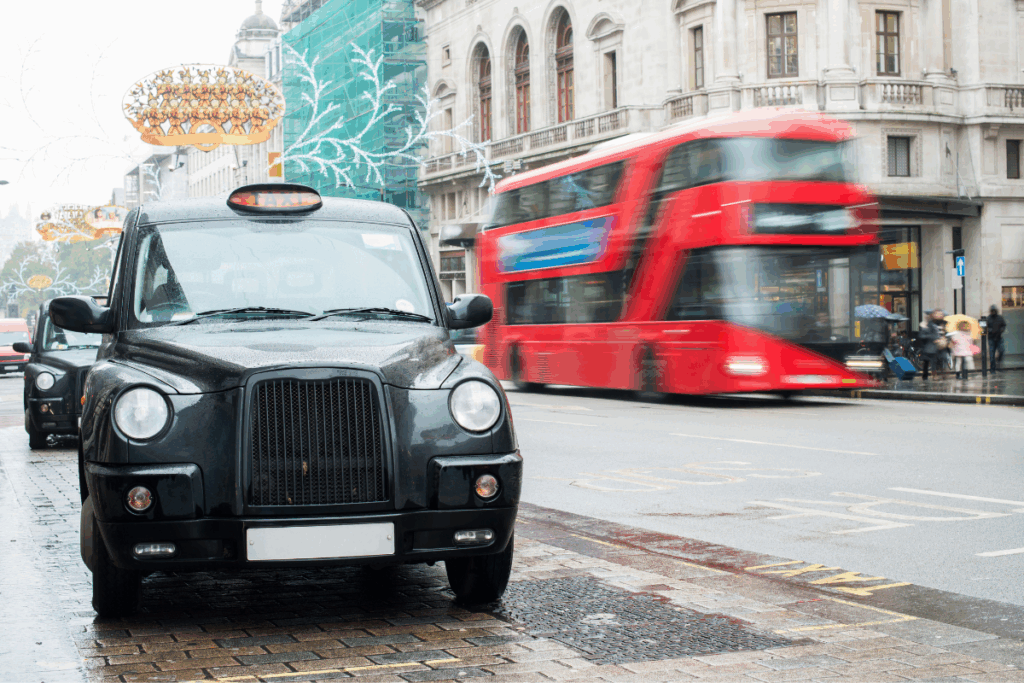
London's iconic cabs meet the robotaxi revolution. Credit: Deyan Georgiev via Canva.com
The future of transport has arrived, and its first destination is towards London, quite literally. They are silent, autonomous vehicles that were once in science fiction movies. They are now preparing to navigate the capital’s streets. Uber, a name synonymous with modern innovation and mobility, plans to introduce driverless taxis across the city in partnership with a key AI firm. Uber propose this new innovation as a technological leap to efficient driving in the streets. However, this revolution threatens to fundamentally reshape many jobs, and for Londoners, it’s the very fabric of work, economic stability, and community. Uber announces that driverless taxis will be on London streets by the spring of 2026. But the city itself devours the predictable systems that Uber will implement. The streets aren’t designed by engineers with algorithms in mind; they are Alleyways, there are paths, and centuries of British pragmatism, so the traffic patterns defy logic, and now we’re expecting robots to navigate this chaos?
The human cost: 38,000 jobs in, 200,000 drivers out?
Now, government figures project an impressive 38,000 new jobs from autonomous vehicles by 2035. It is a grand pronouncement, certainly for that fact. Yet this optimism feels more like a joke.
The GMB voiced griped concerns, pointing out that hundreds of thousands of existing Uber as well as traditional taxi drivers are facing potential displacement, and their livelihoods hang in the balance.
Consider this: London’s vibrant gig economy is thriving largely on human endeavour, and drivers work long, arduous hours to keep the city moving. So what happens when those gigs vanish? When are algorithms replacing seasoned professionals?
Families depend on these wages, communities are built around these jobs, and the pure mathematics of this transition from traditional taxi drivers to autonomous drivers does not add up for those who rely on the wheel for their very existence. So this technological leap forward feels more like a painful shove to many.
The safety theatre
This narrative is spun like driverless cars are the next safety feature in the future of driving. The headline reads fewer accidents than humans. It does sound reassuring, of course, but beneath that surface, there is a different picture that’s emerging.
Consider Uber’s existing Global Taxi operations in Austin. According to reports, the company provides around 20 hours of daily service, which is impressive:
- There are instances where human intervention became absolutely necessary.
- Services suffered abroad.
- Temporary cancellations due to glitches.
In San Francisco, Robo-taxis were stuck downtown when they all tried to use the same intersection during a music festival. So what does this tell us that they are not designed to adapt to the unique circumstances in traffic, roads, or paths?
We often hear stories of drivers causing accidents, but we rarely hear of driverless vehicles causing accidents. If you put them in operating conditions at vastly different mileage and inconsistent reporting mechanisms, then I deceptive safety narrative will be deployed.
It is a theatre of carefully managed perceptions, so you don’t have the full disclosure on what driverless taxis actually do and if they’re considered safe.
London’s unpredictable reality
Now, regarding London, the streets are an unparalleled, sometimes delightful chaos that would make even the most seasoned driver squeamish. London’s iconic black cabs are driven by legendary knowledge of every back alley, embodying centuries of human experience.
So when you put these black cabs against the soulless program, the machine, it becomes a battle for the soul of the city. Uber forgets that it should factor in the following:
- British unpredictability, the perpetually changing road works blocking key stations
- Unexpected strikes that grind traffic to a halt
- A fox is running across a busy road.
If AI can truly decipher all these analogies listed, this remains a colossal pragmatic question.
Following the economics behind the hype
Amidst all these future promises, the money is the most interesting aspect of all this. The Department for Transport provides a figure regarding autonomous vehicles, claiming they will contribute a high of £42 billion to the UK economy by 2035.
This is a staggering number, and who precisely does this number serve? Is it for the benefit of Londoners, the ordinary customer, or simply another colossal win for Silicon Valley and its early investors?
This seems less of a technological advancement and more of a colossal economic play. It was the shuttle bus before, and now it is autonomous driving. So, does ditching human drivers actually give us generally cheaper fares for passengers, or do the savings just help boost profit margins more or less for digital giants?
It is a fundamental question to ask in terms of distribution: Who will truly prosper when the robots take over the wheel?
The road ahead
London’s imminent driverless taxi trial, scheduled for deployment in 2026, is a highly controversial shift in urban mobility. We have a lot of significant unanswered questions, such as the human cost of thousands of drivers, the AI safety incidents and the unpredictability of London’s unique streets.
As the UK accelerates this framework, who will benefit from it, and at what true cost? This is a profound societal gamble on London’s historic streets.
Follow Euro Weekly News on Google News
Get breaking news from Spain, travel updates, and expat stories directly on your Google News feed.
Follow on Google NewsSign up for personalised news
Subscribe to our Euro Weekly News alerts to get the latest stories into your inbox!
By signing up, you will create a Euro Weekly News account if you don't already have one. Review our Privacy Policy for more information about our privacy practices.




Tarek Salame
Tarek is a writer and digital marketer based in Barcelona, with a passion for turning complex ideas into clear, compelling narratives. With a background in marketing communications, tech, and content strategy, he has worked across industries ranging from cloud computing and fintech to fire safety and science. At Euro Weekly News, he contributes thoughtful, accessible stories that connect readers with topics shaping the modern world.
Comments