Europe’s busiest airports hacked in chaotic weekend for travel
By Adam Woodward • Updated: 20 Sep 2025 • 19:13 • 2 minutes read
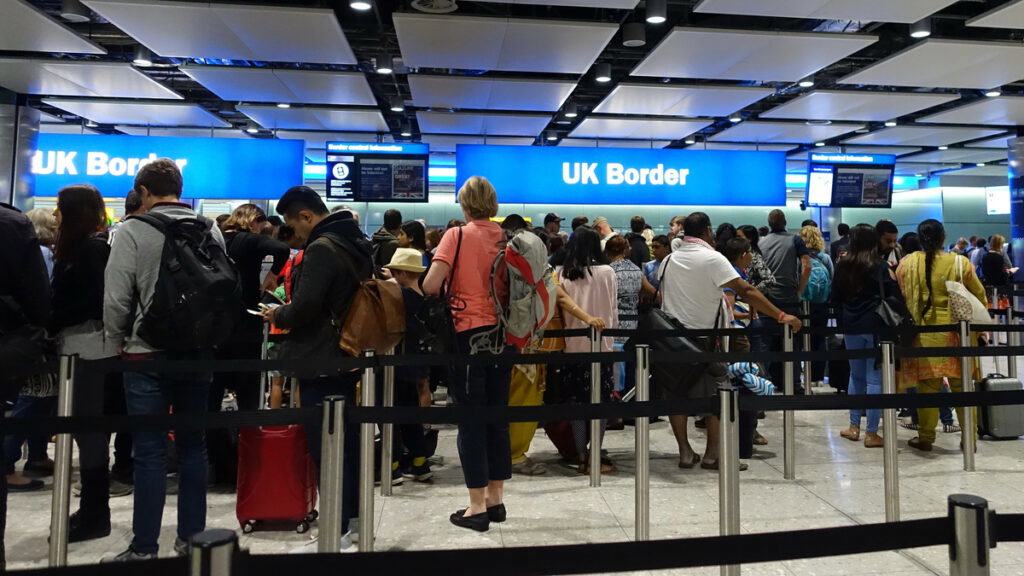
Heathrow Airport Credit: 1000 Words - Shutterstock
A sophisticated cyber attack on Collins Aerospace’s systems plunged Europe’s busiest airports into chaos on Saturday, September 20, and caused hundreds of flight delays and cancellations as check-in and boarding processes all ground to a halt.
Heathrow in London, Berlin Brandenburg, and Brussels Zaventem were among the hardest hit, with Dublin and Cork in Ireland reporting disruptions on top of a bomb alert that forced passengers out of the main terminal buildings. The incident, which began Friday night in Brussels, reveals the escalating vulnerability of global aviation infrastructure to digital sabotage, following a two-decade history of cyber threats that have repeatedly crippled critical facilities.
Airport software provider admits to being hacked
Collins Aerospace confirmed a “cyber-related disruption” to its MUSE software, which handles electronic check-ins and baggage drops for multiple airlines worldwide. “The impact is limited to these functions and can be mitigated with manual operations,” they announced, while promising to restore full functionality as quickly as possible. However, the outage forced airports to go back to paper-based processes, which led to long lines and frustrated travellers. Aviation data from Cirium revealed 29 cancellations at the affected hubs, with average delays exceeding one hour—potentially stranding thousands during peak weekend travel.
At Heathrow, Europe’s busiest airport with 651 scheduled departures, passengers like Pranab Chatterjee, who said, “Sitting in a flight from LHR London for the past hour or so. We are almost 2 hours late and have no estimate of when we can fly. I just hope it’s safe to fly…”, and Cuilleog on X who posted, “It began last night, and was an absolute clusterf***. My flight was an hour late departing, sat on the tarmac for ages because they couldn’t figure out if several passengers had checked in…”
Brussels Airport reported to be origin of hack
Brussels Airport, where the attack was first felt, reported nearly a dozen cancellations and manual checks causing longer waits, advising passengers to verify statuses with carriers before heading out.
Security agencies sprang into action. Britain’s National Cyber Security Centre (NCSC) is said to be collaborating with Collins Aerospace, the Department for Transport, and law enforcement to investigate the breach. Germany’s Federal Office for Information Security (BSI) is currently liaising with Berlin officials on the “infrastructure disruptions.”
20 years of cyberattacks on major institutions
This strike fits a grim pattern of cyber assaults on transportation and major facilities, dating back to the 2007 DDoS barrage on Estonia‘s networks, allegedly Russian-orchestrated, that paralysed banking and government services. In 2010, the Stuxnet worm, which was widely attributed to US-Israeli intelligence, physically sabotaged Iranian nuclear centrifuges, was the dawn of hybrid cyber-physical warfare.
Recent corporate victims like Jaguar Land Rover (£120 million hit, factory halts) and M&S (£300 million in costs, job threats) highlight the ripple effects, with suppliers on the point of bankruptcy.
Computer science expert Hisham Al Assam of the University of Buckingham has reportedly warned that shared digital platforms create “single points of failure,” turning efficiency into a disaster. “A single compromise can disrupt entire airline ecosystems,” he said.
As investigations continue, the attack is a stark reminder: In an era of interconnected skies, one breach can cascade into continental gridlock. Delays are expected to continue until at least Sunday, September 21, so travellers are encouraged to monitor airline apps and prepare for manual checks.
Follow Euro Weekly News on Google News
Get breaking news from Spain, travel updates, and expat stories directly on your Google News feed.
Follow on Google NewsSign up for personalised news
Subscribe to our Euro Weekly News alerts to get the latest stories into your inbox!
By signing up, you will create a Euro Weekly News account if you don't already have one. Review our Privacy Policy for more information about our privacy practices.




Adam Woodward
Adam is a writer who has lived in Spain for over 25 years. With a background in English teaching and a passion for music, food, and the arts, he brings a rich personal perspective to his work at Euro Weekly News. As a father of three with deep roots in Spanish life, Adam writes engaging stories that explore culture, lifestyle, and the everyday experiences that shape communities across Spain.
Comments