Urgent checks ordered on Airbus A380s after wing cracks found
By Farah Mokrani • Published: 23 Jun 2026 • 23:35 • 5 minutes read
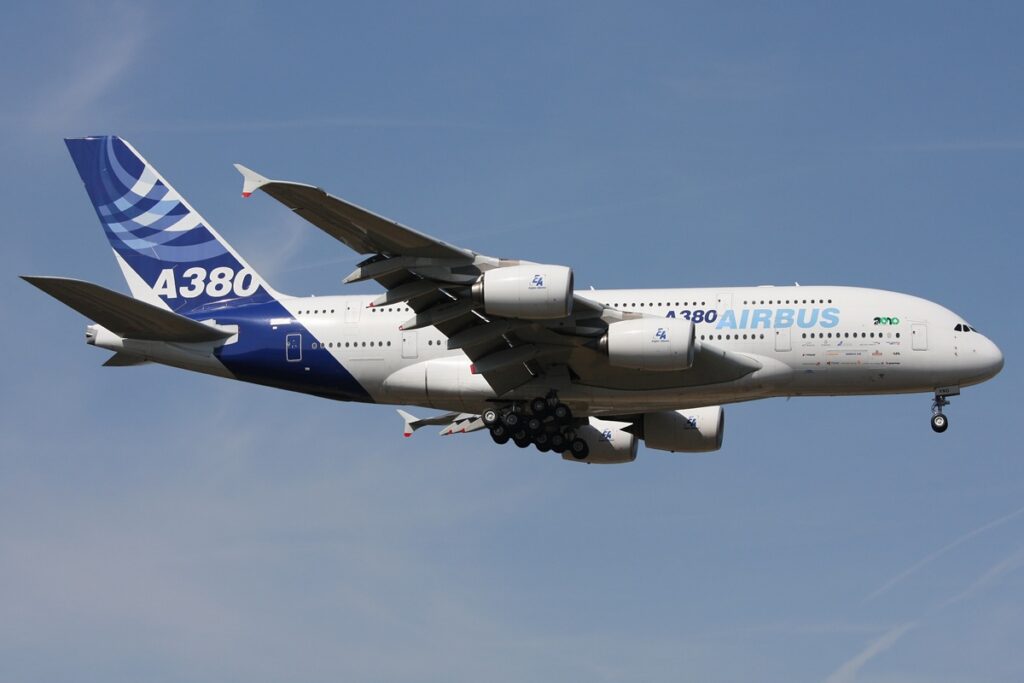
Urgent inspections have been ordered on selected Airbus A380s after wing cracks were found. Credit : Bjoern Wylezich, Shutterstock
Passengers with upcoming A380 flights may be wondering whether plans could be disrupted after Europe’s aviation safety regulator ordered urgent wing inspections on 16 Airbus superjumbos. The order follows the discovery of cracks in structural parts of the wing, with five aircraft required to be checked before flying again and 11 more facing inspections within 25 flight cycles.
That sounds dramatic, and in aviation terms it is serious. But it does not mean the entire A380 fleet has been grounded, and it does not mean every passenger booked on the aircraft needs to panic.
What has happened is more specific than that.
The European Union Aviation Safety Agency, EASA, has issued an emergency directive covering 16 Airbus A380s after cracks were found in wing mid spars, which are structural parts inside the wing. According to the directive, those cracks could affect the wing’s structural integrity if left unchecked, which is why the regulator has stepped in now rather than waiting for routine maintenance to catch up. The order took effect in late June and applies mainly to Emirates, with one affected aircraft belonging to Qantas.
For travellers, the big question is not so much the engineering detail as the practical one: will this affect flights?
Which A380 flights could be affected by the EASA inspection order?
At the moment, the aircraft involved are heavily concentrated in one airline: Emirates.
Of the 16 A380s covered by the order, 15 are operated by Emirates and one by Qantas. Five of the Emirates aircraft must be inspected before their next flight, while the other 11 aircraft on the list have to be checked within 25 flight cycles. That does not automatically mean cancellations, but it does mean the airlines have very little room to ignore the issue or push it down the line.
If any cracks are confirmed during the inspection, repairs have to be carried out before the aircraft returns to normal service.
That matters because the A380 is not a small regional jet that can be swapped out without anyone noticing. These are very large aircraft used on major long-haul routes, often carrying hundreds of passengers at a time. When one goes into unscheduled maintenance, it can have a knock-on effect on schedules, aircraft rotations and last-minute equipment changes.
So yes, there is a real possibility that some passengers could see disruption if inspections uncover problems on aircraft that were due to operate busy routes. That could mean an aircraft swap, a delay, or in some cases schedule reshuffling behind the scenes.
What it does not mean, at least at this stage, is a blanket shutdown of Emirates or Qantas A380 services.
Qantas has already said its affected aircraft, VH-OQI, was already in heavy maintenance in Dresden, Germany, and that the directive is not expected to affect its current flying programme. That immediately takes some heat out of the story on the Qantas side.
Emirates is the airline to watch more closely, simply because it has the biggest A380 fleet in the world and because five of the aircraft needing checks before their next flight belong to the Dubai carrier.
What exactly has been found on the Airbus A380?
The issue centres on cracks in the wing mid spars.
You do not need to know the full anatomy of an Airbus wing to understand why regulators care about that. Spars are key structural components. They help support the wing and carry the loads an aircraft experiences in flight. If cracks develop there, regulators want to know about them quickly.
EASA’s directive says the latest action follows analysis of earlier inspection findings. Airbus has now produced additional inspection instructions, and airlines have been told to use those procedures and report the results. If defects are found, repairs will be mandatory before the aircraft can go back into normal operation.
That is really the heart of the story. Not that the A380 is suddenly unsafe as a type, but that a specific structural issue has been found on a small group of aircraft and regulators want answers fast.
In aviation, that is exactly how the system is supposed to work. A potential problem appears, the manufacturer issues technical guidance, the regulator orders inspections, and airlines either clear the aircraft or fix them.
Should passengers booked on an A380 be worried?
Not in the sense of rushing to cancel a trip. EASA has not grounded the whole A380 fleet. It has not suggested that every superjumbo in service is affected, and it has not issued a wider warning telling passengers to avoid the aircraft. The order is targeted at a defined group of 16 planes based on inspection data and Airbus documentation.
That is an important distinction, because the phrase ‘wing cracks’ understandably sounds frightening on its own.
The more realistic takeaway for travellers is this: if you are flying on an Emirates A380 in the coming days or weeks, keep an eye on your booking in the same way you would for any long-haul trip involving an aircraft under extra maintenance scrutiny. It does not mean your flight will be cancelled. It does mean the airline may need to juggle aircraft more carefully than usual if inspections uncover anything that needs immediate repair.
For Qantas passengers, the risk of disruption looks lower for now because the affected aircraft is already in maintenance and not currently flying a normal schedule.
Why this keeps happening to the A380
There is another reason this story matters: it is not the first time the A380 has needed structural inspections.
The aircraft entered service in 2007, and Airbus stopped building it in 2021 after delivering 251 planes. It remains hugely popular with passengers and still plays a major role at airlines such as Emirates, British Airways, Singapore Airlines, Lufthansa and Qantas. But it is also an ageing aircraft, and ageing aircraft need closer monitoring.
Over the years, the A380 has already been through inspection campaigns involving other wing components, including wing rib feet and other spar areas. This latest order is not about those earlier problems, but it does sit in the same broader pattern: as the fleet gets older, regulators and airlines are having to watch it more closely.
That is especially true for an aircraft as large and specialised as the A380. It is a brilliant passenger plane when it works well, but it is also a complex machine that costs a lot to maintain and cannot easily be replaced route by route.
So while this is not an A380-wide grounding story, it is another reminder that keeping the superjumbo in frontline service now comes with a growing amount of inspection work, engineering checks and expensive maintenance planning.
For passengers, the most likely consequence is not fear, but inconvenience.
If the inspections stay clear, most people will never notice this story again. If they uncover more cracking, airlines may have to reshuffle aircraft and some travellers could feel the impact through delays, swaps or schedule changes.
Follow Euro Weekly News on Google News
Get breaking news from Spain, travel updates, and expat stories directly on your Google News feed.
Follow on Google NewsSign up for personalised news
Subscribe to our Euro Weekly News alerts to get the latest stories into your inbox!
By signing up, you will create a Euro Weekly News account if you don't already have one. Review our Privacy Policy for more information about our privacy practices.





Farah Mokrani
Farah is a journalist and content writer with over a decade of experience in both digital and print media. Originally from Tunisia and now based in Spain, she has covered current affairs, investigative reports, and long-form features for a range of international publications. At Euro Weekly News, Farah brings a global perspective to her reporting, contributing news and analysis informed by her editorial background and passion for clear, accurate storytelling.
Comments