Spain’s blackout mystery solved
By Farah Mokrani • Published: 04 Oct 2025 • 14:37 • 3 minutes read
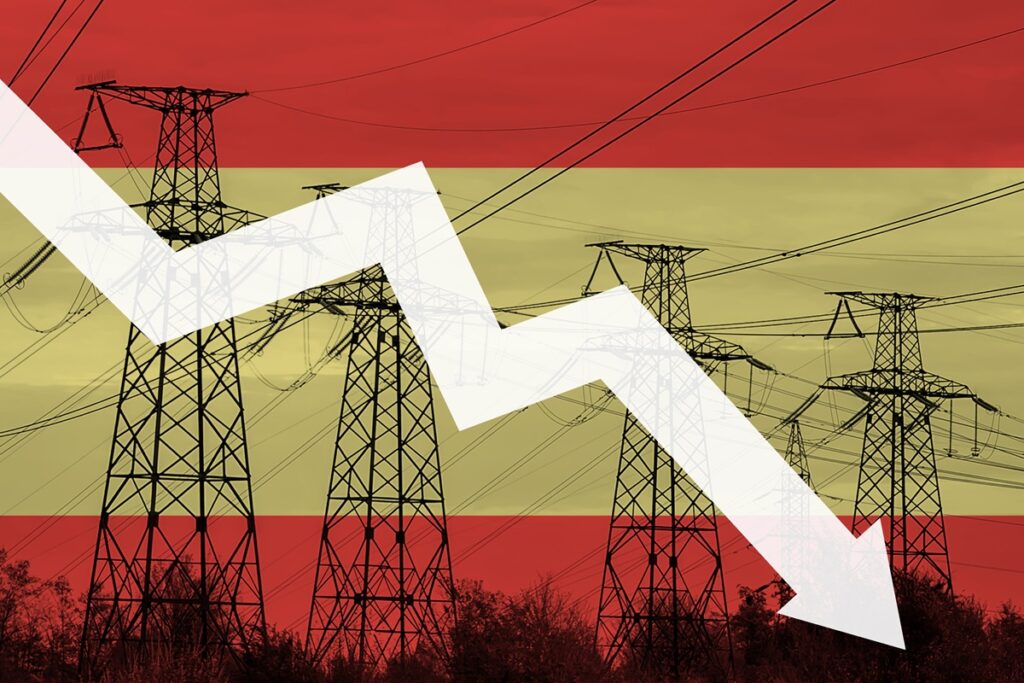
Spain’s massive power outage traced to a voltage surge, not renewable energy sources. Credit : Oleksiichik, Shutterstock
Spain’s biggest blackout in decades left millions across the Iberian Peninsula in the dark last April, sparking questions about whether the rapid rise of renewable energy had made the grid more fragile.
But five months on, the official European investigation has ruled out the green transition as the cause – and instead points to something far more technical: a rare “cascade of overvoltage” that spiralled out of control within minutes.
A power failure like no other
According to a detailed report released by ENTSO-E, Europe’s network of electricity transmission operators, the blackout that swept across Spain and Portugal on 28 April was “a unique global event.” The system failure began in southern Spain before spreading at lightning speed across the Iberian grid, forcing automatic shutdowns, cutting power to homes and businesses, and even disconnecting Spain from both France and Morocco.
The 45-expert team that compiled the report gathered data from governments, grid operators, and power generators across Europe to produce what they describe as a “factual, technical explanation” – not an accusation. A final, more comprehensive report is expected by early 2026, which will explore root causes and issue prevention recommendations.
Crucially, the investigators made one thing clear: renewable energy was not to blame. “The problem wasn’t the presence of renewables,” said Damien Cortinas, ENTSO-E’s president. “What we need is generation that can control voltage – and the good news is, this can be done with green energy just as it is with conventional power.”
Inside the chain reaction
Voltage — the level of electrical energy within the grid — must be carefully maintained within specific limits. Too low or too high, and the entire system can become unstable. While most blackouts stem from a drop in voltage, this one was caused by the opposite: a surge that triggered a domino effect.
The issue began around midday on 28 April, as solar and wind generation rose sharply while prices dropped and Spain’s electricity exports hit 5 gigawatts. Minor oscillations were detected, but at 12:03 p.m., the grid came under stress. By 12:32, things escalated rapidly — several wind and solar plants suddenly disconnected, removing more than 2,500 megawatts of generation within just 20 seconds.
A transformer in Granada failed to protect nearby solar and wind facilities, followed by large-scale generation losses in Badajoz, Segovia, Huelva, Seville and Cáceres. Some units shut down due to overvoltage, others for reasons still under investigation. The loss of this generation — which had been helping stabilise the grid — only worsened the situation.
As the voltage soared, automatic defence systems kicked in, but not fast enough. Within seconds, Spain’s grid lost synchronisation with France and Morocco, effectively isolating the peninsula. Five seconds later, the entire Iberian network collapsed.
Portugal managed to restore its grid shortly after midnight on 29 April. Spain’s recovery took until around 4 a.m.
Experts call for smarter voltage control
The findings highlight a critical challenge for Europe’s energy transition: while renewables can supply clean power, the system still needs sources that can stabilise voltage — something once handled mostly by fossil fuel plants.
“The technology exists,” Cortinas stressed. “This isn’t new science. The question is whether countries today have enough voltage control capacity.”
ENTSO-E says new investments are urgently needed to modernise the grid and equip renewable installations with better control mechanisms. Modern inverters, advanced transformers, and improved coordination between national operators could prevent a repeat of what happened in April.
The organisation also urged countries to enhance localised voltage regulation – allowing issues to be solved at the point where they arise, rather than letting them ripple through the system.
No finger-pointing, just lessons learned
ENTSO-E was keen to stress that its mission is not to assign blame. “We’re not the police or a court,” said Cortinas. “Our job is to promote transparency and learning through a technical explanation.”
That said, national authorities in Spain are expected to conduct their own follow-up inquiries. The April blackout has become a case study for engineers worldwide — a rare instance of a grid-wide overvoltage collapse in a highly developed energy network.
The report’s timeline suggests that a combination of solar rooftop disconnections, automatic safety shutdowns, and interconnection failures all contributed to the chain reaction. Experts admit that understanding how small, decentralised systems — like home photovoltaic panels — behave during such crises remains one of the toughest challenges.
What happens next?
The European body plans to publish its final analysis in early 2026, which will delve deeper into technical root causes and propose new safeguards for the continent’s increasingly renewable-dependent grid.
For Spain, the blackout has been a wake-up call. As one of Europe’s renewable leaders, with more than half its energy now coming from wind and solar, the incident exposed just how complex and interconnected modern grids have become — and how critical it is to balance green growth with system resilience.
Spain’s government and Red Eléctrica de España (REE) have since stepped up collaboration with European regulators to strengthen infrastructure and refine their rapid-response mechanisms.
While many feared this blackout would trigger criticism of renewables, the opposite appears true. The report reinforces the idea that the future of Europe’s energy system depends not on fewer renewables — but on smarter, more resilient ones.
Follow Euro Weekly News on Google News
Get breaking news from Spain, travel updates, and expat stories directly on your Google News feed.
Follow on Google NewsSign up for personalised news
Subscribe to our Euro Weekly News alerts to get the latest stories into your inbox!
By signing up, you will create a Euro Weekly News account if you don't already have one. Review our Privacy Policy for more information about our privacy practices.


Farah Mokrani
Farah is a journalist and content writer with over a decade of experience in both digital and print media. Originally from Tunisia and now based in Spain, she has covered current affairs, investigative reports, and long-form features for a range of international publications. At Euro Weekly News, Farah brings a global perspective to her reporting, contributing news and analysis informed by her editorial background and passion for clear, accurate storytelling.
Comments
Bob
05 October 2025 • 08:36So at the end of the day it was caused by Renewable energy and a crap national grid system that for years has had low investment
Geoff
05 October 2025 • 13:34Exactly. And the UK system is just a bad if not worse. Keep a torch and candles handy this winter.
D Bath
05 October 2025 • 11:28“What we need is generation that can control voltage – and the good news is, this can be done with green energy just as it is with conventional power.” To me this reads as, “Somebody dropped the ball during the planning and implementation phases.” As the coexistence of legacy energy sources with green energy sources – and how they’re controlled – would surely have been considered from the beginning.
Morris Davidson
05 October 2025 • 15:52AYE SURE AND WE ALL BELIEVE THE EU
Dirk
06 October 2025 • 13:29So when are they going to reimburse the people for the damages incurred?
I for example work online and could not work that day also all my food was defrosted and had to be thrown away since it was too much for me to eat.
I say this before they say that the timespan for claiming has passed…..
Comments are closed.