Spain’s blackout: Cause finally revealed
By Farah Mokrani • Published: 18 Jun 2025 • 23:59 • 3 minutes read
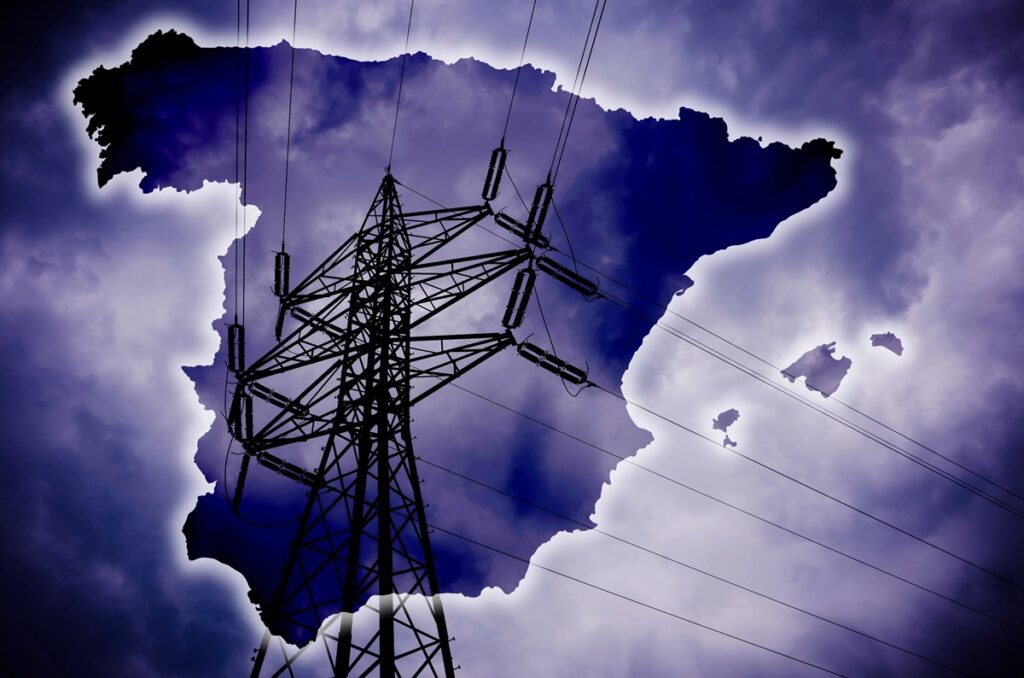
Visual of Spain’s 2025 blackout: Discover the real cause of the power outage, its impact on the grid, and what’s next for Spain’s electricity network. Credit : Shutterstock
If you were in Spain or Portugal on April 28, chances are you remember exactly where you were when the lights went out.
Cities ground to a halt, thousands were stranded on trains and in lifts, and daily life was thrown into chaos as a rare, massive power outage swept across the Iberian Peninsula. Now, as officials untangle what really went wrong, we’re finally getting answers—but they’re not all pointing in the same direction.
So, what actually caused the blackout? According to the Spanish government, the trouble started with Redeia, Spain’s grid operator, miscalculating the right energy mix in the system. At the heart of the crisis was a voltage surge—the electrical “push” that keeps power moving smoothly across the network. Keeping voltage steady is crucial for grid stability, and when it goes haywire, the whole system is at risk.
The government report says some conventional power plants—those burning coal, gas, or nuclear—failed to do their bit, letting voltage levels spike and triggering a domino effect of shutdowns across the network. In short: not enough backup, not enough control, and not enough power plants responding when it mattered.
Redeia, for its part, agrees that a voltage surge triggered the crisis, but pushes back on the idea that its own energy planning was at fault. Instead, it blames the conventional power stations for not stepping in, and says an unexpected jump in demand from the transport network only made things worse. So, the finger-pointing continues, and the debate over exactly where the blame lies isn’t settled yet.
Spain blackout 2025: Could it have been prevented?
In an ideal world, grid operators use a whole toolkit of controls to balance frequency, voltage, and supply, making sure that whatever happens, there’s enough juice in the right place at the right time. But the government’s report reveals that on April 28, there simply weren’t enough generators online to keep voltage in check—fewer, in fact, than in previous weeks. Worse, not every unit that should have helped out actually did.
Curiously, neither report has named the companies running the power plants that dropped the ball. And while Spain’s Energy Minister admits there was a lack of capacity to regulate voltage, Redeia insists their calculations were solid and the real issue was that power plants didn’t respond as planned.
But what about renewables? Given Spain’s status as a European leader in solar and wind, some have wondered if green energy might have played a part. Both the government and Redeia are adamant: renewable energy was not the culprit. In fact, at the moment the grid crashed, renewables were supplying a massive 59% of Spain’s electricity. As Redeia’s own operations chief put it, “Had conventional power plants done their job, there would have been no blackout.”
Spain Blackout 2025: What’s next for the power grid?
With the blame game ongoing, what can we expect now? The Spanish government has already promised measures to strengthen the grid and tighten voltage controls. There’s talk of closer integration with the wider European network, which could make the whole peninsula’s power supply more robust in future.
Redeia has said a more detailed report is on the way, and the government’s own findings are being shared with the European Network of Transmission System Operators, who are running their own investigation. If any companies or parties are found responsible for the chaos, they could be on the hook for losses and compensation, depending on the legal outcome.
One thing’s certain: for Spain and Portugal, the blackout has been a wake-up call. Modern grids, with all their renewable energy and interconnected parts, are more complex than ever. Keeping the lights on isn’t just about having enough power, but making sure the right kind of power is there when things go wrong.
For now, daily life has returned to normal, but the April 28 blackout is set to leave a lasting mark on how Spain and Portugal manage their energy. Watch this space for the next round of official findings and fingers crossed, we won’t be left in the dark again any time soon.
Stay tuned with Euro Weekly News for more news from Spain
Sign up for personalised news
Subscribe to our Euro Weekly News alerts to get the latest stories into your inbox!
By signing up, you will create a Euro Weekly News account if you don't already have one. Review our Privacy Policy for more information about our privacy practices.



Farah Mokrani
Farah is a journalist and content writer with over a decade of experience in both digital and print media. Originally from Tunisia and now based in Spain, she has covered current affairs, investigative reports, and long-form features for a range of international publications. At Euro Weekly News, Farah brings a global perspective to her reporting, contributing news and analysis informed by her editorial background and passion for clear, accurate storytelling.
Comments