Europe has just six weeks of jet duel left, IEA warns as flight cancellations loom
By Molly Grace • Published: 16 Apr 2026 • 21:41 • 3 minutes read

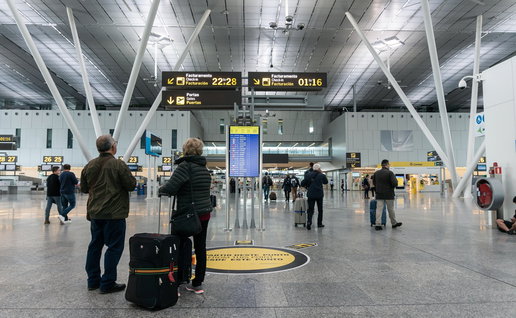
If airports do not have enough fuel, the first response would usually be rationing rather than an immediate shutdown. Photo credit: Skycolors/Shutterstock
Europe may have only around six weeks of jet fuel remaining if disruption through the Strait of Hormuz continues, according to the head of the International Energy Agency (IEA), raising concern over air travel, fuel prices and wider economic pressure.
Fatih Birol, executive director of the IEA, said Europe has “maybe six weeks or so” of aviation fuel left and warned that flight cancellations could begin soon if normal supply routes are not restored. His remarks were made in an interview with the Associated Press and reported by multiple international outlets.
The warning follows weeks of disruption in one of the world’s most important shipping routes. The Strait of Hormuz is a key channel for oil and refined fuel exports from the Gulf. Restrictions on tanker movements have tightened global supply and pushed energy prices higher. The IEA said the broader oil market is already experiencing one of the largest supply shocks on record.
Why Europe is vulnerable
Europe imports part of its aviation fuel needs from the Middle East, either directly or through global markets affected by Gulf supply. Even countries with strong domestic refining capacity can face pressure if international flows are interrupted and buyers compete for alternative cargoes.
The issue is not only the amount of crude oil available, but whether refineries can produce enough jet fuel and whether it can be transported quickly to the airports that need it. Aviation fuel supply chains depend on shipping, storage terminals, pipelines, road tankers and airport fuel systems. Pressure at any point can cause shortages.
Airports Council International Europe previously warned EU officials that a prolonged closure of Hormuz could create a critical shortage within weeks, placing airline schedules at risk during the approach to the summer travel season.
What could happen if airports run short of fuel
If airports do not have enough fuel, the first response would usually be rationing rather than an immediate shutdown. Airlines could be told to reduce uplift volumes, meaning aircraft take only limited fuel before departure. Some flights might need to refuel elsewhere, adding delays and operational complexity.
Carriers would then be likely to prioritise the most commercially important routes. Long-haul services, high-demand domestic routes and strategically important connections may be protected first, while less profitable or lower-demand flights could be reduced or suspended.
If shortages worsened, airlines could cancel services entirely. This could affect holiday travel, business trips, cargo operations and connecting passengers moving through major hubs. Delays would also rise as schedules are rewritten and aircraft repositioned.
Regional airports with fewer supply options may be more exposed than large hubs with bigger storage capacity and stronger supplier networks. Some airports could maintain operations while others face sharper disruption.
Economic effects beyond aviation
A sustained shortage would not only affect passengers. Air freight could be delayed, disrupting supply chains for goods that rely on fast delivery, including pharmaceuticals, electronics and perishable products. Tourism-dependent regions could also feel the impact if visitors are unable to travel during peak season.
Higher fuel costs are already a concern for airlines. Even before physical shortages emerge, rising kerosene prices can increase operating costs, reduce margins and place upward pressure on ticket prices. Some carriers have already adjusted schedules or warned of financial impact linked to the energy shock.
The IEA has also warned that wider consequences may include slower economic growth, higher inflation and pressure on household energy bills if disruption continues.
Can the shortage be avoided?
The outcome will depend on how long the Strait of Hormuz remains constrained and how quickly alternative supply can be arranged. Europe may seek extra cargoes from other regions, while refineries could adjust output to maximise jet fuel production where possible. Strategic reserves and emergency coordination measures may also be considered.
However, replacing lost volumes is not always immediate. Tanker availability, refinery capacity and transport logistics can all slow the response. Even if enough fuel exists globally, getting it to the right airport at the right time can remain difficult.
Industry watching next steps closely
For now, flights continue across Europe, but the warning show how dependent aviation remains on stable global energy routes. If supply conditions improve, disruption may be limited. If not, airports and airlines may soon have to make difficult decisions over which services can continue and which cannot.
Sign up for personalised news
Subscribe to our Euro Weekly News alerts to get the latest stories into your inbox!
By signing up, you will create a Euro Weekly News account if you don't already have one. Review our Privacy Policy for more information about our privacy practices.



Molly Grace
Molly is a British journalist and author who has lived in Spain for over 25 years. With a background in animal welfare, equestrian science, and veterinary nursing, she brings curiosity, humour, and a sharp investigative eye to her work. At Euro Weekly News, Molly explores the intersections of nature, culture, and community - drawing on her deep local knowledge and passion for stories that reflect life in Spain from the ground up.
Comments