Spanish supermarket bread linked to health issues
By Molly Grace • Published: 03 Nov 2025 • 16:16 • 3 minutes read
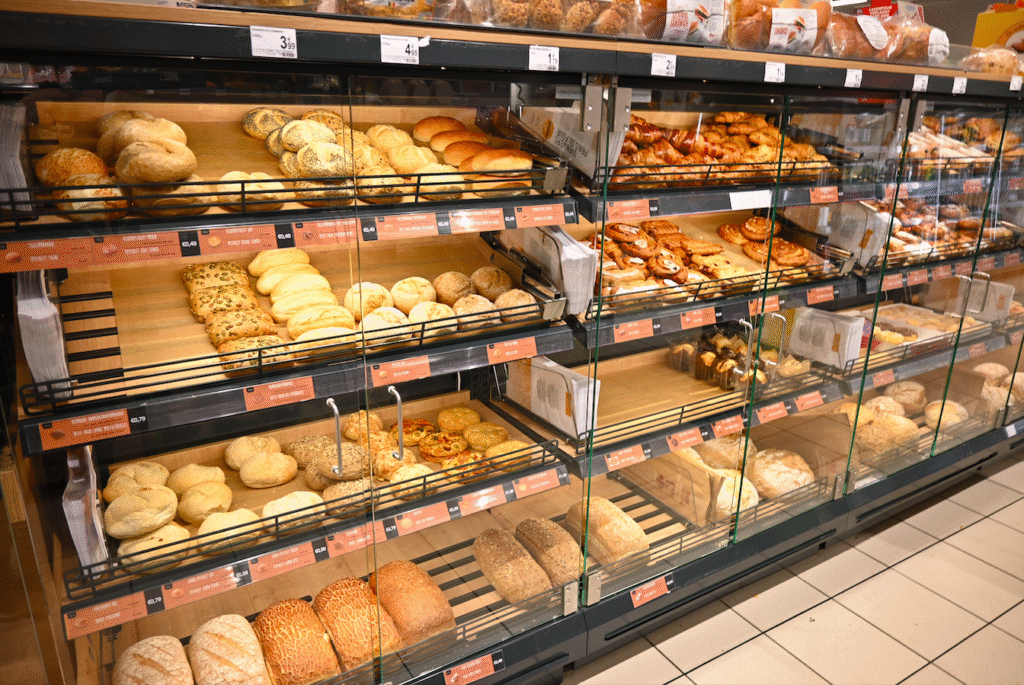
Bread remains an essential part of the Spanish diet, but not all loaves are created equal. Photo credit: SJBright/Shutterstock
Bread has been a staple of the Spanish diet for centuries, valued for its taste, convenience, and perceived nutritional benefits. Many consumers assume that freshly baked loaves from supermarket bakeries are as wholesome as artisan breads from traditional bakeries. However, research shows that much of the bread sold in supermarket bakery sections may not meet these expectations.
Industrially produced breads, including pre-baked or partially baked loaves, often contain additives and undergo rapid fermentation, which can reduce digestibility and nutrient content. Unlike traditional artisan breads, which rely on slow fermentation and wholegrain flours, mass-produced breads are designed for convenience, consistency, and long shelf life.
Supermarket breads are often lighter, less dense, and lower in fibre, indicating higher refinement and fewer nutrients. Experts warn that these characteristics, combined with chemical additives and shortcuts in production, may contribute to digestive issues and lower overall nutrient intake if consumed regularly.
Nutritional and Digestive Implications
Fibre, Gluten and Digestibility
Fibre is a key marker of bread quality. Wholegrain breads provide sustained energy, support digestion, and promote heart health. Supermarket bakery breads often contain less fibre than artisan loaves, making them less filling and potentially less beneficial for digestive health. Even breads labelled as “integral” or “wholegrain” may not contain the claimed 100% wholegrain flour, which can mislead consumers about their true nutritional value.
A study comparing gluten and fructan contents of breads from industrial and artisan bakeries found substantial differences. Industrial breads often had higher gluten and higher fructan levels than artisan breads, which is relevant to Non-coeliac wheat sensitivity (NCWS) and potentially coeliac-related issues because gluten and fructans are implicated.
Industrial breads also use rapid fermentation and chemical additives, which can reduce digestibility. Pre-baked or mass-produced loaves may be harder to process for some individuals, sometimes causing mild gastrointestinal discomfort. Artisan breads, by contrast, rely on natural fermentation, allowing enzymes and bacteria more time to break down gluten and other compounds, improving digestibility and nutrient absorption.
Economic and Cultural Impact
Preserving Traditional Baking
The rise of mass-produced breads has placed significant economic pressure on small, traditional bakeries. Many artisan bakeries struggle to compete with cheaper supermarket products, leading to closures and a loss of traditional baking skills. This affects both the quality and availability of breads and reduces transparency regarding ingredients and production methods, leaving consumers with fewer genuinely nutritious options.
Industrial breads have also contributed to a loss of bread diversity. Traditional varieties and regional recipes are increasingly rare, while pre-baked supermarket loaves dominate the market. These breads often lack the flavour complexity, texture, and nutritional benefits associated with slow fermentation and careful ingredient selection. Consumers lose both cultural richness and potential health benefits when convenience is prioritised over traditional methods.
Investigation Findings
Evidence from Documentary Research
A recent investigation in Spain examined the quality of supermarket bakery breads and found concerning trends. Experts interviewed in the documentary confirmed that many pre-baked or mass-produced breads contain high levels of additives and refined flours, with significantly lower fibre and nutrient content than artisan options. Medical professionals also warned that frequent consumption of such breads could contribute to digestive issues and blood sugar fluctuations.
The documentary highlighted that supermarket breads, although visually appealing, often compromise nutritional value for convenience and shelf life. It also emphasised the importance of supporting small bakeries using slow fermentation and traditional methods, which naturally retain more nutrients.
In addition, research shows that industrial breads may have higher levels of certain mycotoxins compared with artisan breads, though still below legal limits. Regulatory and food-safety evaluations indicate that high intake of refined cereal products, including many supermarket breads, is associated with increased cardio-metabolic risks such as elevated blood pressure, though not directly with coeliac disease. Regulatory reform in Spain shows that until 2019 many breads labelled “wholemeal” were mostly refined flour with added bran or colouring.
Key Points for Consumers
Practical Advice
- Read Labels Carefully: Check flour type, fibre content, and additives. Terms like “integral,” “wholegrain,” or “artisanal” do not automatically guarantee higher nutritional quality.
- Choose Artisan Bread When Possible: Breads produced in-house using slow fermentation methods provide higher fibre content, better digestibility, and more nutrients.
- Be Wary of Pre-Baked Supermarket Loaves: Even freshly baked breads from supermarket bakeries may contain additives, lower fibre, and reduced nutritional value. Regular consumption could affect overall health.
- Support Traditional Bakeries: Choosing genuine artisan bread from Panaderias helps preserve local baking techniques, encourages higher-quality ingredients, and maintains a wider variety of breads on the market.
Final Thoughts
Bread remains an essential part of the Spanish diet, but not all loaves are created equal. While supermarket bakery breads offer convenience, they often compromise on fibre, nutrient content, and digestibility.
Choosing artisan breads, reading labels carefully, and being aware of production methods can help consumers make healthier choices while supporting traditional baking culture. Awareness raised by investigations and expert commentary highlights the importance of scrutinising supermarket breads rather than assuming they are nutritionally adequate.
Follow Euro Weekly News on Google News
Get breaking news from Spain, travel updates, and expat stories directly on your Google News feed.
Follow on Google NewsSign up for personalised news
Subscribe to our Euro Weekly News alerts to get the latest stories into your inbox!
By signing up, you will create a Euro Weekly News account if you don't already have one. Review our Privacy Policy for more information about our privacy practices.





Molly Grace
Molly is a British journalist and author who has lived in Spain for over 25 years. With a background in animal welfare, equestrian science, and veterinary nursing, she brings curiosity, humour, and a sharp investigative eye to her work. At Euro Weekly News, Molly explores the intersections of nature, culture, and community - drawing on her deep local knowledge and passion for stories that reflect life in Spain from the ground up.
Comments
Michael Jenkins
04 November 2025 • 13:45This story does not qualify as journalism. It should definitely be labeled as an opinion piece or better yet, an advertisement for artisan bakeries.
You make numerous references to studies and data without quantifying any of it. You conflate supermarket bread (baked in store) with industrial bread (mass produced) without differentiating.
Your points may be valid. But no one will ever know.
Charles Thomas
04 November 2025 • 16:00I agree with Michael Jenkins on his assesment, it is also a point that most of us use supermarket bread because of cost. I recently purchased a small “Artisan” loaf from a local bakery, cost 4€, only purchased for a special lunch with an old friend. Couldn’t afford that every day. We know the local bakers pay more for ingredients, covering the profit loss the supermarkets cause to suppliers due to bulk buying discounts etc.
Comments are closed.