New studies link common food additives to cancer, diabetes and heart disease risk
By Molly Grace • Published: 21 May 2026 • 23:38 • 4 minutes read
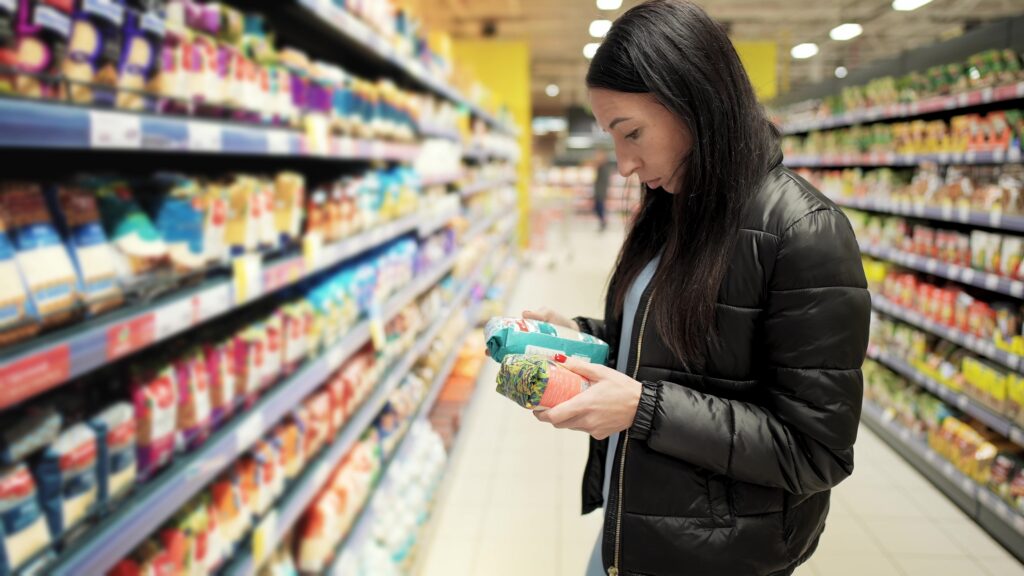
Researchers highlighted the large sample size and repeated dietary measurements as key strengths. Photo credit: Serg Grbanoff/Shutterstock
Three new large-scale epidemiological studies have found associations between the intake of specific food additives and an increased risk of type 2 diabetes, cancer, cardiovascular disease and hypertension.
The findings are based on data from the NutriNet-Santé cohort, a French population study following more than 100,000 adults who regularly report detailed dietary intake using repeated web-based food records.
The research was carried out by teams from Inserm, INRAE, Sorbonne Paris Nord University, Université Paris Cité and CNAM.
Findings published in major medical journals
According to Inserm, the results were published in three peer-reviewed journals: Diabetes Care, European Journal of Epidemiology and European Heart Journal. The studies examined exposure to three main groups of additives: synthetic food colourings, artificial sweeteners, and preservatives, all widely used in processed and ultra-processed foods.
Researchers reported statistically significant associations between higher consumption of some of these additives and increased risk of chronic disease outcomes, after adjusting for diet quality and lifestyle factors.
Data drawn from long-term dietary tracking
Exposure estimates were based on repeated 24-hour dietary records collected over several years.
Participants in the cohort logged thousands of food and drink items, which were then cross-referenced with food composition databases identifying additive content in commercial products. The dataset included more than 100,000 participants and millions of dietary records, allowing researchers to estimate long-term exposure to individual additives and mixtures of additives.
Colourings, preservatives and sweeteners analysed separately
The studies separated additives into specific functional categories rather than treating them as a single group. One of the key findings was a link between synthetic food colourings and an increased risk of type 2 diabetes.
These colourings included additives such as E102 (tartrazine), E110 (sunset yellow), E122 (carmoisine), and E124 (ponceau 4R), which are commonly used in soft drinks, confectionery and processed foods. Preservatives linked to cancer and cardiovascular disease
A second group examined was preservatives, particularly those used in processed meats and packaged foods. These included nitrites and nitrates (E249–E252), commonly used in cured meats such as bacon, ham and sausages, as well as other preservation agents used to extend shelf life in packaged products. Researchers reported associations between higher intake of these preservatives and increased risk of both cancer and cardiovascular disease outcomes.
Artificial sweeteners included in metabolic risk analysis
A third category involved artificial sweeteners, widely used in sugar-free products. These included aspartame, acesulfame-K, and sucralose, which were analysed in relation to type 2 diabetes risk and other metabolic outcomes.
Results varied depending on the compound, with some showing stronger associations than others.
Combined exposure also assessed
Researchers also examined combined exposure to multiple additives, reflecting real-world dietary patterns where individuals consume mixtures of colourings, preservatives and sweeteners.
Higher combined exposure was associated with increased risk of several chronic diseases, although the strength of association varied between outcomes.
Disease outcomes tracked over long follow-up
One study focused on cancer incidence over several years of follow-up. It found associations between higher intake of certain preservatives, particularly nitrites and nitrates, and increased incidence of cancers including breast and prostate cancer in subgroup analyses.
A separate analysis focusing on type 2 diabetes found associations with both synthetic colourings and certain sweeteners. Cardiovascular analysis also identified links between some preservatives and increased risk of heart disease and hypertension.
Not all additives showed consistent associations
Researchers stressed that not all additives studied showed measurable relationships with disease outcomes.
Some compounds showed no statistically significant association after adjustment for confounders such as smoking, alcohol intake, physical activity, age and overall diet quality. The authors emphasised that dietary patterns as a whole may play a larger role in disease risk than any single additive.
Study design and population details
The NutriNet-Santé cohort was launched in 2009 and is one of the largest ongoing nutritional epidemiology studies in Europe. Participants provide repeated dietary records several times per year, allowing researchers to assess long-term dietary exposure. Health outcomes are tracked through self-reported medical data and linkage with national health databases.
Strengths and limitations
Researchers highlighted the large sample size and repeated dietary measurements as key strengths. However, they also acknowledged limitations, including possible measurement errors in self-reported food intake and the inability to fully rule out residual confounding.
The findings are therefore observational and cannot establish direct cause-and-effect relationships.
Scientific interpretation and wider context
Researchers emphasised that results should be interpreted within the context of overall dietary patterns rather than individual foods or additives in isolation. They called for further experimental research to investigate biological mechanisms, particularly involving long-term exposure to additive mixtures.
Previous work from the same cohort has already linked ultra-processed food consumption with increased risk of chronic diseases.
Public health relevance
The studies contribute to ongoing debate about the health impact of processed foods and food formulation practices. Researchers stated that while associations were observed, this does not mean all additives are harmful, but some may require further evaluation.
Conclusion of findings
The studies provide new evidence of associations between specific food additives, including synthetic colourings (E-numbers such as E102 and E110), preservatives (nitrites and nitrates E249, E252), and artificial sweeteners (aspartame, acesulfame-K and sucralose), and increased risk of chronic diseases.
Although causation has not been established, researchers say the consistency of findings across large population datasets warrants further investigation into long-term dietary exposure and health outcomes.
Follow Euro Weekly News on Google News
Get breaking news from Spain, travel updates, and expat stories directly on your Google News feed.
Follow on Google NewsSign up for personalised news
Subscribe to our Euro Weekly News alerts to get the latest stories into your inbox!
By signing up, you will create a Euro Weekly News account if you don't already have one. Review our Privacy Policy for more information about our privacy practices.





Molly Grace
Molly is a British journalist and author who has lived in Spain for over 25 years. With a background in animal welfare, equestrian science, and veterinary nursing, she brings curiosity, humour, and a sharp investigative eye to her work. At Euro Weekly News, Molly explores the intersections of nature, culture, and community - drawing on her deep local knowledge and passion for stories that reflect life in Spain from the ground up.
Comments