Spanish towns join mobile-free mountain network
By Santiago Carneri • Published: 13 Dec 2025 • 21:59 • 3 minutes read
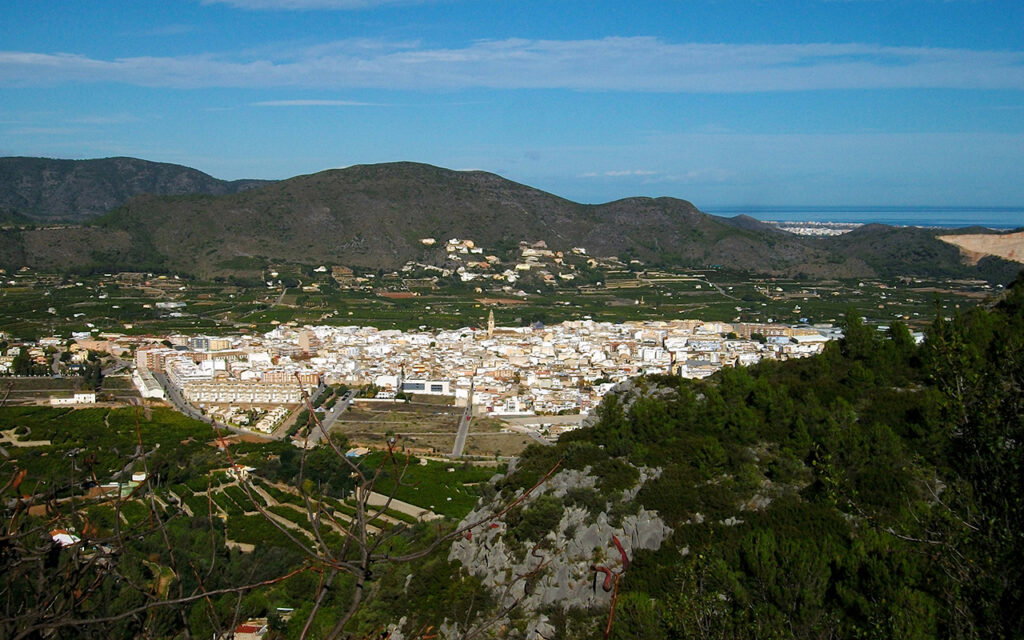
Pego and Calpe join mobile-free mountain network. Credit: Joanbanjo / Creative Commons
On December 12, coinciding with International Mountain Day, 69 municipalities in the Valencian Community joined a nationwide initiative to create mobile-free spaces aimed at offering young people and teenagers stays in natural environments without mobile phones. The project, Refugios Bien de Altura: spaces without coverage, is promoted by the Spanish Association of Mountain Municipalities (EsMontañas) and funded by the Ministry for the Ecological Transition and the Demographic Challenge (Miteco). It transforms municipal hostels and rural accommodation in 284 mountain villages across Spain into areas of voluntary digital disconnection.
Among the 69 participating Valencian towns, only six are in the province of Alicante, with two located in the Marina Alta: Calpe and Pego.
“Mountain villages offer an environment where people can pause, socialise and regain routines without screens. The Valencian Community contributes a very valuable network of municipalities that strengthen this initiative,” EsMontañas representatives stated.
Tackling mobile dependence and its impacts on teenagers
The initiative targets the growing dependence on mobile technology among young people and the associated problems such as anxiety, depression, low self-esteem and insomnia. “We provide young people and teenagers with an emotional refuge through camps, excursions, getaways and activities focused on their well-being,” EsMontañas explained.
“Mountain villages offer something very simple yet highly necessary: time without screens and shared life experiences,” they added.
Phone-free stays as an educational and preventive measure
Approximately 20% of students aged 14 to 18 exhibit problematic use of mobile phones and social media. In response, the Refugios Bien de Altura network offers phone-free stays as an educational and preventive alternative.
Reports cited in the project dossier indicate that taking a break from social media for short periods of three to seven days is associated with improvements in emotional well-being and rest among young people.
Nature and well-being backed by scientific research
The programme is designed with contributions from university groups specialising in well-being, quality of life and environmental studies. One such group, ARMAQOL from the University of Valencia, provides scientific analysis on the impact of natural environments on emotional well-being.
The project follows international experiences of nature-based prescriptions in countries such as Japan, the United Kingdom and Canada, demonstrating the growing recognition of nature’s therapeutic benefits.
An open network for integration into public programmes
Refugios Bien de Altura is an initiative open to public administrations, schools, social organisations and other entities interested in providing digital disconnection stays in natural surroundings. EsMontañas describes the project as a replicable and transferable network that can be integrated into health, youth and territorial development programmes.
“It is a simple and concrete way to implement public policies with social return from mountain villages,” they concluded.
About EsMontañas
Founded in 2013, EsMontañas brings together 300 Spanish mountain villages with the aim of promoting legislative initiatives and other actions to improve life in mountain areas, curb depopulation, and foster economic and social development.
The association encourages nature lovers and those who enjoy unique, tranquil spaces, local gastronomy and historical or ethnographic points of interest to take part in the challenge by visiting these villages.
A step towards healthier digital habits
With the launch of this initiative in the Valencian Community, young people now have the opportunity to experience life without constant connectivity, building stronger social bonds and reconnecting with nature. The project also highlights the importance of preventive measures for mental health, showing that even short breaks from technology can have measurable benefits.
By providing structured experiences in rural settings, Refugios Bien de Altura offers a practical approach to tackling digital dependency, while simultaneously supporting local communities through tourism and engagement with public programmes.
Growing momentum for mountain villages
The participation of towns like Calp and Pego reflects a wider movement across Spain to make mountain villages hubs of well-being and sustainability. By offering a safe, structured environment where technology is optional rather than mandatory, these municipalities are creating spaces where young people can thrive away from screens.
The project also positions mountain villages as models for other regions, showing how simple initiatives can combine health, education and rural development in a cohesive strategy.
Connecting youth with nature and community
Ultimately, the initiative aims to foster a deeper connection between young people and the natural world. By encouraging digital detoxes in scenic mountain environments, it not only benefits teenagers’ mental health but also reinforces the social and cultural fabric of participating communities.
As more municipalities join the network, the project promises to expand its impact, offering young people across Spain the chance to recharge, learn, and grow in healthy, screen-free spaces.
Stay tuned with Euro Weekly News for the latest news about Europe and Costa Blanca.
Follow Euro Weekly News on Google News
Get breaking news from Spain, travel updates, and expat stories directly on your Google News feed.
Follow on Google NewsSign up for personalised news
Subscribe to our Euro Weekly News alerts to get the latest stories into your inbox!
By signing up, you will create a Euro Weekly News account if you don't already have one. Review our Privacy Policy for more information about our privacy practices.
Santiago Carneri
Santiago is a freelance journalist, writer, photographer, and documentary producer with over a decade of experience reporting from Paraguay and Brazil. His work has appeared in The New York Times, The Guardian, Vice News, BBC, Associated Press, France Press, Der Spiegel, Deutsche Welle, El País, and more. Now based in Dénia—his self-described secret paradise—Santi contributes to Euro Weekly News, bringing a global perspective to both local and international stories. Outside of journalism, he enjoys boxing and cultivating his home garden.
Comments