Storm Johannes triggers VMA warning, two fatalities reported
By Molly Grace • Updated: 28 Dec 2025 • 0:09 • 3 minutes read
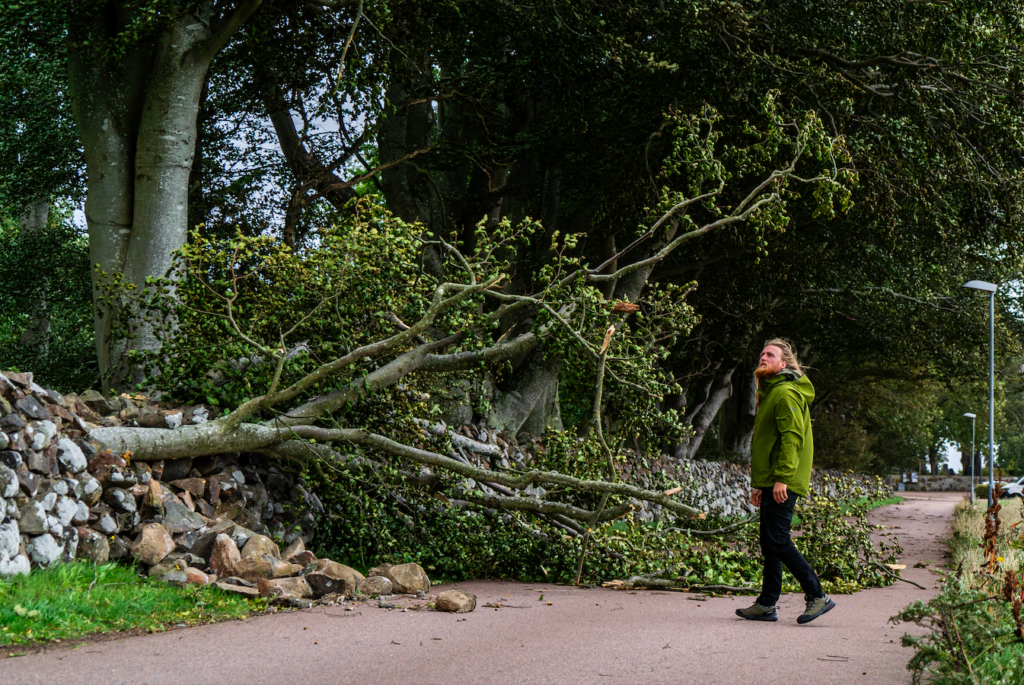
Authorities reported that thousands of trees have been blown down. Photo Credit: Marijn Bruinen/Shutterstock
Storm Johannes has left a trail of disruption across large parts of Sweden, prompting authorities to issue a Viktigt Meddelande till Allmänheten (VMA or important public warning) and strongly advise residents against travelling on roads blocked by fallen trees and, in some cases, downed power lines. Authorities reported that thousands of trees have been blown down, causing severe traffic disruptions and prompting urgent safety messages in several counties.
On Saturday evening, a VMA was issued covering northern Dalarna, Gävleborg, Västernorrland and southern Jämtland, as the storm moved inland with sustained strong winds. Authorities warned that the falling trees posed an obvious danger to road users and urged people to avoid all unessential travel until conditions improve.
Elin Sarfati, a spokesperson for the Swedish Transport Administration, said the number of fallen trees was exceptional even for severe weather, with multiple major roads including European routes and national highways blocked by debris. Motorists were urged to stay at home to avoid the risks posed by unstable trees and other hazards.
Fatalities linked to fallen trees
Two deaths reported amid storm chaos
The storm has also claimed lives. At least two people were killed on Saturday in separate accidents linked to trees blown down by the powerful winds. In the municipality of Sandviken, a man in his 50s was struck by a falling tree while walking and later died from his injuries in hospital.
In a second incident in Härnösand municipality, a man died during tree‑clearing work following the storm. He was employed with a local company undertaking storm response activity when a tree fell on him.
The deaths underline the danger posed by storm conditions and the urgency of heeding public safety warnings. Police and emergency services have closed multiple road sections and focused on clearing obstructions and assisting residents.
Disruption to transport and utilities
Roads, rail and power networks hit
For much of Saturday and into Sunday, traffic was severely affected on roads across the storm‑hit region. Trees blocked vital corridors including stretches of the E4 motorway and other national roads, leading to long queues and halted journeys.
In addition to road disruptions, several railway lines were closed pre‑emptively by the Swedish Transport Administration to protect travellers, affecting trains to and from Östersund and Åre. Ferry crossings were also postponed or cancelled due to hazardous conditions.
Utilities have been hit by the storm as well. More than 40,000 households were reported without electricity in the affected areas, particularly in Hälsingland, where crews worked late into the night trying to restore service.
The Swedish Meteorological and Hydrological Institute maintained strong wind warnings throughout the event, including warnings indicating serious consequences and danger to the public. These alerts, coupled with the VMA, underscored the severity of the storm’s impact on infrastructure and daily life.
Public reaction and agency advice
Officials urge caution and preparedness
Despite the warnings, authorities noted that some residents continued to travel, prompting criticism from the Swedish Transport Administration. Officials stressed that moving vehicles amid falling trees increases the risk of collisions and injuries, especially when traffic is stationary and trees remain unstable.
In some areas, sirens known as Hesa Fredrik were activated as part of the VMA alert system, signalling residents to seek immediate safety indoors. Citizens reported being startled by the alarm, which is used only for significant threats such as extreme weather or civil emergencies.
Emergency services, municipal authorities, and utility crews worked throughout the weekend to clear roads, restore power and assess structural hazards. Residents were encouraged to follow official channels for updates, prepare emergency kits, and avoid all non‑essential outdoor activity until the storm abated and roads were deemed safe.
Key points
- An important public warning (VMA) was issued due to storm-blown trees on roads in northern Sweden.
- Thousands of trees fell across major highways and local roads, blocking traffic.
- At least two people died after being struck by fallen trees during the storm.
- Transport networks, including rail and ferries, were disrupted or closed.
- More than 40,000 households were left without power in affected regions.
Recovery efforts and ongoing risks
Storm Johannes has illustrated the destructive potential of severe winds on Sweden’s infrastructure and daily life. Authorities emphasised that recovery work, particularly clearing fallen trees from major routes, will take several days, and that conditions may remain unstable while strong winds persist.
Officials also stressed that residents should continue to monitor weather and safety advisories, particularly in rural and forested areas where isolated trees and weak branches remain a hazard. The combined impacts on transport, utilities and public safety have led agencies to coordinate cleanup efforts and provide real‑time information to communities in affected counties.
As the storm moves away from northern Sweden, local authorities are focusing on both immediate emergency response and longer‑term recovery, including infrastructure repair and support for those displaced or affected by power outages.
Follow Euro Weekly News on Google News
Get breaking news from Spain, travel updates, and expat stories directly on your Google News feed.
Follow on Google NewsSign up for personalised news
Subscribe to our Euro Weekly News alerts to get the latest stories into your inbox!
By signing up, you will create a Euro Weekly News account if you don't already have one. Review our Privacy Policy for more information about our privacy practices.




Molly Grace
Molly is a British journalist and author who has lived in Spain for over 25 years. With a background in animal welfare, equestrian science, and veterinary nursing, she brings curiosity, humour, and a sharp investigative eye to her work. At Euro Weekly News, Molly explores the intersections of nature, culture, and community - drawing on her deep local knowledge and passion for stories that reflect life in Spain from the ground up.
Comments