Norway’s billion-euro ship tunnel hits the rocks
By Molly Grace • Updated: 27 Jun 2026 • 19:05 • 4 minutes read
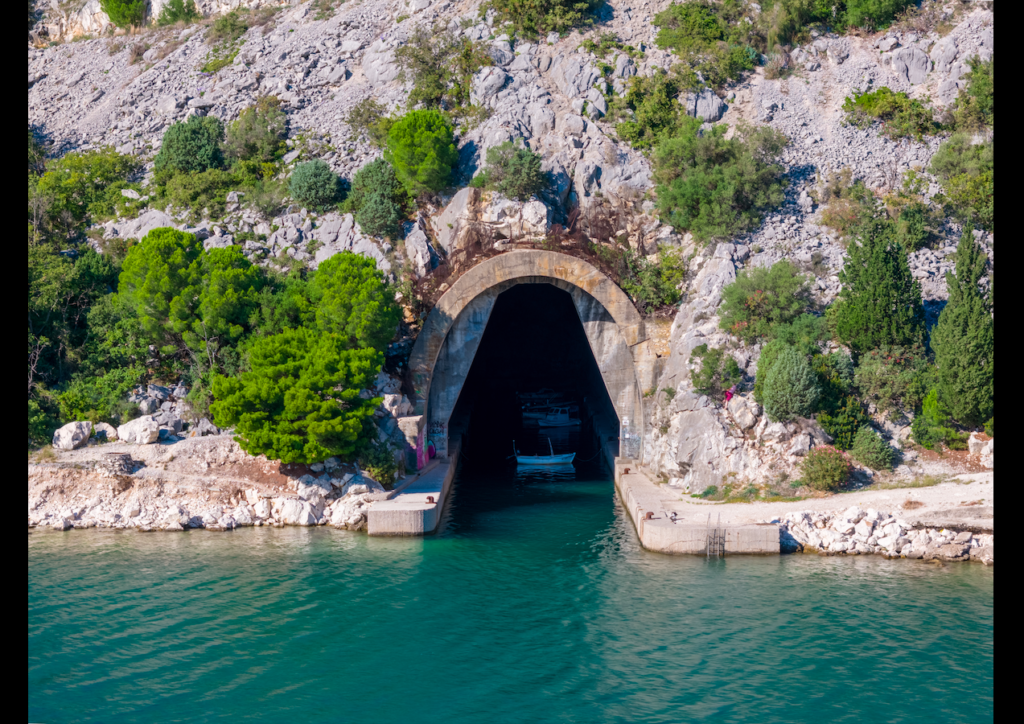
Lawmakers will debate whether to release funds to continue the current tender. Photo credit: Robin Dessens/Shutterstock
Update – June 2026: The Norwegian government has now given the project the green light. Construction is expected to start in 2027. Read the latest here: World’s first ship tunnel through mountain wins approval in Norway
Norway’s long‑championed plan to build the world’s first full‑scale ship tunnel, designed to allow vessels to bypass one of the country’s most dangerous stretches of sea, has been put on hold by the national government amid spiralling cost estimates and budget disagreements. The Stad Ship Tunnel project, which would have cut a 1.7‑kilometre passage through Norway’s Stad Peninsula, was once regarded as a bold engineering solution to hazardous maritime conditions. However, officials now say the projected costs have almost doubled, prompting reconsideration of its viability within the current budget framework.
The government announced as part of its proposed 2026 state budget that work on the tunnel will be suspended pending approval by the national parliament, known as the Storting. The Norwegian Coastal Administration, the body responsible for the project’s development, has been instructed to pause all ongoing preparations, including the tendering process and preliminary contractor negotiations, until lawmakers complete their deliberations.
“For now, we are suspending our activities until the parliament has decided on the budget,” said the Coastal Administration’s director, emphasising that stakeholders including municipalities and regional interests will be waiting for the legislature’s outcome.
The original project and its ambitions
From concept to pre-qualification
The idea of a ship tunnel at Stad had been under study for decades, with the objective of improving safety for vessels navigating the treacherous Stadhavet Sea on Norway’s western coast. Strong cross‑currents, unpredictable winds and a history of shipwrecks have long made the route around the peninsula risky for ferries, fishing boats and coastal cargo traffic. A tunnel through the narrowest point of the peninsula, between Moldefjorden and Kjødepollen, would have offered a protected maritime corridor.
Under official plans, the tunnel was to be 1.7 kilometres long, 36 metres wide and 50 metres high, large enough to accommodate coastal freight and passenger vessels such as those operated by Hurtigruten. Preparations included repeated quality assurance and project optimisation studies carried out by the Coastal Administration and external consultants.
In late 2024, the Norwegian Coastal Administration completed a prequalification phase for contractors, with four firms advancing to the bidding round. These included joint ventures from Norway and abroad, reflecting significant interest in what would have been an unprecedented maritime engineering project.
Rising costs trigger government rethink
Budget pressure and political debate
Despite early momentum, the tunnel’s projected cost began to climb as bids came in and further technical assessments were made. Initial transport planning documents estimated the project would cost a few billion Norwegian kroner, but by 2025 advisers warned that construction could exceed NOK 9 billion, roughly €810 million. In October 2025, government ministers publicly cited these escalating figures as the primary reason to halt active work.
Under one government-approved framework, construction costs were capped at NOK 5.3 billion, a figure adjusted from earlier parliamentary approvals. Because the tendered bids significantly exceeded this threshold, officials concluded that proceeding without a new parliamentary mandate would be fiscally irresponsible given competing national priorities.
The Minister of Fisheries and Oceans said the decision to halt the tunnel project reflected a need to prioritise projects that deliver greater safety and accessibility benefits within the available budget.
Supporters see lost opportunity
Economic and safety implications
The tunnel’s cancellation has disappointed many regional leaders, industry stakeholders and advocates of maritime safety. Proponents had argued the tunnel would not only mitigate hazards for smaller vessels but also boost efficiency for coastal shipping, reduce travel time and potentially cut carbon emissions by encouraging sea transport over road haulage.
Fishing industry representatives and coastal municipalities noted that unpredictable weather around Stad often delays ferries, disrupts supply chains and increases operational costs for marine traffic. Local economic actors, including tourism and aquaculture sectors, had anticipated that the ship tunnel would improve reliability, attract investment and elevate safety standards on Norway’s rugged coastline.
What you need to know
- Norway’s Stad Ship Tunnel project would have created the world’s first full‑scale navigable tunnel for ships, aimed at improving safety around the Stad Peninsula.
- Estimated construction costs rose from initial projections to nearly NOK 9.4 billion (€810 million), prompting government suspension pending parliamentary approval.
- Four major companies were prequalified to bid on construction before the project’s pause.
- Debate now shifts to the Storting, which must decide whether future budgets will reinstate, redesign or end the project.
Parliament to decide tunnel’s fate
Political crossroads in Oslo
The Parliament (Stortinget) now plays a decisive role in the Stad project’s future. Lawmakers will debate whether to release funds to continue the current tender and contract process or to rewrite the project scope to align with more modest cost projections. The government’s proposed 2026 budget, which includes the tunnel’s suspension, will be subject to parliamentary scrutiny and possible amendment before a final vote.
Some members of the legislature have already indicated they may push for reviving the project or restructuring it so costs fall within acceptable limits, potentially requiring a new funding approval. Until the final budget vote, the Coastal Administration will maintain a holding pattern, halting construction planning and awaiting clear direction.
An ambitious idea at a fiscal turning point
The Stad Ship Tunnel was conceived as an innovative response to a dangerous maritime passage, one that could have set a global precedent. Despite strong engineering interest, significant preparatory work and broad strategic justifications, the project now faces an uncertain future as Norway’s government and parliament wrestle with cost‑benefit realities. As the 2026 budget process unfolds, stakeholders from coastal communities to national policymakers will be watching closely. Whether the tunnel is revived, redesigned or permanently shelved will shape Norway’s approach to major infrastructure projects for years to come.
Follow Euro Weekly News on Google News
Get breaking news from Spain, travel updates, and expat stories directly on your Google News feed.
Follow on Google NewsSign up for personalised news
Subscribe to our Euro Weekly News alerts to get the latest stories into your inbox!
By signing up, you will create a Euro Weekly News account if you don't already have one. Review our Privacy Policy for more information about our privacy practices.





Molly Grace
Molly is a British journalist and author who has lived in Spain for over 25 years. With a background in animal welfare, equestrian science, and veterinary nursing, she brings curiosity, humour, and a sharp investigative eye to her work. At Euro Weekly News, Molly explores the intersections of nature, culture, and community - drawing on her deep local knowledge and passion for stories that reflect life in Spain from the ground up.
Comments
Dennis Friezen
04 January 2026 • 23:37An Engineering suggestion. Change the contracting structure. Let the gov set the value of the tunnel in 100m length increments. Let the construction companies bid to build at this price. This allows construction firms to test their ability to perform and to develop better cost effective techniques without risking their companie’s future. If they cannot hack it they back out, getting paid for the result delivered and another compny can then test their ability.
John Parkinson
05 January 2026 • 16:51Be aware.Consultants,construction companies ,civil servants ,etc cnvinced our Parliament HS2 was needed,cost benefits ,more efficient rail service was the way foreword.
Now stupidly over budget,had to be cut so uch as to be waste of time.But so far in with billions £ thrown away cannot get out of contracts.Consultants much brighter than politicians
Comments are closed.