World’s first ship tunnel through mountain wins approval in Norway
By Adam Woodward • Published: 27 Jun 2026 • 19:02 • 2 minutes read
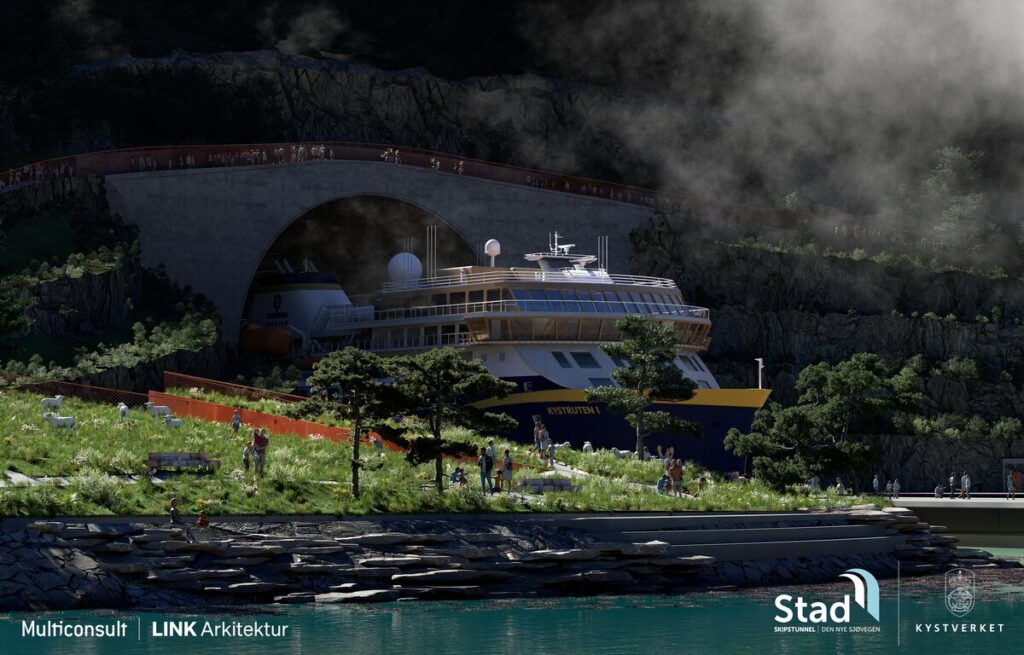
Ship emerges from the mountains. Credit: kystverket.no
Norway has finally given approval for construction of the world’s first maritime tunnel intended for massive ships. Project planners chose a route that cuts through a mountain on the Stadlandet peninsula. Clear benefits in safety and efficiency now await coastal shipping operations.
Vessels trading in western Norway currently face serious challenges from the Stadhavet Sea. Storms affect the area for about 100 days each year. Norwegian authorities class this stretch as one of the most dangerous on the planet. Those conditions create high costs, delays and real risks for passenger ferries, fishing vessels and cargo carriers. The new tunnel removes that exposure by providing an inland alternative between two fjords.
Safety improvements for maritime traffic
Crews will get a calmer and more controlled environment for the short crossing. Passenger services will become more reliable and dependable because operators no longer depend on favourable weather windows. Fishing boats and cargo ships will be able to avoid physical strain and damage from rough conditions on hulls and equipment. Everyone on board benefits from the protection the mountain provides against wind and waves, albeit in the darkness of a tunnel passing under a mountain range.
Economic benefits for fishing and exports
Operating costs fall when ships take the shorter protected route instead of longer detours or waiting periods. Salmon exporters in particular will see advantages from quicker and cheaper transport of their catch to markets. The fishing industry gains a practical tool supporting steadier production and delivery. Steady schedules help maintain Norway’s reputation for reliable seafood supply chains.
Completion date and what lies ahead
Construction has been now planned for 2027 and will run at least until 2032. Users of the future route can look forward to a straightforward ten-minute passage free of charge from that year onward. Regular services including cruise ships will have access to this new option along Norway’s coastline. Crews and visitors can look forward to trying the new route once it opens officially in 2032.
Tunnel size and crossing experience
The bored rock section will measure 1.7 kilometres, while the total length rises to 2.2 kilometres once water-based entrance structures are included. Internal dimensions provide generous clearance with a height of 50 metres and a width of 36 metres. Capacity covers ships up to 16,000 gross tonnes. Travel proceeds at speeds between five and eight knots throughout the journey.
Design accommodates regular traffic from fishing boats, ferries and cruise ships without issue
The Norwegian Coastal Administration is overseeing the entire project. This infrastructure represents an important step in modernising maritime connections in a region long affected by difficult sea conditions. Once finished, crews and passengers gain a welcome change from traditional exposed routes.
Follow Euro Weekly News on Google News
Get breaking news from Spain, travel updates, and expat stories directly on your Google News feed.
Follow on Google NewsSign up for personalised news
Subscribe to our Euro Weekly News alerts to get the latest stories into your inbox!
By signing up, you will create a Euro Weekly News account if you don't already have one. Review our Privacy Policy for more information about our privacy practices.





Adam Woodward
Adam is a writer who has lived in Spain for over 25 years. With a background in English teaching and a passion for music, food, and the arts, he brings a rich personal perspective to his work at Euro Weekly News. As a father of three with deep roots in Spanish life, Adam writes engaging stories that explore culture, lifestyle, and the everyday experiences that shape communities across Spain.
Comments