How driving an old banger in Spain could benefit you – Entry in low emission zones, cheaper insurance & some road tax exception
By Adam Woodward • Published: 07 Feb 2026 • 11:32 • 4 minutes read
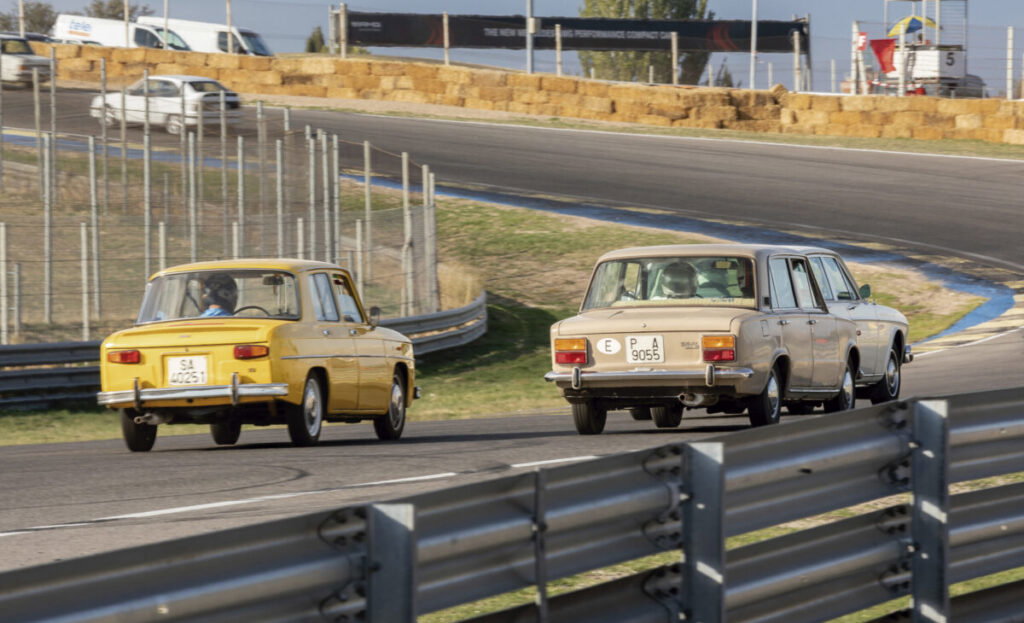
It's not old! It's a "classic". Credit: DGT
Many who retire to Spain choose to invest in an old banger of a car. There are a lot around. With second-hand Spanish cars maintaining their value more than in other neighbouring countries, less rain (usually) and therefore less rust, and neighbours who tend to “park by ear” when parking (I’ll stop when I hit the other car), it makes economic sense if you don’t have to travel long distances or commute regularly.
With almost half of all cars in Spain over 15 years old, many choose affordable, older motors to get round the country’s roads economically. Entry into low-emissions zones, lower insurance, less visits to the DGT, owning an old motor might be economically beneficial. Recent statistics reveal that sales of vehicles over 10 years old exceed new car sales by 40 per cent, a trend expats often take on board with rising used car prices, where models over 20 years old have seen a 15 per cent price jump due to high demand for “cheap but still running” options.
The preference for budget-friendly “old bangers” is particularly appealing for newcomers adjusting to life in Spain, but a great new law from the Dirección General de Tráfico (DGT) is now raising these “vintage rides” to “historic” status, offering plenty of perks.
One year after the implementation of Real Decreto 892/2024, registrations of historic vehicles have increased from 48,000 to over 175,000, and keeping old jalopies from the scrap heap.
The DGT’s revolutionary historic vehicle regulation
Introduced on October 1, 2024, the Real Decreto 892/2024 overhauled the outdated 1995 regulations, making it simpler and cheaper to classify vehicles over 30 years old as “historic”, or even, “classic” if you want it to be. Inspired by a trip to the UK where DGT Director General Pere Navarro observed millions of classics on the roads, the law was planned to encourage conservation and cultural appreciation of automobiles as 20th-century icons. The now easier process, often completable online for as little as €20 to €30.
Who qualifies? Turning your rust bucket into a “historic” vehicle
Any vehicle manufactured or first registered at least 30 years ago can potentially qualify, provided it’s no longer in production, remains in original condition without major modifications (custom job), and is well-maintained. Considering motors were much simpler 30 years ago, and many parts are still available, this could easily work out very affordable.
The DGT divides applicants into two groups for easier processing:
- Group A: Cars with valid Spanish registration and current ITV (technical inspection). Owners submit a simple responsible declaration confirming originality and only “occasional use”, retaining their original plates with an added “H” badge, for “historic”(we’ll come to that later).
- Group B: Vehicles without valid docs, imports, or those needing restoration. These require a technical report and ITV card before registration.
For expats with imported old cars, while import taxes remain high (up to one-third of value), the law encourages local preservation over export.
How the law can benefit owners of 30-year-old cars
For someone with an “old banger” gathering dust in the garage, registering it as historic under the new law unlocks a host of advantages, transforming it from a liability into a valuable asset.
- Road tax exemptions: Many councils offer full or partial exemptions from IVTM (vehicle tax), potentially saving hundreds of euros annually.
- Cheaper Insurance: Specialised policies for historic vehicles are often more affordable, though with possible mileage limits.
- Low registration costs: The process now costs around €20 to €80, down from €800 euros previously.
- Extended ITV Intervals: Inspections every 2 to 4 years depending on age, with exemptions for vehicles over 60 years or from emissions/noise tests.
- Access to low emission zones (ZBEs/LEZs): Historic vehicles can enter restricted urban areas, often up to 96 days per year, bypassing rules that fine more modern polluters.
How to obtain historic vehicle registration (“H” status) in Spain
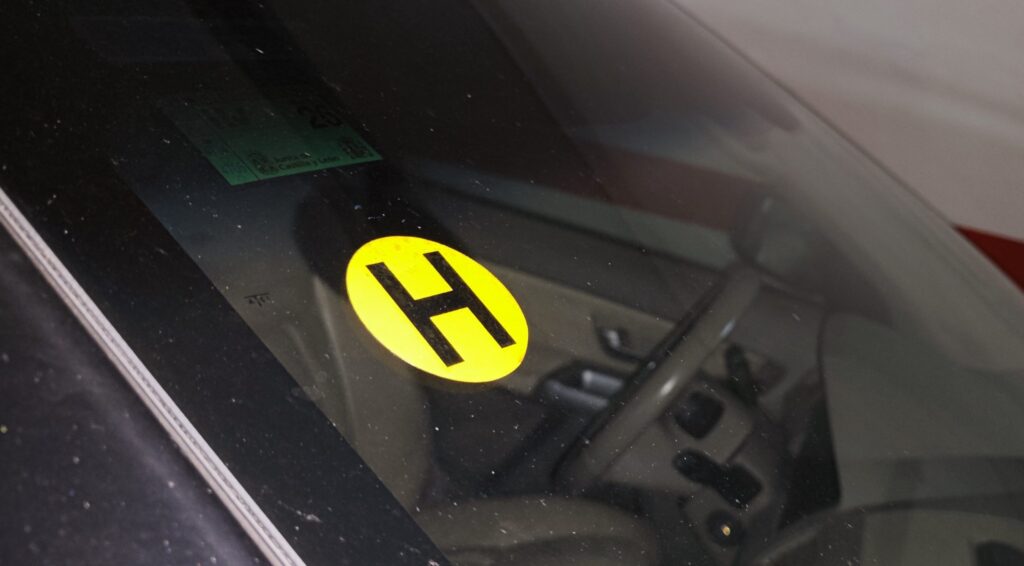
If you’re looking to register your vehicle as “histórico” (historic) in Spain under the Dirección General de Tráfico (DGT) regulations, this grants it special status, often marked by an “H” on the license plate or a visible badge. This applies to vehicles at least 30 years old that meet specific criteria, as outlined in Real Decreto 892/2024. The process varies based on whether your vehicle falls into Group A (simpler, for already-registered Spanish vehicles) or Group B (more involved, for imports or unregistered vehicles). Below is a step-by-step guide based on the official DGT procedures.
Credit: Pegatinasyvynilos.com
Step 1: Check eligibility
Your vehicle qualifies if it:
- Is at least 30 years old from its manufacture or registration date.
- Is no longer in production (specific model type).
- Is in original condition without major changes.
- Is well-maintained and conserved.
Determine your group:
- Group A: The. car is already registered in Spain with a Spanish number plate. (technical inspection).
- Group B: Imported vehicles, lacks valid documentation, or needs a new historic registering.
Step 2: Gather required documents
Common to both groups:
- Proof of identity (DNI, NIE, passport for individuals; company docs for legal entities).
- Vehicle ownership proof (e.g., purchase invoice or title).
- Payment receipt for the DGT fee.
For Group A (Change of service):
- Valid ITV card.
- Completed application form for change to historic service (available on DGT site).
- Responsible declaration – be honest, now.
For Group B (Full registry):
- Technical suitability report from an accredited historic vehicle service/lab (costs vary, around €100-300).
- ITV card issued after historic inspection.
- Four colour photos of the vehicle (front, rear, sides).
- Proof of no outstanding taxes, fines, or liens.
- If imported: Customs clearance and import taxes paid (can be high, up to 33 per cent of value).
Step 3: Complete the process
You can handle this online or in person. Online is faster and available for most cases since October 2024. Go to the DGT’s Sede Electrónica: sede.dgt.gob.es. Use a digital certificate, Cl@ve, or electronic ID for access. Get specialised insurance if needed (often cheaper but with usage limits). Affix the “H” badge visibly (e.g., on the windshield). Renew ITV periodically (extended intervals: every 2-4 years, with exemptions for emissions on older models).
So, when you see a lot of old junkers, rattle traps, and dilapidated old motors on Spanish roads, just think. There’s probably a good reason for it.
Follow Euro Weekly News on Google News
Get breaking news from Spain, travel updates, and expat stories directly on your Google News feed.
Follow on Google NewsSign up for personalised news
Subscribe to our Euro Weekly News alerts to get the latest stories into your inbox!
By signing up, you will create a Euro Weekly News account if you don't already have one. Review our Privacy Policy for more information about our privacy practices.




Adam Woodward
Adam is a writer who has lived in Spain for over 25 years. With a background in English teaching and a passion for music, food, and the arts, he brings a rich personal perspective to his work at Euro Weekly News. As a father of three with deep roots in Spanish life, Adam writes engaging stories that explore culture, lifestyle, and the everyday experiences that shape communities across Spain.
Comments