Spain transport shake up: New fuel rule could push up prices for businesses and shoppers
By Tara Russell • Published: 15 Apr 2026 • 13:36 • 3 minutes read
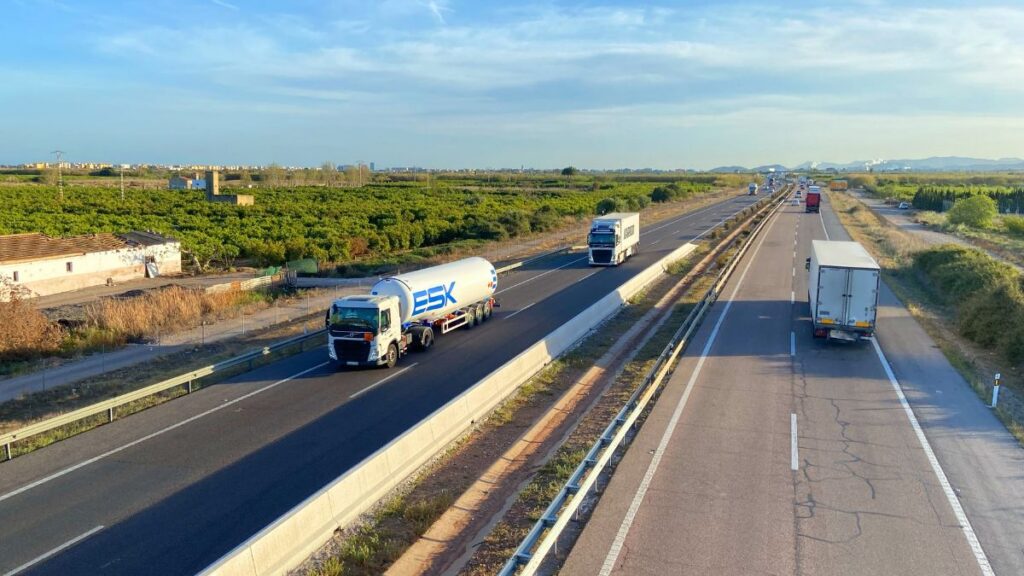
Fuel for thought: New mandatory price adjustments mean that as fuel costs fluctuate, the price of transporting goods across Spain will now change automatically. Credit: Maksim Safaniuk / Shutterstock.com
Spain has approved a new law that changes how transport prices are calculated, and it will affect businesses, suppliers, and potentially everyday prices. The rule applies across the country and forces transport companies to pass fuel cost changes directly to clients. It comes into force immediately, as fuel prices continue to rise due to international tensions.
The key rule that changes how transport prices work
The Spanish government has introduced Real Decreto-ley 9/2026, published on April 15, 2026.
The key change is simple.
If fuel prices go up or down, transport prices must now be adjusted automatically.
This applies when fuel prices change by 5 per cent or more between the moment a contract is agreed and when the transport actually takes place. The adjustment must be clearly shown on invoices and cannot be avoided by agreement between companies.
The rule applies to road freight across Spain. It also includes new financial support for rail and maritime transport companies.
Why businesses in places like Malaga may feel this quickly
In areas like Malaga, Marbella, and Fuengirola, where logistics and deliveries support tourism, construction, and retail, businesses are likely to see immediate changes in costs.
Transport companies can now increase prices more quickly when fuel rises. This means:
- Suppliers may raise delivery charges
- Construction and materials costs could increase
- Retail prices may gradually reflect higher transport costs
Local businesses that rely on regular deliveries, such as restaurants and shops, may notice updated invoices that now include a separate fuel adjustment line.
A simple real life example of how this affects you
Imagine a restaurant in Marbella that orders fresh food deliveries every week.
- The restaurant agrees a delivery price with a supplier on Monday.
- By Friday, fuel prices have increased by more than 5 per cent.
- Under the new rule, the transport company must increase the delivery price.
The next invoice the restaurant receives will now include:
- The original transport cost
- A separate fuel adjustment charge clearly listed
Before this law, the supplier might have absorbed the cost or delayed passing it on. Now it must be applied automatically and shown on the bill.
For the restaurant, this could mean higher weekly costs. Over time, that may lead to small price increases on menus.
The same applies to other everyday situations:
- A construction company in Malaga paying more for materials delivery
- A supermarket in Fuengirola seeing higher transport costs from suppliers
- An online order taking the same time to arrive but costing more to deliver behind the scenes
What business owners and customers should do next
If you run a business or rely on transport services:
- Review your current transport contracts
- Check invoices for new fuel adjustment charges
- Speak to suppliers about how price changes will be applied
- Plan for possible cost increases in the coming months
If you are a consumer, you do not need to take action, but you may see gradual price changes in goods.
How the new system compares to the old one
Before this change, fuel cost increases were not always passed on clearly or immediately. Some contracts delayed or avoided updates.
Now the system is stricter.
| Before | Now |
|---|---|
| Price updates could be delayed or unclear | Price updates are automatic |
| Fuel changes not always shown on invoices | Must be shown clearly on invoices |
| Contracts could avoid adjustments | Opting out is not allowed |
This is designed to protect transport companies from sudden cost increases, especially after recent fuel price spikes linked to global events.
The questions many readers are already asking
Does this affect existing contracts?
Yes. The rule applies even to ongoing contracts if fuel prices change.
Will this apply across Spain?
Yes. It is a national law and applies in all regions.
Will this increase prices for consumers?
Indirectly, yes. Higher transport costs can lead to higher prices for goods over time.
What to expect over the coming weeks
The law is already in force, and companies are expected to apply the new rules immediately.
Further guidance may be issued, but for now businesses across Spain, including in Alicante and Torrevieja, are adjusting contracts and invoices to reflect the new system.
Follow Euro Weekly News on Google News
Get breaking news from Spain, travel updates, and expat stories directly on your Google News feed.
Follow on Google NewsSign up for personalised news
Subscribe to our Euro Weekly News alerts to get the latest stories into your inbox!
By signing up, you will create a Euro Weekly News account if you don't already have one. Review our Privacy Policy for more information about our privacy practices.





Tara Russell
Tara is a writer and editorial team member at Euro Weekly News, specialising in news reporting and feature writing. Born and raised in Spain, she holds a B.A. in Applied Languages and Translation Studies. With a strong background in linguistics, communication, and cross-cultural storytelling, Tara previously worked as a language teacher before transitioning to journalism and media.
Comments