Daily driving vs long-term thinking: ICE and EV SUV choices explained
By Guest Writer • Published: 16 Apr 2026 • 13:51 • 3 minutes read
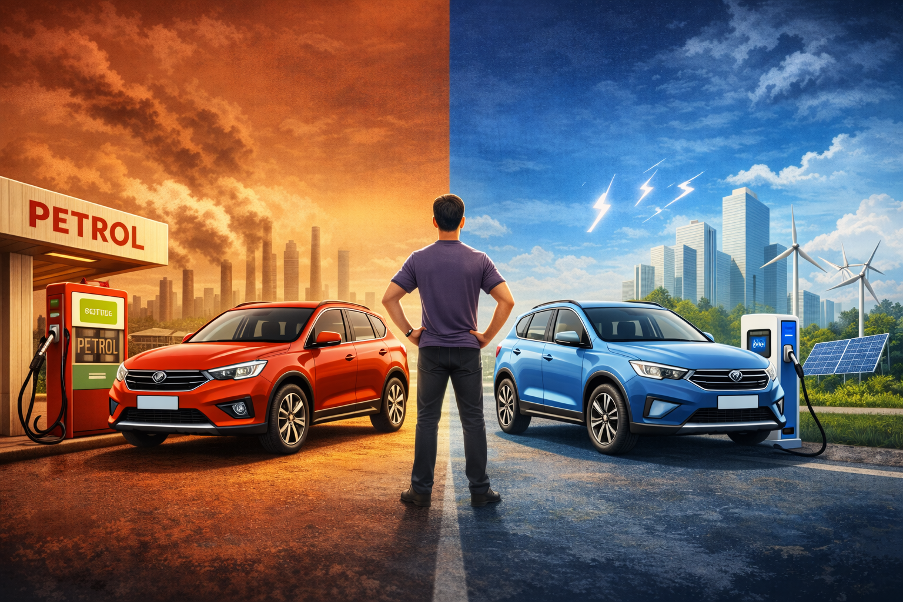
Image: AI
Choosing a car today is no longer just about features or price—it’s about perspective. Buyers are increasingly weighing daily driving convenience against long-term ownership benefits, especially when deciding between traditional ICE SUVs like the Kia Seltos and electric SUVs like the Mahindra XEV 9e.
This shift reflects a bigger change in how people think about mobility—not just for today, but for the years ahead.
The reality of daily driving
For most buyers, cars are primarily used for everyday tasks:
- Office commutes
- School runs
- Short city drives
- Occasional errands
In such scenarios, convenience matters more than anything else.
ICE SUVs have long been optimised for this kind of usage. Vehicles like the Kia Seltos offer:
- Quick refuelling within minutes
- Consistent performance across conditions
- No dependency on charging infrastructure
This makes them highly practical for buyers who prioritise ease and flexibility in their daily routines.
Where EVs fit in daily use
Interestingly, EVs can also be very effective for daily driving—sometimes even more so.
Electric SUVs like the Mahindra XEV 9e offer:
- Smooth, silent driving experience
- Instant acceleration in city traffic
- Lower running costs per kilometre
For urban users with predictable driving patterns, EVs can actually feel more convenient—especially when home charging is available.
However, this convenience depends heavily on access to charging infrastructure.
The long-term ownership perspective
While daily usability is important, many buyers are now thinking beyond immediate needs.
Long-term considerations include:
- Running costs over several years
- Maintenance requirements
- Future resale value
- Changing regulations and fuel trends
EVs are often seen as more future-ready in this context.
The Mahindra XEV 9e, for example, is built on a dedicated electric platform and designed for long-term efficiency and adaptability, including software updates and evolving features.
This makes it appealing to buyers who plan to keep their vehicles for a longer duration.
Cost: Immediate vs over time
Cost plays a central role in this decision.
ICE SUVs:
- Lower upfront cost
- Higher fuel expenses over time
EV SUVs:
- Higher initial investment
- Lower running and maintenance costs
For buyers focused on daily affordability, ICE vehicles may seem more practical. But for those looking at total cost over 5–7 years, EVs can offer better value.
Flexibility vs planning
Another key difference lies in how these vehicles are used.
ICE cars offer:
- Complete flexibility
- No need to plan refuelling stops
EVs require:
- Some level of planning
- Awareness of charging availability
Even though EVs like the XEV 9e offer a claimed range of over 500 km in real-world conditions, charging still takes longer than refuelling.
This makes ICE vehicles more suitable for spontaneous or long-distance travel.
Driving experience differences
Daily driving comfort also varies between ICE and EV vehicles.
ICE SUVs like the Seltos provide:
- Familiar engine response
- Gear-based driving feel
- Balanced performance for varied conditions
EV SUVs like the XEV 9e offer:
- Instant torque
- Quiet cabin experience
- Smooth and linear acceleration
The choice often depends on what kind of driving experience the buyer prefers.
Technology and future readiness
Technology is another area where long-term thinking comes into play.
EVs are typically more software-driven, with features such as:
- Over-the-air updates
- AI-based systems
- Advanced digital interfaces
The XEV 9e’s high-performance computing system and connected features highlight how EVs are evolving into digital platforms on wheels.
ICE vehicles, while feature-rich, are generally less adaptable over time.
Lifestyle-based decisions
Ultimately, the decision depends heavily on lifestyle.
Choose an ICE SUV if:
- You frequently travel long distances
- Charging access is limited
- You prefer flexibility without planning
Choose an EV SUV if:
- Your driving is mostly within the city
- You have access to home or workplace charging
- You are focused on long-term savings and sustainability
Role of digital platforms in buyer decisions
With so many factors to evaluate, online car-buying platforms like ACKO Drive help buyers understand both daily usability and long-term ownership implications.
By offering detailed insights into features, costs, and real-world usage, such platforms make it easier to choose the right vehicle based on individual needs.
Final thoughts
The decision between ICE and EV SUVs is no longer straightforward.
It is a balance between:
- What works best today
- What makes sense for tomorrow
Cars like the Kia Seltos excel in immediate practicality and ease of use. Meanwhile, vehicles like the Mahindra XEV 9e represent a shift towards long-term efficiency and future-ready mobility.
For buyers, the right choice depends on how they prioritise their present needs against their long-term vision.
Sign up for personalised news
Subscribe to our Euro Weekly News alerts to get the latest stories into your inbox!
By signing up, you will create a Euro Weekly News account if you don't already have one. Review our Privacy Policy for more information about our privacy practices.





Guest Writer
Comments