Spain issues urgent warning after fake Guardia Civil emails target bank details
By Farah Mokrani • Published: 19 Apr 2026 • 13:23 • 3 minutes read

Spain warns residents over fake Guardia Civil phishing emails Credit : PeopleImages, Shutterstock
A new email scam is doing the rounds in Spain, and it is catching attention for one simple reason: it uses the name of the Guardia Civil to frighten people into responding.
Spain’s National Cybersecurity Institute, INCIBE, says fraudsters are sending messages that pretend to come from the Guardia Civil and Europol. The emails claim the recipient is linked to criminal activity or under investigation, then push them to reply, open documents or share private information.
For anyone who sees police logos or legal language in their inbox, the reaction can be immediate. Many people panic first and question it later. That is exactly why this type of scam can work.
Why these emails feel believable
The people behind these scams understand something important. Most victims are not tricked because they are careless. They are tricked because the message arrives at the right moment and looks serious enough to feel real.
Some of the emails reportedly include official sounding titles, formal wording and attached PDF documents. Others use names linked to cybercrime units or Europol to add more pressure.
At first glance, it can look like something genuine.
That is often all a scammer needs. If a person opens the attachment or replies in fear, the conversation has already started.
Many people still expect scams to be badly written or obvious. That is no longer always true. Some are polished, tidy and convincing enough to make even cautious users stop and think.
The trick is fear, not technology
Unlike fake parcel messages or refund scams, this one does not offer a reward. It offers a threat.
The email may suggest your phone has been involved in cybercrime, that illegal content has been linked to your connection, or that urgent action must be taken to avoid prosecution.
That kind of wording is designed to create stress.
When people feel accused or frightened, they often rush. They click quickly, reply too fast or hand over details they would normally protect.
It is less about hacking a device and more about pushing the right emotional buttons.
That is why cybersecurity experts often say the weakest point is not the computer. It is the moment a human feels pressured.
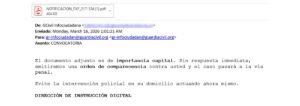
Credit : INCIBE
What real authorities usually do
If you genuinely had a serious legal issue, random emails from strange addresses would not normally be the starting point.
Official contact from police or public bodies follows recognised procedures. It does not usually arrive through a generic inbox asking for secrecy, urgent payment or personal banking details.
That alone should make people pause.
If you receive a message claiming to be from the Guardia Civil, do not use the links or phone numbers inside it. Go directly to official websites or trusted public channels and check there instead.
Scammers want to control the path you follow. The safest move is stepping off that path.
What to do if one arrives
The best first response is calm, not speed.
Do not reply immediately. Do not open attachments just because they look formal. Do not send documents, passwords or card details.
Delete the message or report it through official cybersecurity services.
If you already clicked something or replied, move quickly after that. Change important passwords, especially email passwords, and contact your bank if money or financial details may be involved.
Saving screenshots can also help if you need to make a report later.
Why people should not feel embarrassed
Many victims stay silent because they feel foolish afterwards.
They should not.
These scams are built by people who study behaviour. They know how to create urgency, copy authority and catch people during busy or stressful moments.
Teachers, business owners, retirees, young professionals, anyone can be targeted.
Being cautious does not mean being paranoid. It simply means accepting that fraud has become more sophisticated.
The easiest rule to remember
If an email scares you and demands action straight away, slow everything down. Read it again. Check the sender properly. Verify it somewhere official.
Most fake messages fall apart the moment they are given an extra minute of attention.
Spain’s latest warning is a useful reminder that criminals often do not need to break into your accounts. Sometimes they just need you to trust the wrong email.
Follow Euro Weekly News on Google News
Get breaking news from Spain, travel updates, and expat stories directly on your Google News feed.
Follow on Google NewsSign up for personalised news
Subscribe to our Euro Weekly News alerts to get the latest stories into your inbox!
By signing up, you will create a Euro Weekly News account if you don't already have one. Review our Privacy Policy for more information about our privacy practices.




Farah Mokrani
Farah is a journalist and content writer with over a decade of experience in both digital and print media. Originally from Tunisia and now based in Spain, she has covered current affairs, investigative reports, and long-form features for a range of international publications. At Euro Weekly News, Farah brings a global perspective to her reporting, contributing news and analysis informed by her editorial background and passion for clear, accurate storytelling.
Comments