Spain’s Prime Minister declares “the end of the right” at Barcelona political summit
By Molly Grace • Published: 19 Apr 2026 • 0:49 • 3 minutes read
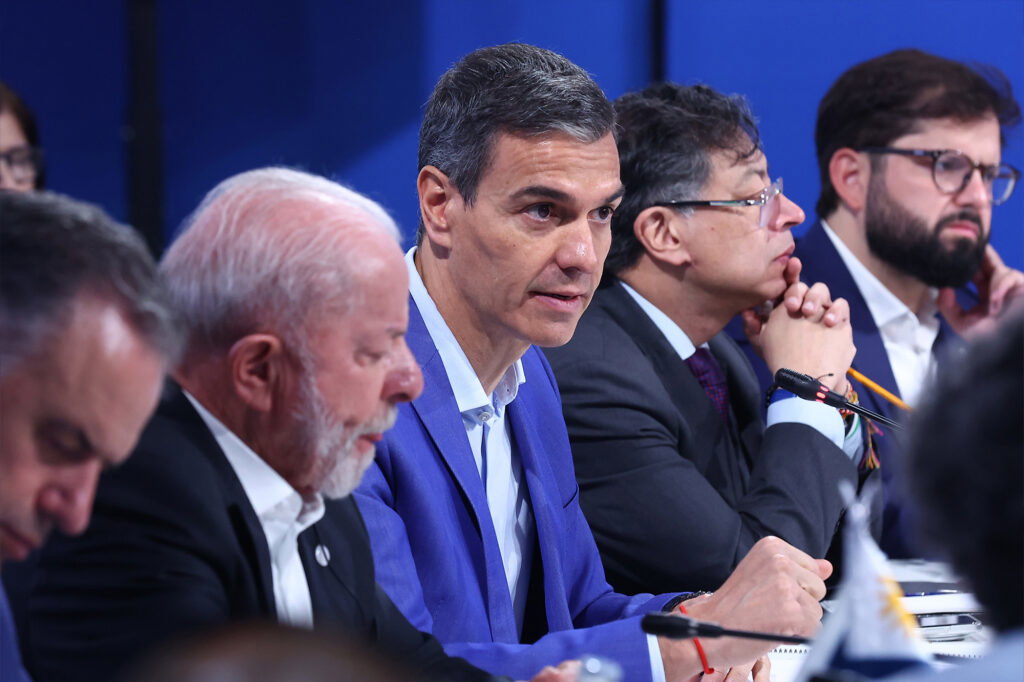
A progressive political summit held in Barcelona this Saturday, April 19, brought together political leaders, policymakers and representatives from Spain and several other countries to discuss shared approaches to economic policy, social protection and wider governance challenges. The event, known as the Global Progressive Mobilisation, took place at a time of ongoing political debate across Europe, with discussions focusing on how governments can respond to economic pressure, social inequality, climate policy and institutional reform.
The meeting formed part of a wider international network of progressive and social democratic forums aimed at strengthening coordination between like-minded parties on policy direction and political strategy.
Criticism of opposition and political messaging
Sánchez used part of his speech to criticise right-wing political parties, arguing that they lacked coherent long-term policy programmes and instead relied on division in public debate. He said that these political forces were increasingly disconnected from public priorities and claimed that their political influence was weakening in comparison with progressive movements across Europe.
He also addressed how political identities have been framed in public debate in recent years, saying that progressive ideas had often been reduced to negative labels or used as political insults. Sánchez said this situation was changing and argued that progressive movements should reclaim confidence in their political positions and defend them openly in public discourse.
He told delegates that political debate should not be shaped by stigma or fear of ideological labelling, but by open defence of policy choices.
Migration policy referenced in speech
Sánchez also referred to migration policy during his address, highlighting Spain’s recent approach to regularising undocumented migrants. He said that Spain should not be associated with xenophobia and described migration as part of the country’s social and historical development. He referred to government estimates that up to 500,000 migrants could be affected by the regularisation process approved by the Council of Ministers, which is currently being implemented.
He argued that migration policy should be managed through legal and structured frameworks that support integration into the labour market and ensure social stability. The remarks were delivered as part of a broader argument about inclusion and economic policy within progressive governance models.
International themes and policy discussions
Sánchez placed his remarks within a wider international context, referring to global instability and the need for cooperation between governments. He positioned progressive administrations as being committed to multilateral approaches in addressing shared challenges, including economic regulation, social policy and institutional governance.
The Barcelona summit included participation from international political figures from Europe and other regions, reflecting its role as a forum for coordination between progressive and social democratic movements.
Across the summit, delegates took part in structured discussions on economic inequality, labour conditions, housing affordability, climate policy and institutional reform. These issues were examined alongside broader concerns about public services, democratic governance and responses to economic pressure.
Sánchez frames speech around political shift
In his closing remarks, Sánchez said that progressive movements should interpret current global developments as evidence of a broader political shift. He said that “the time of the right has come to an end” and added that progressive governments would “bring a new era of progress”, framing his comments as part of long-term political change rather than a single electoral cycle or national context. He made these remarks in front of more than 5,000 attendees, including delegates from progressive parties and organisations taking part in the summit.
He told attendees that opposition forces were not strengthening but instead reacting to what he described as longer-term changes in public attitudes and political expectations. According to Sánchez, right-wing and far-right political movements were becoming more vocal because they were aware of declining influence, rather than increasing support. He also argued that progressive politics should focus on governance, long-term policy planning and institutional stability, rather than short-term political messaging.
Conclusion of the Barcelona summit
The summit concluded following Sánchez’s closing speech, which summarised the political themes of the event and marked the end of the gathering. Organisers described the meeting as part of ongoing coordination between progressive political movements, with further discussions expected in future international forums.
The Barcelona summit includes participation from progressive political movements in different countries. Sánchez’s remarks are expected to be referenced in political debate in Spain and internationally.
Sign up for personalised news
Subscribe to our Euro Weekly News alerts to get the latest stories into your inbox!
By signing up, you will create a Euro Weekly News account if you don't already have one. Review our Privacy Policy for more information about our privacy practices.

Molly Grace
Molly is a British journalist and author who has lived in Spain for over 25 years. With a background in animal welfare, equestrian science, and veterinary nursing, she brings curiosity, humour, and a sharp investigative eye to her work. At Euro Weekly News, Molly explores the intersections of nature, culture, and community - drawing on her deep local knowledge and passion for stories that reflect life in Spain from the ground up.
Comments