Scientists warn rare solar storm could disrupt power, GPS and daily life worldwide
By Farah Mokrani • Published: 25 Apr 2026 • 20:48 • 4 minutes read
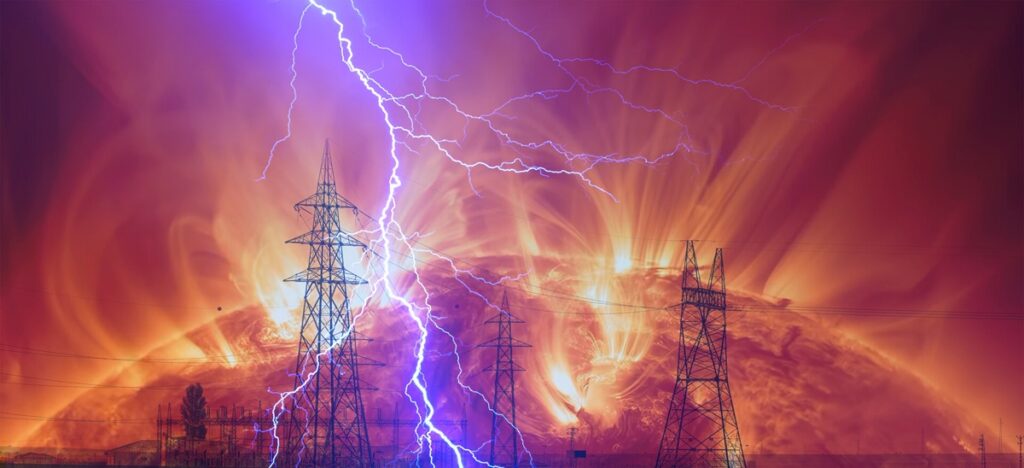
Scientists warn a rare solar storm could threaten power grids, satellites and GPS systems Credit : muratart, Shutterstock
A severe solar storm powerful enough to disrupt electricity grids, satellites, navigation systems and communications could strike again, according to renewed warnings from scientists studying space weather. These major events are rare, but experts say they happen on a roughly century scale and modern society is now far more exposed than ever before.
That is the real concern.
A storm of this kind would not send people back to the nineteenth century overnight, but it could interrupt many of the systems people now depend on every day, from phone networks and banking to flights, deliveries and power supplies.
The more connected daily life becomes, the more vulnerable it can be when space weather turns hostile.
Why scientists are watching the Sun closely
A technical report discussed in the UK in 2026 looked at what a once in a century scale solar event could mean for infrastructure. While the study focused on Britain, similar risks apply to countries at comparable latitudes and to highly connected economies around the world.
Solar activity rises and falls in cycles lasting around eleven years.
During more active periods, dark sunspots appear on the Sun’s surface. These areas are linked to intense magnetic energy that can suddenly release in the form of solar flares or huge clouds of charged plasma known as coronal mass ejections.
When those clouds head towards Earth, problems can begin.
They may take several days to arrive, but once they interact with Earth’s magnetic field, they can trigger geomagnetic storms strong enough to affect technology on the ground and in orbit.
The Sun is around 150 million kilometres away, yet what happens there can still reach straight into modern life.
What could actually be affected
The biggest worry is often the power grid. Strong geomagnetic storms can create electrical currents inside long transmission lines. That extra current can overload equipment and, in serious cases, lead to blackouts across regions.
Electricity is only part of the story.
Satellites are also exposed. Charged particles can damage onboard electronics, interfere with sensors and shorten the lifespan of solar panels. If enough satellites are affected, services many people barely think about could start to fail and that includes GPS.
Navigation tools used by drivers, ships, aircraft, farmers and logistics firms depend heavily on satellite signals. If those signals become unreliable, delays and costly disruption can follow quickly.
Radio communications can also suffer, especially long distance signals used in aviation and maritime sectors.
Even mobile phone services and internet systems may feel indirect knock on effects if networks relying on timing signals or power supplies are hit.
This is why solar storms are taken more seriously than many people realise. They do not need to damage every device in your home to create widespread problems. They only need to disrupt the systems everything else depends on.
We have already seen warning signs
Extreme space weather is not just theory. In May 2024, a major solar event produced strong auroras across parts of Europe and North America. It also caused operational issues in some sectors and renewed attention on how exposed modern systems can be.
Reports at the time highlighted problems linked to satellite based guidance used in parts of US agriculture. That may sound niche, but it shows how specialised technology can suddenly become a weak point.
Many industries now run on precision systems that rely on stable signals, accurate timing and constant connectivity.
When those foundations wobble, losses can appear in unexpected places.
Could it really be that serious
The dramatic phrase often used is that a huge solar storm could send society backwards. That is an exaggeration, but the underlying point is fair.
A prolonged outage affecting electricity, transport systems, payments and communications would feel severe in a world built on instant access.
Imagine cities dealing with power cuts, airports facing delays, card payments failing in some areas, navigation systems under strain and supply chains slowing down.
Modern economies are efficient, but efficiency can come with fragility. The question is not whether civilisation ends. It is how disruptive several days or weeks of technological stress could become.
Can anything be done
The good news is that monitoring has improved sharply. Space agencies and observatories track the Sun constantly using satellites and ground based instruments. NASA’s Solar Dynamics Observatory is one example, providing continuous imagery and data.
Scientists can often detect eruptions and estimate whether material is heading towards Earth.
Warnings may give operators hours or even days to prepare.
That time can be used to protect satellites, adjust flight routes, reduce strain on power networks and activate contingency plans.
Forecasting is still not perfect. Predicting the exact strength and direction of solar material remains difficult. But it is far better than it once was.
Why this matters now
Society has never relied more heavily on technology than it does today. Smartphones, maps, banking apps, deliveries, cloud services and transport systems all sit on layers of infrastructure many people never see.
That means a natural event once viewed mainly as a scientific curiosity now carries real economic and social weight. The Sun is not becoming malicious. It is behaving as stars do.
What has changed is us. We built a world where one storm in space could be felt in homes, businesses and airports here on Earth.
Sign up for personalised news
Subscribe to our Euro Weekly News alerts to get the latest stories into your inbox!
By signing up, you will create a Euro Weekly News account if you don't already have one. Review our Privacy Policy for more information about our privacy practices.




Farah Mokrani
Farah is a journalist and content writer with over a decade of experience in both digital and print media. Originally from Tunisia and now based in Spain, she has covered current affairs, investigative reports, and long-form features for a range of international publications. At Euro Weekly News, Farah brings a global perspective to her reporting, contributing news and analysis informed by her editorial background and passion for clear, accurate storytelling.
Comments