Egypt holiday snake show horror: German tourist dies after cobra bite
By Molly Grace • Updated: 27 Apr 2026 • 23:44 • 3 minutes read
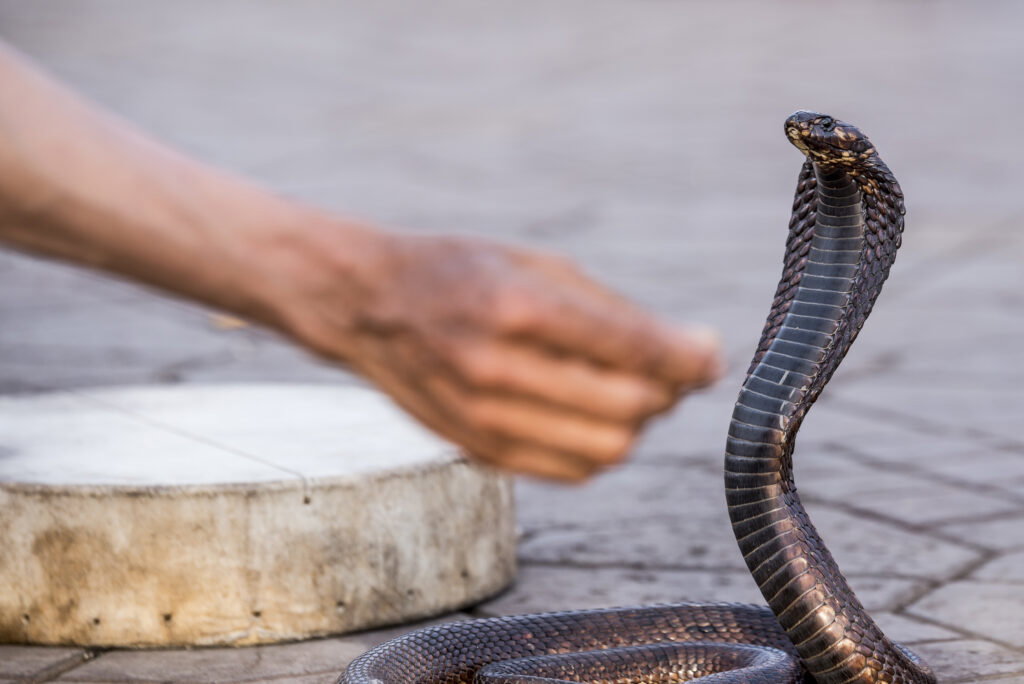
Cobras are among the world’s best-known venomous snakes. Photo credit: Alberto Loyo/Shutterstock
A German tourist has died after being bitten by a snake during a hotel performance in the Egyptian resort of Hurghada, in an incident now under investigation by authorities in Germany. The 57-year-old man had been holidaying in Egypt with family members when he attended an entertainment show featuring two snakes. According to investigators, one of them, believed to be an Egyptian cobra bit him after it was allowed to crawl inside his clothing as part of the act.
The victim reportedly showed immediate signs of envenomation and had to be resuscitated at the scene before being taken to hospital. He later died after arrival. German prosecutors have opened an investigation and toxicology results are awaited. When contacted, Egyptian authorities said they were not aware of the incident at the time of the report.
What is snake charming?
Snake charming is a traditional street and tourist performance found in parts of North Africa, the Middle East and South Asia. Despite the common image of snakes being “hypnotised” by music, snakes do not respond to melodies in the same way humans do. Instead, they react to movement, posture and vibrations.
When a charmer moves an instrument in front of a cobra, the snake often follows the movement while maintaining a defensive stance. What appears to be dancing is usually a response to a perceived threat rather than a trained routine.
Why this case is unusual
Fatal snakebite incidents involving organised tourist performances are rarely reported internationally, which is one reason this case has attracted attention. The Egyptian cobra (Naja haje) is the most venomous snakes in North Africa, but outcomes after a bite can depend on several factors, amount of venom injected, location of the bite, speed of treatment and the victim’s overall health.
Bites to the leg can still be medically serious because venom can spread through tissue and circulation. Rapid emergency treatment is essential, particularly if symptoms develop quickly.
Defanged snakes and altered fangs
In some tourist shows and illegal wildlife performances around the world, snakes have historically had their fangs removed, damaged or otherwise altered in an attempt to reduce the risk of bites. In other cases, venom glands may be injured or the snake may be handled in ways that compromise its welfare.
However, these practices are controversial, harmful to the animal and do not guarantee safety. Snakes can still bite with remaining teeth, infections may occur, and some procedures are temporary or incomplete. A performer may also use animals that have not been altered at all. There is currently no verified public information confirming whether the snake involved in the Hurghada incident had undergone any such procedure. That question may form part of any official investigation.
Welfare and safety concerns
Wildlife experts and animal welfare organisations have long criticised performances involving close public contact with venomous animals. Concerns usually focus on two issues: risk to people and treatment of the animals.
Repeated handling, bright lights, noise, transport and crowd interaction can place reptiles under stress. From a public safety perspective, even experienced handlers face risk when using venomous species in uncontrolled environments such as hotel entertainment areas.
Tourism and regulation
Hurghada is one of Egypt’s best-known Red Sea holiday destinations, attracting large numbers of international visitors each year. Resort entertainment often includes cultural performances and excursions, but standards and oversight can vary depending on venue and operator.
This incident is likely to renew questions about how live animal acts are supervised, what safety measures are required, and whether tourists are given enough protection when invited to participate.
A wider reminder
Although the circumstances are unusual, the case underlines a broader point: wild animals, especially venomous species, remain unpredictable even in staged settings. Behaviour that appears calm can change instantly if an animal feels threatened, stressed or trapped.
For travellers, the safest approach is to avoid direct contact with wild animals used in entertainment displays, particularly where venomous species are involved. Watching from a distance is one thing; becoming part of the act carries very different risks.
Follow Euro Weekly News on Google News
Get breaking news from Spain, travel updates, and expat stories directly on your Google News feed.
Follow on Google NewsSign up for personalised news
Subscribe to our Euro Weekly News alerts to get the latest stories into your inbox!
By signing up, you will create a Euro Weekly News account if you don't already have one. Review our Privacy Policy for more information about our privacy practices.


Molly Grace
Molly is a British journalist and author who has lived in Spain for over 25 years. With a background in animal welfare, equestrian science, and veterinary nursing, she brings curiosity, humour, and a sharp investigative eye to her work. At Euro Weekly News, Molly explores the intersections of nature, culture, and community - drawing on her deep local knowledge and passion for stories that reflect life in Spain from the ground up.
Comments