Goodbye PIN: fingerprint payments set to change how Spain pays
By Farah Mokrani • Published: 03 May 2026 • 18:31 • 4 minutes read
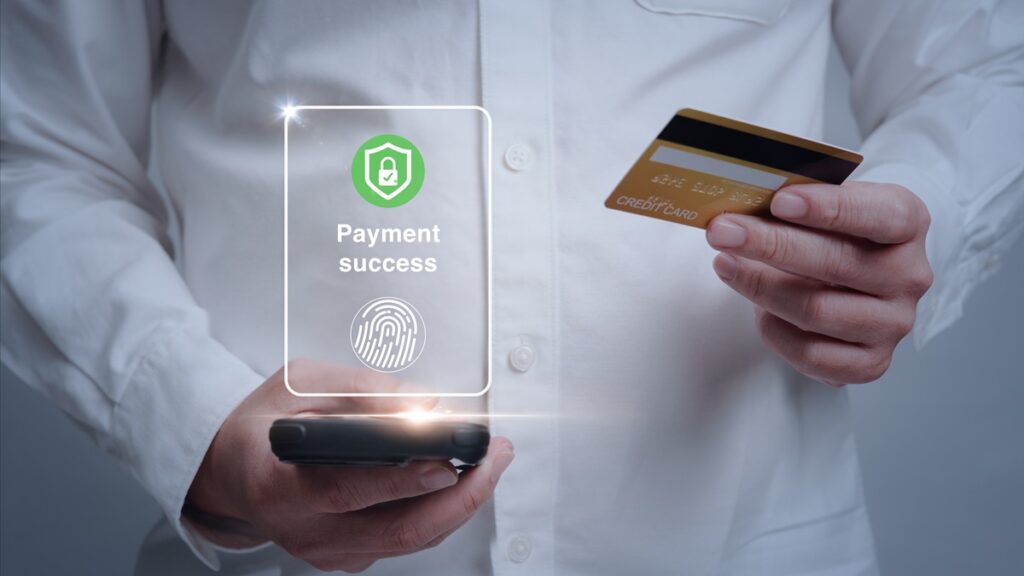
Fingerprint payments could soon replace PIN codes on bank cards in Spain Credit : TimmyTimTim, Shutterstock
If you are used to typing a four digit PIN every time you pay by card, that habit may soon start to fade. Banks across Europe, including Spain, are preparing for a shift that could change how payments work in everyday life. Biometric bank cards that use your fingerprint instead of a PIN are moving closer to reality, with wider rollout expected from late 2026 into 2027.
For consumers, the idea is simple. Instead of remembering a code, you confirm a payment with something that is uniquely yours. And for banks, the goal is just as clear. Reduce fraud and make payments smoother at the same time.
This change will not happen overnight, but it is already underway.
How biometric cards will work in everyday payments
The concept behind these new cards is straightforward.
Future credit and debit cards will include a small fingerprint sensor built directly into the card itself. When you make a payment, you place your finger on that sensor while holding the card near the terminal, just as you would with contactless.
The transaction is then authorised using your fingerprint rather than a PIN.
For the user, the experience does not change much. You still tap your card in the same way. The difference is that you no longer need to look down and enter a code on the keypad.
It also means that payments above current contactless limits can be approved without typing a PIN, which could make the process quicker in shops.
This technology is already familiar in other areas. Many people unlock their phones or approve mobile payments using fingerprint or facial recognition. The idea now is to bring that same logic to physical cards.
Why banks want to move away from the PIN
The four digit PIN has been around for decades. It was once a major step forward in payment security. But over time, its limits have become clear.
Codes can be guessed, observed or stolen. Techniques such as skimming or hidden cameras at payment terminals have made it easier for criminals to capture card details and PINs. Biometric systems aim to reduce that risk.
A fingerprint cannot be memorised, shared or easily copied. That makes it harder to use stolen card details for fraudulent payments.
For banks, this is one of the main reasons behind the shift.
There is also a practical benefit. Fewer steps at the payment terminal can make transactions faster and more convenient, especially in busy environments.
Where the rollout stands in Spain and Europe
Biometric cards are not a distant concept. They are already being tested. Some banks in Europe have started early trials. In Italy, for example, institutions such as Banca Sella and Intesa Sanpaolo, working with Mastercard, have tested cards with built in fingerprint sensors.
Large payment networks are also involved. Both Visa and Mastercard have been running pilot programmes in several European countries, including France, Italy and the United Kingdom. These trials are designed to check how the technology performs in real situations.
In Spain, the transition has started more quietly.
There are no mass issued biometric cards yet, but testing and preparation are already underway. According to industry expectations, wider availability in Spain is likely between 2026 and 2027, when banks begin issuing these cards more broadly.
Consumer interest is not seen as a barrier. Studies suggest that a large share of users are comfortable with biometric authentication, especially as it is already widely used on smartphones.
What happens to your data and privacy
One of the first questions people ask is about privacy. The idea of storing a fingerprint on a bank card can sound sensitive. But the system has been designed to limit risks.
The fingerprint is stored directly on the chip inside the card, not on external servers. That means it is not shared with the bank, the shop or any third party during a transaction.
When you place your finger on the sensor, the card checks the fingerprint locally. It simply confirms whether it matches the one stored on the chip.
This approach is intended to reduce the risk of data breaches. Even if a bank’s systems were compromised, the biometric data would not be accessible.
In Spain, data protection rules are strict, and any rollout will need to comply with the requirements set by the national data protection authority.
Will the PIN disappear completely
For now, the PIN is not going away entirely. Biometric cards are expected to work alongside existing systems rather than replace them immediately. Some transactions may still require a PIN, especially in situations where the sensor cannot be used.
Over time, however, the role of the PIN could become less important.
As more people adopt biometric authentication and become comfortable with it, the need to rely on codes may decrease.
This will depend on how quickly banks roll out the technology and how widely it is accepted by retailers.
A change that could reshape everyday payments
For most people, the shift will feel gradual.
There will not be a single moment when the PIN disappears. Instead, it will be replaced step by step as new cards are issued and older ones are phased out.
At first, biometric cards may be seen as a novelty. But if they prove reliable and easy to use, they could quickly become the standard.
What matters most for users is how it fits into daily life. If payments become faster and feel more secure, the change is likely to be welcomed. And for anyone who has ever forgotten their PIN at the wrong moment, the idea of simply using a fingerprint may not feel like such a big leap after all.
Follow Euro Weekly News on Google News
Get breaking news from Spain, travel updates, and expat stories directly on your Google News feed.
Follow on Google NewsSign up for personalised news
Subscribe to our Euro Weekly News alerts to get the latest stories into your inbox!
By signing up, you will create a Euro Weekly News account if you don't already have one. Review our Privacy Policy for more information about our privacy practices.





Farah Mokrani
Farah is a journalist and content writer with over a decade of experience in both digital and print media. Originally from Tunisia and now based in Spain, she has covered current affairs, investigative reports, and long-form features for a range of international publications. At Euro Weekly News, Farah brings a global perspective to her reporting, contributing news and analysis informed by her editorial background and passion for clear, accurate storytelling.
Comments
Mark
04 May 2026 • 10:26For the moment and the unseable future cash will decide how i pay……
Brian
04 May 2026 • 14:34With all the “battle scars” I get on my hands from gardening and other physical jobs, my fingerprint could fail very frequently!
Francois
04 May 2026 • 15:58For one most machines can’t read my very “flat” finger prints.
For two the idea of placing my dirty finger on a dirty screen seems retrograde.
I just approach my phone (or my watch) to the terminal. Sounds much better and cleaner.
Sanda Rowlands
05 May 2026 • 06:54Nothing to do with making it safer. It will be more of a hindrance if the truth is known, this is just another loss of freedom, it will tell the government which person used the ATM. My husband and I use each others ATM cards as I am sure many couples do. So that will stop. Banks are not known to do anything helpful to their customers and this is just more loss of Freedom
Lee
05 May 2026 • 09:59exactly
Lee
05 May 2026 • 09:59finger prints can be copied
Cati
05 May 2026 • 14:08Another issue is as we age our fingerprints become harder to scan and read. Simple biology means skin becomes thinner, laxer and so the clarity degrades, meaning biometric scanners often fail to capture a clear image. With an aging population in Europe, this has got to be taken into consideration, because rather than making things quicker and easier, it will inevitably cause more problems than it solves. Aging causes the same kind of issues with iris scans too.
Eric
05 May 2026 • 19:17Bad idea, Anybody could forcefully put your finger on a phone.Also my wife’s fingerprints is unrecognisable which I suppose is a good thing for me!!
Jo Robinson
06 May 2026 • 09:15Ugh! Imagine the germs you will pick up after using the fingerprint scanner! When I applied for my TIE card, the scanner couldn’t pick up my finger print.
Old age and hard working hands change the fingerprints 😏
Comments are closed.