Guardia Civil seeks families in Spain to foster future police dogs
By Molly Grace • Published: 04 May 2026 • 16:39 • 3 minutes read
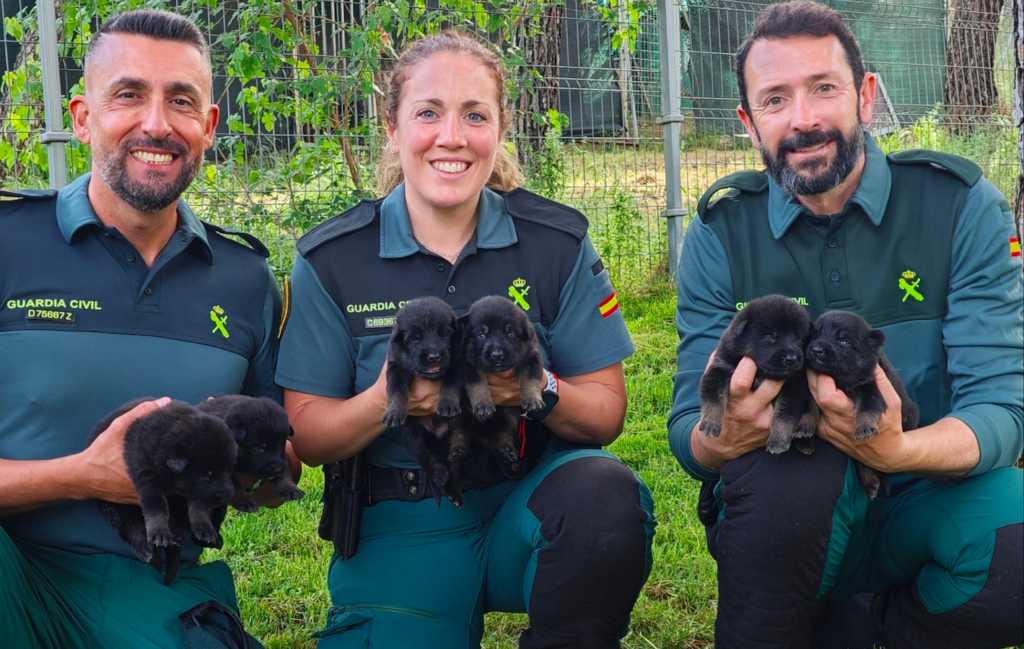
The fostering scheme operates through the Guardia Civil’s canine programme. Photo credit: Guardia Civil.es
Residents across Spain are being invited to take part in a fostering scheme run by the Guardia Civil. The programme places young puppies into private homes for around one year before they begin specialist training for operational duties.
The dogs involved are future working animals for tasks such as detection work, search and rescue, and other police functions. They spend their early months in domestic environments so they become accustomed to everyday surroundings, household routines and interaction with people outside a training facility.
What foster families are expected to do
Selected households receive puppies at approximately two months of age and care for them until they are around twelve months old. During this period, the dogs live as part of the family.
Foster carers provide feeding, exercise and general supervision. They also introduce the puppy to normal daily environments such as streets, public transport areas and social settings, so the dog becomes familiar with situations it will later encounter during service work.
The role does not involve formal training of working tasks. Instruction remains the responsibility of Guardia Civil handlers. Families support development by ensuring the animal is exposed to varied but controlled experiences and by reinforcing basic behaviour such as calmness in public spaces.
The Guardia Civil keeps legal ownership of the dog throughout the placement. It also covers veterinary care, vaccinations, food and any medical attention required during the fostering period. Handlers maintain contact with families to monitor progress and provide guidance where necessary.
Conditions for participation
Applicants must be able to provide a stable home environment and sufficient time for daily care. Puppies cannot be left alone for long periods, as consistency is required during early development.
Homes are expected to have appropriate space for a growing dog and a routine that allows regular exercise and supervision. The organisation may assess whether existing pets in the household could affect the puppy’s development, and some placements may not be suitable where other animals are present.
Geographical proximity is also taken into account. Preference is given to households within reach of Madrid, where coordination with the canine service is based and where follow-up visits are carried out.
Application process
The fostering scheme operates through the Guardia Civil’s canine programme known as “Programa Fénix”.
Families have until the May 15 to apply, residents must complete an official registration form providing personal details, household composition and experience with dogs. The form is submitted directly to the canine service by email at dg-cinologicofenix@guardiacivil.org.
After submission, applications are reviewed by the canine unit. Candidates who meet the initial requirements may be invited to an interview. This stage is used to assess the suitability of the home, availability to care for a puppy, and understanding of the responsibilities involved.
Successful applicants are then assigned a puppy for the fostering period. An agreement is signed outlining the conditions of participation, including the requirement to return the dog after approximately one year for formal training.
Applications are accepted only during specific intake periods announced by the Guardia Civil. Once the window closes, submissions are held for future selection rounds or disregarded depending on the cycle.
Return and training phase
When the fostering period ends, the dogs are returned to the Guardia Civil for evaluation. They undergo assessment to determine whether they are suitable for specialist training.
Those that progress enter structured instruction for roles such as detection of drugs or explosives, or for search and rescue operations. Each dog is assessed individually, and not all continue into operational service if they do not meet required standards.
The early period spent in foster homes is used to build behavioural stability before formal training begins.
Role for residents in Spain
For households in Spain, the scheme provides a temporary responsibility involving daily care of a young dog with defined expectations and a fixed timeframe. Participation is limited by selection and capacity within the Guardia Civil’s canine service.
Further details and application materials are available through official Guardia Civil channels linked to the Programa Fénix initiative.
Sign up for personalised news
Subscribe to our Euro Weekly News alerts to get the latest stories into your inbox!
By signing up, you will create a Euro Weekly News account if you don't already have one. Review our Privacy Policy for more information about our privacy practices.





Molly Grace
Molly is a British journalist and author who has lived in Spain for over 25 years. With a background in animal welfare, equestrian science, and veterinary nursing, she brings curiosity, humour, and a sharp investigative eye to her work. At Euro Weekly News, Molly explores the intersections of nature, culture, and community - drawing on her deep local knowledge and passion for stories that reflect life in Spain from the ground up.
Comments