Flight to Spain forced to turn back after Bluetooth device named ‘BOMB’ sparks security scare
By Molly Grace • Published: 31 May 2026 • 21:10 • 3 minutes read
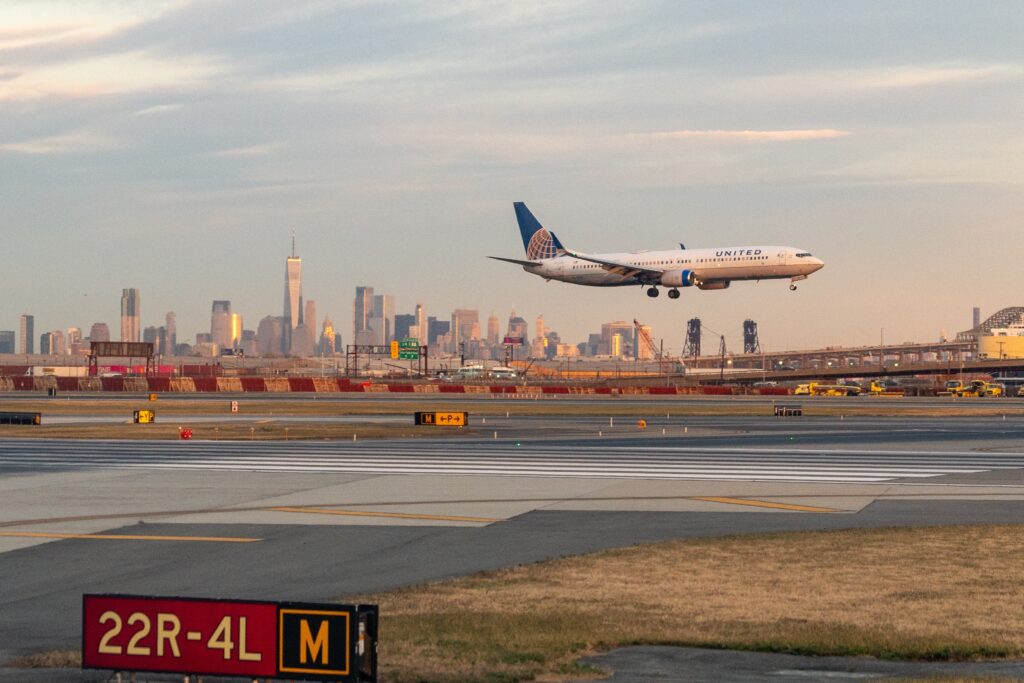
The aircraft landed safely at Newark and was met by police officers. photo credit: John McAdorey/Shutterstock
A United Airlines flight bound for Spain was forced to turn back over the Atlantic Ocean after a Bluetooth device broadcasting the name “BOMB” triggered a security alert on board, leading to a full search of the aircraft and the evacuation of passengers upon landing. Flight UA236 had departed Newark Liberty International Airport in New Jersey for Palma de Mallorca when the incident occurred.
Several hours into the journey, while the Boeing 767 was flying over the Atlantic, crew members became aware of a Bluetooth signal carrying the alarming name. According to air traffic control communications reported by US media, the discovery prompted the crew to notify authorities and request permission to return to Newark as a precautionary measure.
The aircraft was carrying more than 200 passengers and crew at the time.
Cabin crew attempt to locate device
What began as a routine transatlantic flight quickly became a security operation as cabin crew attempted to determine the source of the Bluetooth signal. Passengers later told reporters that announcements were made asking travellers to switch off Bluetooth-enabled devices, including mobile phones, headphones, tablets and portable speakers. Crew members hoped the signal would disappear once the responsible device had been switched off, allowing them to identify its owner.
Despite those efforts, the source could not be conclusively located while the aircraft remained in the air. With the device still unidentified and the wording potentially indicating a security threat, the crew elected to abandon the flight and return to Newark, where law enforcement and security agencies would be able to conduct a comprehensive investigation.
Full security response after landing
The aircraft landed safely at Newark and was met by police officers, airport security personnel and other authorities responsible for aviation safety. Passengers were instructed to leave the aircraft while investigators carried out a detailed inspection. The search extended to the cabin, luggage compartments and cargo hold, while travellers and their belongings were subjected to additional screening procedures.
United Airlines later confirmed that the flight had returned to Newark because of a potential security concern and said the decision had been taken in the interests of passenger and crew safety. The airline arranged a replacement aircraft to continue the journey to Mallorca once the investigation had been completed.
Investigation finds no threat
Following the search, authorities determined that no explosive device or other threat was present on the aircraft. Reports indicate that the Bluetooth device name which triggered the alert was not linked to any genuine danger. However, aviation security procedures require crews and authorities to treat any possible threat as credible until it can be conclusively ruled out.
The decision to return the aircraft was therefore made on the basis of the information available at the time rather than the eventual outcome of the investigation. Security experts have long maintained that airlines cannot afford to ignore warnings, even when they appear unlikely or originate from unusual sources.
Why a Bluetooth name can trigger aviation protocols
Bluetooth-enabled devices continuously broadcast identifying names to nearby electronics. These names can usually be customised by users and are intended to make devices easier to recognise when pairing connections. In most circumstances they attract little attention.
However, when a device displays language associated with violence, explosives or other threats, it can trigger security concerns in sensitive environments such as airports and aircraft. Airlines operate under strict international security regulations that require potential threats to be investigated thoroughly. A warning does not need to come from a passenger or crew member to warrant action; electronic messages, written notes and device identifiers can all prompt security procedures if they raise concerns.
Significant disruption for passengers
Although the alert ultimately proved to be a false alarm, the incident resulted in considerable disruption for those travelling to Mallorca.
Passengers faced an unscheduled return to New Jersey, the evacuation of the aircraft, additional security screening and a lengthy delay before continuing their journey on a replacement flight.
The diversion also created operational challenges for United Airlines, which was required to provide another aircraft and reorganise schedules to accommodate affected travellers.
Event summary
The United Airlines service from Newark to Palma de Mallorca returned to the United States after a Bluetooth device named “BOMB” triggered a security alert while the aircraft was over the Atlantic. Authorities conducted a full search after the plane landed and found no threat. While the incident ultimately proved harmless, it demonstrated how even a Bluetooth device name can lead to significant consequences when aviation security procedures are activated.
Follow Euro Weekly News on Google News
Get breaking news from Spain, travel updates, and expat stories directly on your Google News feed.
Follow on Google NewsSign up for personalised news
Subscribe to our Euro Weekly News alerts to get the latest stories into your inbox!
By signing up, you will create a Euro Weekly News account if you don't already have one. Review our Privacy Policy for more information about our privacy practices.



Molly Grace
Molly is a British journalist and author who has lived in Spain for over 25 years. With a background in animal welfare, equestrian science, and veterinary nursing, she brings curiosity, humour, and a sharp investigative eye to her work. At Euro Weekly News, Molly explores the intersections of nature, culture, and community - drawing on her deep local knowledge and passion for stories that reflect life in Spain from the ground up.
Comments