Flying from Brussels Airport? A major security change is on the way
By Farah Mokrani • Published: 31 May 2026 • 23:24 • 3 minutes read
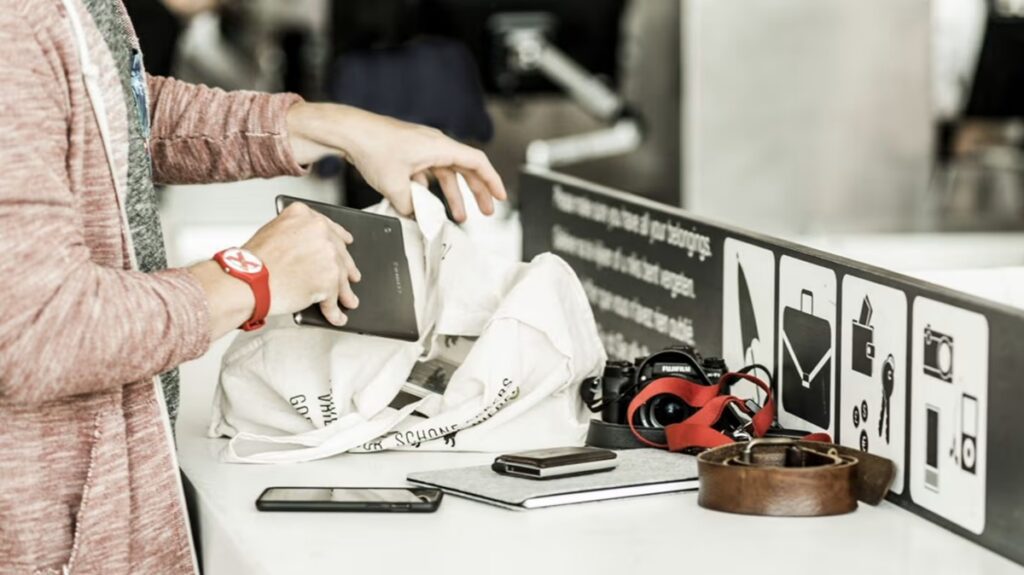
Brussels Airport plans to introduce new scanners that will allow passengers to keep liquids and electronics inside their cabin bags during security checks. Credit : pressroom.brusselsairport.be
If you have flown anywhere in Europe recently, you probably know the routine by heart. You reach the security checkpoint and immediately start preparing for inspection. The laptop comes out. The liquids come out. Chargers, tablets and other electronics often end up in separate trays.
By the time your belongings finally disappear into the scanner, half your hand luggage seems to be spread across the conveyor belt.
Brussels Airport says that process is set to become much simpler.
The airport has announced a major overhaul of its security screening system that will eventually allow passengers to leave liquids and electronic devices inside their cabin bags during security checks. The first new scanners are expected to enter service in 2028, with the entire departure security area scheduled to be upgraded by summer 2029.
For travellers, it could mean spending less time unpacking bags and more time moving through security.
Why security checks at Brussels Airport are about to change
The project centres on a new generation of security equipment that can examine luggage in far greater detail than the scanners currently used in many airports.
Under the plans announced by Brussels Airport, passengers will pass through advanced body scanners while cabin bags will be screened using CT technology capable of creating highly detailed images of the contents inside.
Because security staff will be able to see those images more clearly, passengers will no longer need to remove laptops, tablets, power banks or other electronic devices before their bags enter the scanner.
Liquids will also be allowed to remain inside hand luggage.
According to the airport, current European rules would permit passengers to carry liquids without quantity restrictions provided they are transported in containers of up to two litres.
For frequent travellers, that may be the most noticeable change of all.
For years, airport security has meant checking bottle sizes, separating liquids into bags and making sure everything is ready before reaching the front of the queue. Brussels Airport believes much of that process will eventually become unnecessary.
Passengers will start seeing the changes gradually
Travellers should not expect the new system to appear overnight.
Brussels Airport plans to begin testing its first body scanner in June as part of the preparation phase.
The airport will then spend the next several months preparing for a larger rollout. Construction of an additional temporary security screening area equipped with the new technology is expected to begin in 2027.
The first scanners are due to enter operation in 2028.Airport officials say the gradual approach is designed to avoid major disruption while work takes place.
Rather than replacing everything at once, security areas will be modernised section by section. That should allow the airport to continue operating normally while upgrades are carried out.
For passengers, the transition may be largely invisible until the new equipment begins entering service.
What travellers can expect by 2029
By summer 2029, Brussels Airport expects all departure security checkpoints to be equipped with the new scanners.
In total, 19 security lanes will be upgraded.The airport has also confirmed that transfer passengers will eventually benefit from the new equipment during a later stage of the project.
Although the full rollout is still several years away, the announcement offers a glimpse of how airport travel is changing across Europe.
Airports are increasingly investing in technology that aims to improve both security and passenger experience at the same time.
For most travellers, however, the attraction is likely to be far simpler.
Fewer trays, less unpacking and a security check that no longer begins with the familiar search for a laptop, phone charger and bottle of water at the bottom of a cabin bag.
For anyone who travels regularly, that alone may be reason enough to welcome the changes coming to Brussels Airport over the next few years.
Follow Euro Weekly News on Google News
Get breaking news from Spain, travel updates, and expat stories directly on your Google News feed.
Follow on Google NewsSign up for personalised news
Subscribe to our Euro Weekly News alerts to get the latest stories into your inbox!
By signing up, you will create a Euro Weekly News account if you don't already have one. Review our Privacy Policy for more information about our privacy practices.




Farah Mokrani
Farah is a journalist and content writer with over a decade of experience in both digital and print media. Originally from Tunisia and now based in Spain, she has covered current affairs, investigative reports, and long-form features for a range of international publications. At Euro Weekly News, Farah brings a global perspective to her reporting, contributing news and analysis informed by her editorial background and passion for clear, accurate storytelling.
Comments