Goodbye 100ml rule? Where Europe’s airports now let you fly with full-size liquids
By Farah Mokrani • Published: 02 Feb 2026 • 19:49 • 3 minutes read
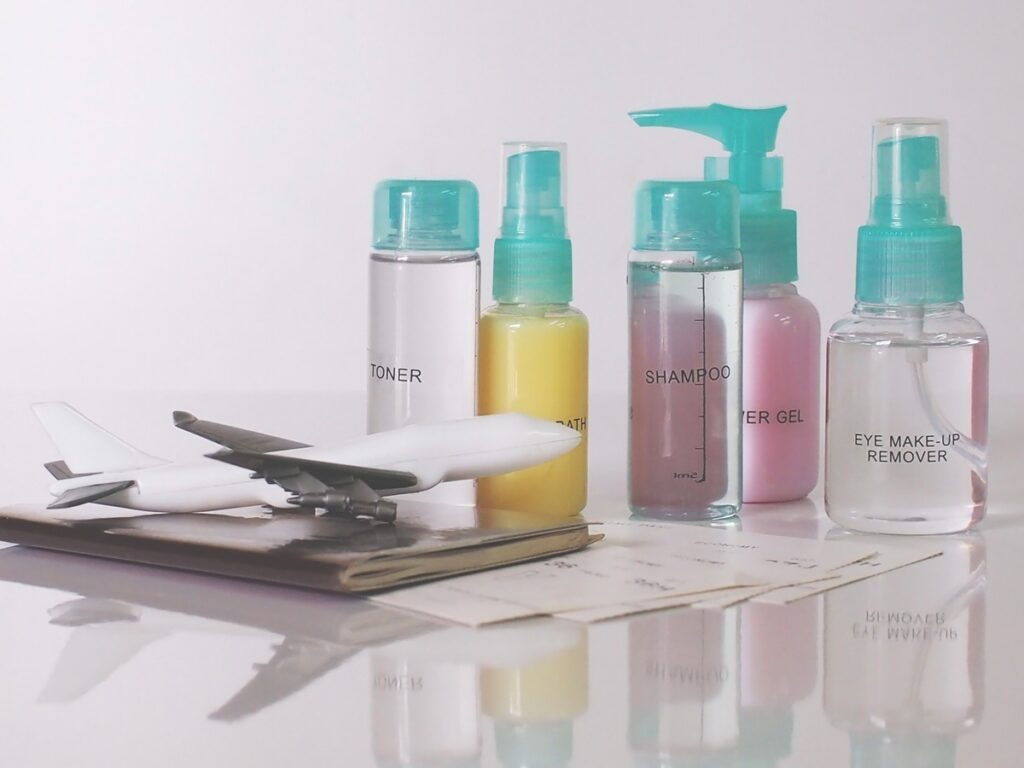
Some European airports are starting to relax the long-standing 100ml liquid limit for hand luggage. Credit : DUANGJAN J, Shutterstock
If you’ve ever stood at airport security reluctantly tipping a half-full bottle of water into a bin, this might feel like a small victory – but a welcome one. Across Europe, a growing number of airports are starting to relax the infamous 100ml liquid limit in cabin baggage, thanks to new security technology that can actually see what’s inside your bag.
It doesn’t mean the rule is gone everywhere. Far from it. But for travellers passing through certain airports, the days of decanting shampoo into travel-sized bottles may finally be numbered.
The change is happening quietly, lane by lane, terminal by terminal – and that’s where things get confusing.
Why the 100ml rule is finally being questioned
The liquid limit dates back to 2006, after British police uncovered a plot involving liquid explosives hidden in drinks bottles. Overnight, airports around the world imposed strict restrictions, forcing passengers to carry liquids in tiny containers, sealed inside plastic bags.
Nearly 20 years on, security technology has moved on. New CT scanners can produce detailed 3D images of bag contents and detect both solid and liquid explosives without passengers unpacking anything. That’s why the European Commission confirmed last summer that it is working towards removing the rule across the EU.
The catch? Airports need the scanners first – and not all of them have them yet.
UK airports are leading the change
If there’s one place where the shift is most visible, it’s the UK.
At London Heathrow Airport, passengers can now carry liquids of up to two litres per container through security in all terminals. It’s a significant change at Europe’s busiest airport and one that regular flyers will notice immediately.
Other UK airports including London Gatwick Airport, Birmingham Airport, Belfast International Airport and Edinburgh Airport have also adopted the new scanners.
Some London airports are half-way there. At London Stansted Airport, London City Airport and London Luton Airport, passengers no longer need to take liquids out of their bags, but the 100ml size limit still applies.
So yes, progress – just not full freedom yet.
Germany and Italy: progress, but with conditions
In Germany, the situation depends very much on which security lane you end up in.
At Munich Airport, some checkpoints now allow liquids up to two litres, while others still enforce the old rules. The same applies at Frankfurt Airport and Berlin Brandenburg Airport, where only selected lanes have the new scanners installed.
Berlin airport has already warned passengers that full upgrades won’t begin until 2026, advising travellers to stick to the 100ml rule if they want to avoid delays.
Italy is further along, particularly with the Winter Olympics on the horizon. Passengers can carry larger liquid containers at Rome Fiumicino Airport, Milan Linate Airport, Bologna Airport and Milan Malpensa Airport (Terminal 1 only). At Turin Airport, the rule applies mainly to fast-track passengers.
Other European airports already allowing 2-litre liquids
Several airports across Europe have also made the leap, including Dublin Airport, Prague Vaclav Havel Airport (Terminal 2), Vilnius Airport, Kaunas Airport, Kraków Airport, Poznań Airport, Cluj Airport, Billund Airport and Malta International Airport.
For travellers using these airports regularly, security already feels noticeably less stressful.
Where the rule is staying put
Despite the momentum, some of Europe’s busiest hubs are not rushing.
At Amsterdam Schiphol Airport and Barcelona El Prat Airport, authorities say they follow EU regulations but have not confirmed when – or if – the 2-litre limit will be introduced.
The same applies at Paris Charles de Gaulle Airport, Madrid Barajas Airport, Athens International Airport and Lisbon Airport, where the 100ml rule remains firmly in place.
Athens expects to introduce the new scanners around 2027, while Paris airports are aiming for full readiness closer to 2030.
What travellers should take from all this
The end of the 100ml rule is clearly coming – but it’s arriving unevenly, and sometimes unpredictably. One terminal may allow full-size liquids, while the next still confiscates them.
Until the scanners are everywhere, the safest advice remains frustratingly simple: check your departure airport carefully, and assume the old rules still apply unless you know otherwise.
For now, Europe’s liquid revolution is real – just messy, incomplete and very airport-dependent.
Stay tuned with Euro Weekly News for more news about Travel
Follow Euro Weekly News on Google News
Get breaking news from Spain, travel updates, and expat stories directly on your Google News feed.
Follow on Google NewsSign up for personalised news
Subscribe to our Euro Weekly News alerts to get the latest stories into your inbox!
By signing up, you will create a Euro Weekly News account if you don't already have one. Review our Privacy Policy for more information about our privacy practices.


Farah Mokrani
Farah is a journalist and content writer with over a decade of experience in both digital and print media. Originally from Tunisia and now based in Spain, she has covered current affairs, investigative reports, and long-form features for a range of international publications. At Euro Weekly News, Farah brings a global perspective to her reporting, contributing news and analysis informed by her editorial background and passion for clear, accurate storytelling.
Comments