Some of Spain’s favourite beaches could lose up to 80 metres of sand
By Farah Mokrani • Published: 01 Jun 2026 • 23:40 • 3 minutes read
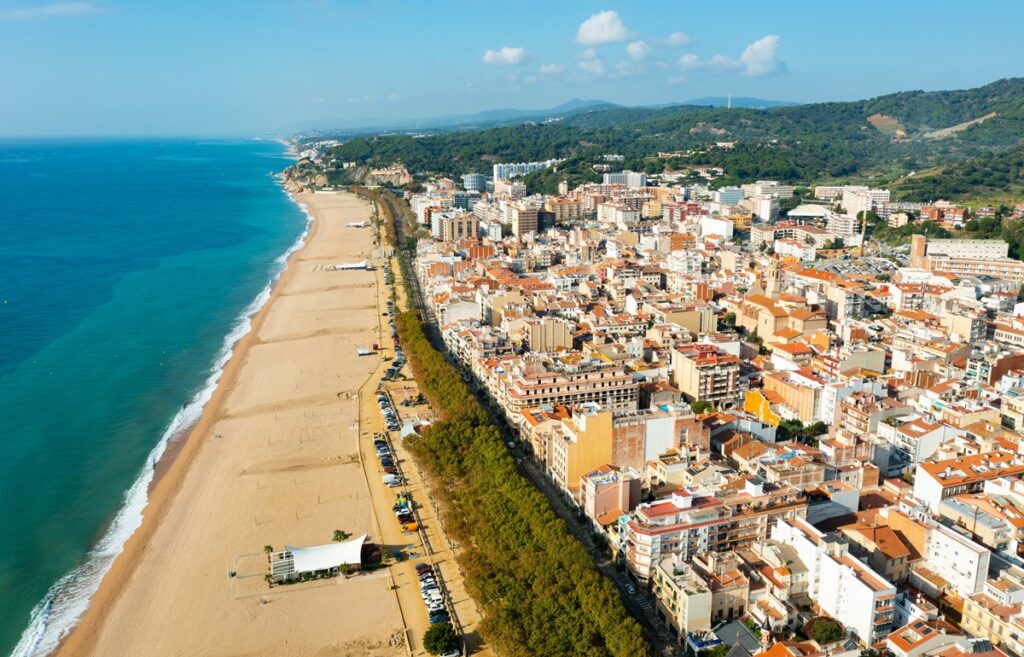
Experts warn that rising sea levels and coastal erosion could significantly reshape parts of Spain's coastline by the end of the century. Credit : BearFotos, Shutterstock
If you have been visiting the same Spanish beach for years, there is a good chance you already think you know every corner of it.
The stretch of sand where families set up their umbrellas each summer. The dunes that separate the beach from the promenade. The spot where children play close to the shoreline.
Now imagine that beach being 60 or even 80 metres narrower than it is today.
According to experts studying Spain’s coastline, that scenario is no longer a distant possibility. Beaches across the country could lose an average of between 60 and 80 metres by the end of the century as rising sea levels combine with decades of coastal development that have disrupted the natural movement of sand.
The warning comes from Raúl Medina Santamaría, director of the Environmental Hydraulics Institute of Cantabria, who says the problem is affecting coastlines across Spain, from Galicia to the Canary Islands.
For many people, coastal erosion sounds like an environmental issue that belongs in scientific reports.
In reality, it is something that could change the beaches millions of residents and tourists use every year.
Why experts say Spain’s beaches are slowly getting smaller
Most people assume beaches lose sand because storms wash it away. That certainly happens, but experts say the story begins much further inland.
For centuries, rivers carried sand from mountains and valleys towards the sea. That natural process constantly replenished beaches.
Today, many of those routes are interrupted.
According to Medina, dams prevent large quantities of sediment from reaching the coast. Ports can also interfere with the natural movement of sand along the shoreline.
The result is simple. More sand leaves some beaches than arrives.
When that balance is lost, beaches begin to shrink.
Urban development has also changed the way many coastlines behave. Seafront promenades, roads and buildings often leave beaches with less room to adapt naturally to storms and changing sea conditions.
Then there is sea level rise.
Experts estimate that for every centimetre the sea rises, beaches can retreat by around a metre. Combined over decades, that gradual process becomes much more noticeable.
The parts of Spain already feeling the effects
The challenge is not limited to one region.
In Galicia, restoration projects are underway in places such as Corrubedo Natural Park and Samil Beach near Vigo, where efforts focus on recovering dune systems damaged by human activity, storms and rising sea levels.
Asturias, one of Spain’s least urbanised coastlines, is also facing increasing erosion. In Cantabria, low lying coastal areas are experiencing more frequent flooding, while places such as the Santoña estuary and Santander Bay are considered particularly vulnerable.
Further east, studies cited by Greenpeace suggest rising sea levels could affect around 70 per cent of beaches in Guipúzcoa and 45 per cent in Vizcaya. In Bilbao, some projections indicate the sea could advance by more than 40 metres before the end of the century.
The Mediterranean coast is facing similar pressures.
In Catalonia, storms continue to accelerate coastal retreat in parts of the Costa Brava. The Valencian Community has identified several areas experiencing significant erosion, including Almassora, Nules, Moncofa, Tavernes de la Valldigna and Dénia.
Murcia’s La Manga has also seen substantial sand loss, a situation experts partly attribute to large scale urban development that began in the 1970s.
Further south, winter storms have left visible damage along sections of Andalucía’s coastline. Areas including Matalascañas, El Portil, Sanlúcar de Barrameda and Los Caños de Meca remain among the most vulnerable.
The islands are not immune either.
A report from the Marilles Foundation estimates that beaches in the Balearic Islands could retreat by between seven and 50 metres as sea levels continue to rise.
Meanwhile, the study SOS Costas Canarias estimates that the Canary Islands lose around four kilometres of natural coastline every year.
Can Spain stop the loss of sand?
Experts insist the situation is serious but not hopeless. Medina argues that beach regeneration projects can work when they are designed around the specific causes of erosion in each location.
He also believes stronger coastal management is essential, along with strict compliance with Spain’s Coastal Law when new developments are planned.
One message appears repeatedly throughout the debate.
Sand is not an unlimited resource.
That may sound surprising in a country famous for its beaches, but experts warn that replacing what nature once delivered for free is becoming increasingly difficult.
For now, nobody is suggesting that Spain’s beaches are about to disappear.
What researchers are saying is that many of them are already changing. The beach people enjoy today in Galicia, Valencia, Andalucía, the Balearics or the Canary Islands may still be there in 2100.
It may simply be a lot narrower than the one they remember
Follow Euro Weekly News on Google News
Get breaking news from Spain, travel updates, and expat stories directly on your Google News feed.
Follow on Google NewsSign up for personalised news
Subscribe to our Euro Weekly News alerts to get the latest stories into your inbox!
By signing up, you will create a Euro Weekly News account if you don't already have one. Review our Privacy Policy for more information about our privacy practices.





Farah Mokrani
Farah is a journalist and content writer with over a decade of experience in both digital and print media. Originally from Tunisia and now based in Spain, she has covered current affairs, investigative reports, and long-form features for a range of international publications. At Euro Weekly News, Farah brings a global perspective to her reporting, contributing news and analysis informed by her editorial background and passion for clear, accurate storytelling.
Comments