When balls meant life or death
By Lucca Movaldi • Published: 10 Jun 2026 • 9:00 • 2 minutes read
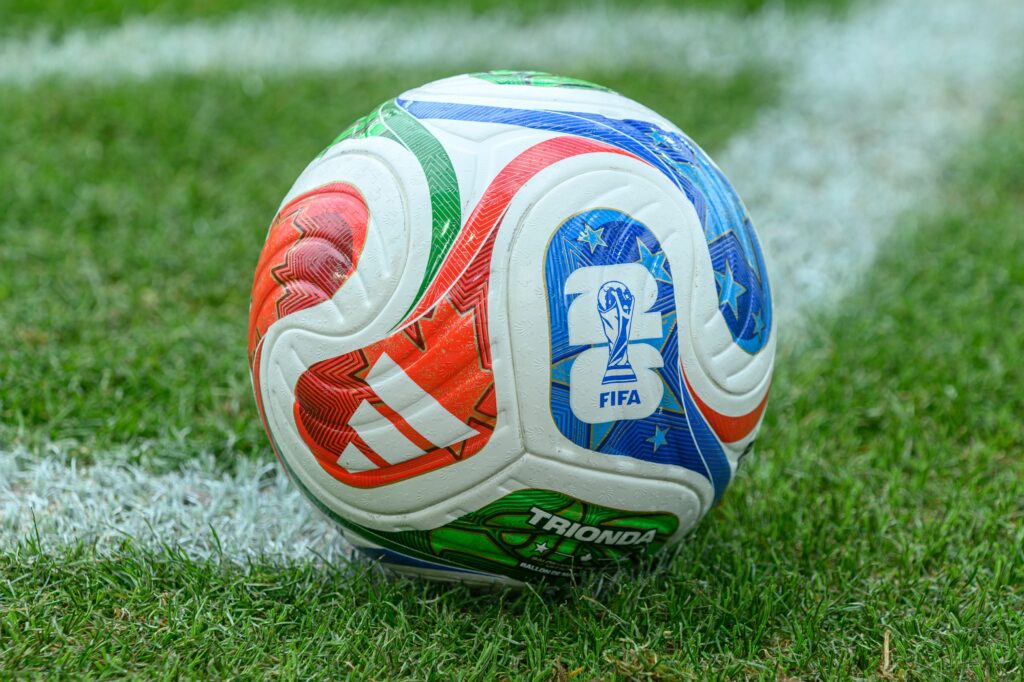
The FIFA World Cup kicks off this Thursday, June 11. Credit: ACHPF / Shutterstock
All kinds – small, hard, oversized, squeezy, soft, airy, bouncy… We hit them, catch them, kick them. In sport, the real difference is how well you do all three. And yet, human fascination pales in comparison to Kashmira’s obsession.
The moment we step into the Los Pacos dog park, she clocks us instantly, charges over, and ceremoniously drops a ball at my partner’s feet, her tail oscillating like a metronome. Her eyes say it all: “Go on then – impress me.”
Kashmira’s persistence is something to behold. I would happily settle for 10 per cent of it.
The park itself is a small stroke of genius – a country club for dogs. There is even a lounge, charmingly named Guau Guau, where doggy parents sip cocktails and nibble on brekkies while their dogs play, mingle, and exchange sniff-based intelligence. I overheard a few of them gossiping about their doggy parents’ habits, complaining about horrible attempts to cheat them by breaking treats in two! How horrific – and they think we wouldn’t notice, right, pals?
Watching Kashmira in full athletic devotion took me, unexpectedly, back to my last visit to the Museo Nacional de Antropología in Mexico City, where I was reminded that our fixation with balls is anything but modern.
The Olmecs, it seems, got there first – around 1600 BCE – fashioning early rubber balls from tree sap and inventing a game to justify them. The Maya later added notoriously unforgiving stone rings mounted on court walls – scoring through one was less a play and more a minor miracle.
By the time the Aztecs took over, the game had become a spectacle: professional players, wagering, and political theatre. But what truly sets it apart is its spiritual dimension. These were rituals. And in the highest-stakes matches, the conclusion could be terminal.
Contrary to modern assumption, it was often the victors who were chosen for sacrifice – an honour of the highest order, a direct passage to the divine. Which, all things considered, puts missing a forehand into perspective.
Speaking of balls currently in play, a nod to the qualifiers at Roland Garros, who have been dismantling expectations with disregard for ranking systems. Several quarter-finalists arrived unseeded, yet proceeded to dispatch names such as Djokovic, Sinner, Ruud, Gauff, and Sabalenka with composure. Zverev aside, it has been a tournament of disruption.
What has been less delightful, however, is the punishing Parisian heat – predictable to everyone except, it would seem, the organisers. One might suggest that scheduling matches outside peak sunlight or introducing a coherent extreme-heat protocol would not be radical.
There is something faintly tragic about watching world-class athletes reduced to survival mode. At several points, endurance seemed the deciding factor. So yes – speaking of balls – it may be time for the organisers to play one of their own.
To be continued next week, because guess what? I will keep writing about balls! The FIFA World Cup kicks off this Thursday, June 11, at Estadio Azteca, where co-hosts Mexico face South Africa. Until next week, keep your eyes on the ball!
Follow Euro Weekly News on Google News
Get breaking news from Spain, travel updates, and expat stories directly on your Google News feed.
Follow on Google NewsSign up for personalised news
Subscribe to our Euro Weekly News alerts to get the latest stories into your inbox!
By signing up, you will create a Euro Weekly News account if you don't already have one. Review our Privacy Policy for more information about our privacy practices.


Lucca Movaldi
Lucca Movaldi is an American author who has lived on the Costa del Sol since 2005. As President of the American International Club Marbella, Lucca connects with fellow Americans and internationals, sharing his experiences through his writing.
Comments