Drivers in Spain could face a €200 fine over a sticker many think is optional
By Farah Mokrani • Published: 16 Jun 2026 • 20:46 • 3 minutes read
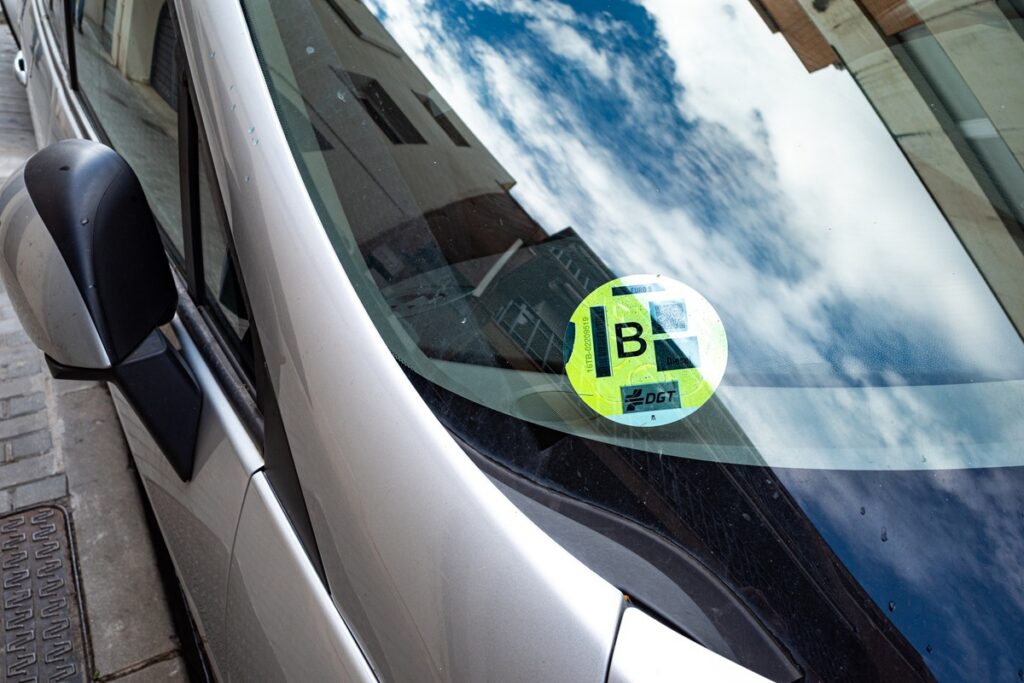
The DGT environmental label is not always mandatory, but some cities require it to be displayed. Credit : Manuel Milan, Shutterstock
Thousands of motorists driving through Spain’s Low Emission Zones are displaying the DGT environmental sticker because they believe the law requires it everywhere. In reality, there is no nationwide obligation to have the label on your windscreen, although failing to display it in certain cities could still land you with a fine.
If you drive in Spain regularly, you’ve probably seen them everywhere. They sit in the bottom corner of windscreens, colour coded and easy to spot. Some drivers put them on as soon as they receive them. Others have never bothered. And plenty are still unsure whether they actually need one at all.
The DGT environmental sticker has become one of the most misunderstood motoring requirements in Spain.
Part of the confusion comes from the growing number of Low Emission Zones appearing across the country. As more cities introduce restrictions aimed at reducing pollution, many drivers have assumed the environmental label automatically became compulsory nationwide.
It didn’t.
The reality is more complicated and depends largely on where you are driving.
Why so many drivers are confused about the DGT sticker
The environmental label was introduced by Spain’s traffic authority to classify vehicles according to their emissions.
It allows authorities to quickly identify which vehicles are considered cleaner and which produce higher levels of pollution.
The system became much more visible after the arrival of Low Emission Zones, known in Spain as Zonas de Bajas Emisiones.
These areas are now operating in many municipalities and are intended to improve air quality by restricting or regulating access for certain vehicles.
As the zones expanded, confusion followed.
Many motorists came away with the impression that displaying the sticker was a legal requirement everywhere in Spain. Some drivers even worried they could be fined simply for not having it attached to the windscreen.
According to current regulations, there is no general national obligation requiring every vehicle to display the environmental label.
A driver can legally travel through much of Spain without the sticker being physically attached to the vehicle.
That surprises many motorists, especially those who have spent years hearing about environmental restrictions and Low Emission Zones.
The catch is that local authorities have significant freedom to create their own rules.
Where not displaying the sticker could become a problem
The key detail many drivers miss is that the rules do not come from a single nationwide regulation.
Instead, individual councils can introduce specific requirements as part of their Low Emission Zone policies.
That means the situation can vary from one city to another.
In some municipalities, displaying the environmental sticker is strongly recommended but not mandatory. In others, local regulations may require the label to be visible on the vehicle.
Failing to comply with those local rules can lead to penalties.
Madrid is often cited as an example because drivers who breach certain Low Emission Zone requirements can face fines of €200. Under Spain’s prompt payment system, that amount is typically reduced to €100 if paid within 20 days.
The important point is that the fine is not issued because of a national DGT rule applying everywhere. It stems from local regulations approved by the city concerned.
For motorists travelling between different parts of Spain, that distinction matters.
A driver who follows the rules perfectly in one municipality could encounter completely different requirements after entering another.
As more Low Emission Zones become operational, understanding those local differences is becoming increasingly important.
Why many motorists choose to display it anyway
The environmental sticker costs around €5 and can be obtained through authorised DGT partners, including Correos post offices.
Given the relatively low cost, many drivers decide that putting it on the windscreen is simply easier than checking local regulations every time they travel.
For some, it is about convenience. For others, it is about avoiding unnecessary discussions or misunderstandings when entering areas with environmental restrictions.
The sticker also makes it easier for authorities to identify a vehicle’s environmental category without carrying out additional checks.
That practical advantage is one reason why many motorists display the label even when they are not legally required to do so.
Spain’s network of Low Emission Zones is expected to continue expanding as municipalities work to meet environmental targets and improve air quality.
As a result, environmental labels are likely to become an increasingly familiar sight on Spanish roads.
What has not changed, however, is the basic rule that many drivers misunderstand.
The DGT environmental sticker is not automatically compulsory across Spain.
Before driving into a Low Emission Zone, the safest approach remains the simplest one. Check the rules of the city you are visiting first.
A few minutes spent reading the local regulations could save you from an unnecessary fine and spare you an unpleasant surprise when the penalty notice arrives.
Follow Euro Weekly News on Google News
Get breaking news from Spain, travel updates, and expat stories directly on your Google News feed.
Follow on Google NewsSign up for personalised news
Subscribe to our Euro Weekly News alerts to get the latest stories into your inbox!
By signing up, you will create a Euro Weekly News account if you don't already have one. Review our Privacy Policy for more information about our privacy practices.





Farah Mokrani
Farah is a journalist and content writer with over a decade of experience in both digital and print media. Originally from Tunisia and now based in Spain, she has covered current affairs, investigative reports, and long-form features for a range of international publications. At Euro Weekly News, Farah brings a global perspective to her reporting, contributing news and analysis informed by her editorial background and passion for clear, accurate storytelling.
Comments