Ibiza’s snake problem just got worse
By Elli Freeman • Published: 17 Jun 2026 • 17:00 • 2 minutes read
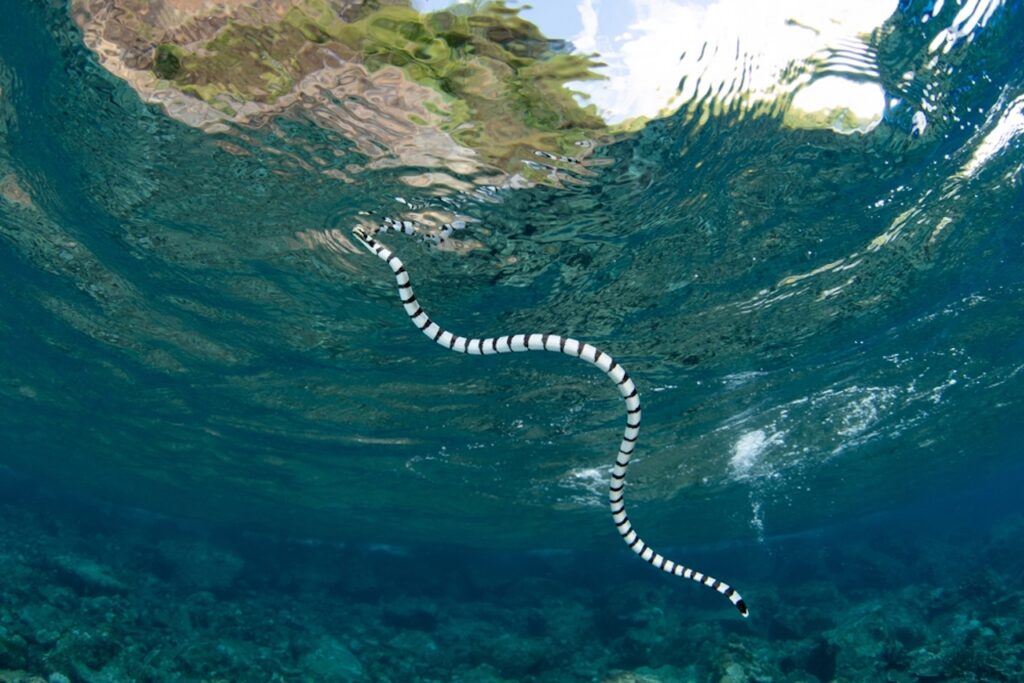
Swimming snakes spotted off Ibiza shore Credit: Shutterstock, Ethan Daniels
The snakes are off the plane and are enjoying a lovely all-inclusive Mediterranean holiday, dinning on native lizard species, swimming in the crystal blue oceans and, worryingly, exploring local islands.
What began as an accidental stowaway problem has developed into one of Ibiza’s most serious ecological threats. Two decades on from their arrival horseshoe whip snakes have spread across most of the island, devastating native lizard populations. Now, conservationists fear the reptiles are entering a new phase of their invasion after being spotted swimming to neighbouring islands.
Horseshoe whip snakes invade Ibiza
Horseshoe whip snakes first appeared in Ibiza twenty years ago. In that time, their numbers grew so quickly they soon inhabited at least 90 per cent of the island and were considered an invasive species. Researchers warn the snakes could achieve complete coverage of the island within the next few years.
The island’s wealthy are largely to blame for the invasion. Over the years they have imported ancient olive trees from the mainland to decorate their villas and holiday homes, not realising the trees’ nooks make for the perfect hiding spot for hibernating snakes and incubating eggs.
Snakes take a swim to neighbouring islands
Recent eye-witness accounts however seem to indicate the horseshoe whip snakes are on the move, leaving Ibiza behind for smaller surrounding islands.
Several videos have been shared to social media by locals and visitors, showing snakes lithe bodies cutting through the water. Thankfully, the horseshoe whip snake is not a venomous species, but it’s sudden presence in the water can be an alarming sight for unsuspecting swimmers.
Conservationists became increasingly concerned after researchers confirmed the snakes were capable swimmers and had already reached nearby islets. On the small islet of Santa Eulària, off Ibiza’s east coast, scientists found evidence that snakes had crossed the water and established themselves in what was once considered a safe refuge for native wildlife.
Lizard population in rapid decline
If the “swimming snakes” manage to make it to shore en masse, conservationists fear the consequences for local ecosystems. Their presences pose the greatest threat to local lizard populations, especially the Ibiza wall lizard which has since been classified as “endangered”.
The island’s native lizards have already paid a heavy price. The Ibiza wall lizard, found nowhere else in the world, plays an important ecological role by controlling insect populations and helping disperse plant seeds. Yet since the arrival of the horseshoe whip snake, many local populations have collapsed.
Some of the most alarming declines have been recorded on Ibiza’s offshore islets. Scientists counted 72 Ibiza wall lizards on Santa Eulària in 2016. By 2023, just three remained. By 2025, researchers could find none at all.
Battle to stop the Balearic snake invasion
Authorities and conservation groups have spent years attempting to slow the invasion, but the reptiles continue to spread across the Balearic Islands.
More than 16,000 snakes have been captured in Ibiza and Formentera since organised control programmes began in 2016. Despite those efforts, experts fear eradication is now unrealistic. The discovery that horseshoe whip snakes can swim between islands has transformed the challenge facing conservationists. Natural sea barriers that once protected isolated ecosystems may no longer be enough.
Follow Euro Weekly News on Google News
Get breaking news from Spain, travel updates, and expat stories directly on your Google News feed.
Follow on Google NewsSign up for personalised news
Subscribe to our Euro Weekly News alerts to get the latest stories into your inbox!
By signing up, you will create a Euro Weekly News account if you don't already have one. Review our Privacy Policy for more information about our privacy practices.





Elli Freeman
Originally from the UK, Elli has lived in Spain for more than half of her life. She holds a B.A in English Literature and Creative Writing. Before joining the Euro Weekly News team, Elli was an avid traveller, with a keen interest in exploring new cultures.
Comments