Sánchez signals possible early election if Spain’s Budget is rejected
By Molly Grace • Published: 18 Jun 2026 • 23:10 • 2 minutes read
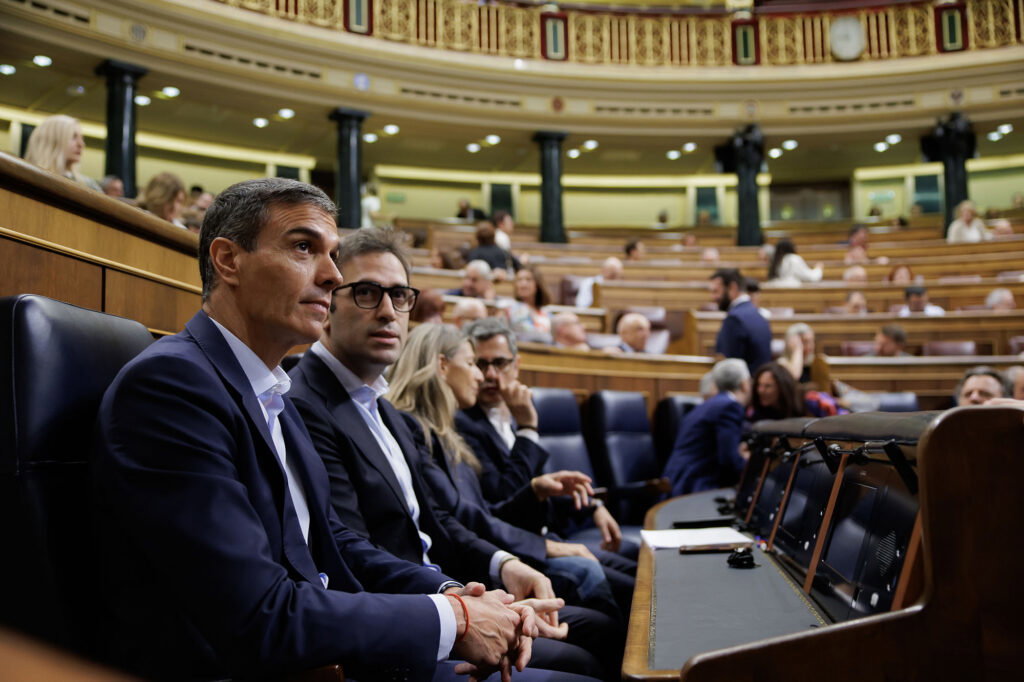
The government's next challenge will be securing enough parliamentary support to pass the 2027 Budget. Photo credit: Pool Congreso/Congreso de los Diputados
Spanish Prime Minister Pedro Sánchez has, for the first time, suggested he could bring forward a general election if his government fails to secure parliamentary approval for the 2027 State Budget. The comments come after months of insisting that the legislature would run until 2027 regardless of whether a Budget was approved.
Speaking in Brussels on June 18, Sánchez linked the future of the legislature to the success of the 2027 budget process, although he stressed that any election would still take place in 2027 rather than this year.
A change from Sánchez’s previous position
For months, Sánchez had maintained that the government would continue governing even if it failed to secure parliamentary backing for a budget.
Spain is currently operating under extended budgets after the government was unable to approve new spending plans in recent years. Under Spanish law, existing budgets can remain in force if a replacement fails to pass Parliament, allowing the government to continue functioning without immediately triggering an election.
Until now, Sánchez had argued that extending existing budgets was a viable option and did not justify dissolving Parliament. His latest remarks suggest that position may be changing if support for the 2027 accounts cannot be secured.
Why the Budget matters
Passing a State Budget is one of the most important tests for any government because it determines public spending priorities, taxation plans and investment commitments.
For Sánchez, securing approval is difficult because his minority government depends on support from a range of regional and smaller political parties to pass legislation. Negotiations often require agreements between groups with differing political priorities, making budget votes especially challenging.
The government recently announced that work on the 2027 General State Budget is beginning, with Sánchez publicly committing to presenting new accounts to Parliament. Approval remains uncertain given the fragmented political landscape in Madrid.
Could Spain really face an early election?
At this stage, no election has been called and Sánchez has not confirmed that one will happen.
Instead, he has indicated that the outcome of the budget process could influence future decisions. If Parliament rejects the government’s spending plans and negotiations fail to produce an alternative agreement, pressure could grow on the Prime Minister to seek a fresh mandate from voters.
Spain has seen a similar situation before. In 2019, Sánchez called an early general election after his government’s budget was voted down in Parliament, arguing that voters should decide the country’s political direction.
While the Prime Minister stopped short of announcing any concrete plans, he has now publicly acknowledged a scenario that he had previously dismissed.
What it means for Spain
Any move towards an early election would shift Spain into a pre-election period, with political parties focusing on campaigning and negotiations rather than new legislative activity.
However, uncertainty over the Budget could affect decisions on public spending, infrastructure projects, taxation and investment programmes. Businesses, local authorities and public services often rely on clarity over government spending plans when preparing for future years.
For foreign residents and British expats living in Spain, any election campaign would likely bring renewed debate around housing, healthcare, taxation, tourism and regional investment.
What happens next?
The government’s next challenge will be securing enough parliamentary support to pass the 2027 Budget.
Negotiations are expected to continue over the coming months as Sánchez seeks backing from the parties needed to secure a majority. If the Budget is approved, the government is likely to continue towards the scheduled end of the legislature in 2027.
If it fails, the possibility of an early election is now on the table for the first time since the current legislature began.
Follow Euro Weekly News on Google News
Get breaking news from Spain, travel updates, and expat stories directly on your Google News feed.
Follow on Google NewsSign up for personalised news
Subscribe to our Euro Weekly News alerts to get the latest stories into your inbox!
By signing up, you will create a Euro Weekly News account if you don't already have one. Review our Privacy Policy for more information about our privacy practices.



Molly Grace
Molly is a British journalist and author who has lived in Spain for over 25 years. With a background in animal welfare, equestrian science, and veterinary nursing, she brings curiosity, humour, and a sharp investigative eye to her work. At Euro Weekly News, Molly explores the intersections of nature, culture, and community - drawing on her deep local knowledge and passion for stories that reflect life in Spain from the ground up.
Comments