Travelling by train in Spain today? Hundreds of services cancelled as strike begins
By Molly Grace • Updated: 29 Jun 2026 • 11:04 • 4 minutes read
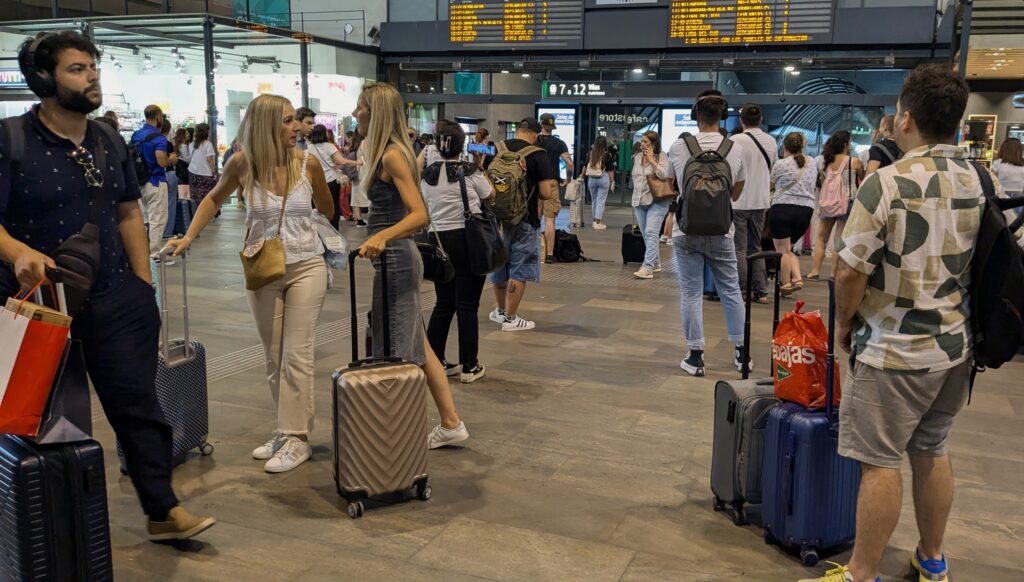
Journeys may require longer gaps between connections. Photo credit: Pat Moore/Shutterstock
Thousands of people travelling across Spain by train today are having to rethink their journeys as the nationwide rail strike leads to hundreds of cancelled services, packed carriages and fewer departure options on some routes.
Around 320 train services have been cancelled as industrial action by Renfe and Adif staff gets under way. High speed routes are continuing to operate under minimum service rules, but many regional and commuter passengers are facing the biggest disruption.
The strike involves staff at Renfe and Adif, Spain’s main rail operator and infrastructure manager. The action is part of ongoing industrial tensions in the rail sector and will be managed through minimum service requirements set by transport authorities.
What will actually change on 29 June
The biggest shift passengers will notice is not a shutdown, but a reduction in choice. High-speed services are expected to operate at around 73% of normal capacity. In practical terms, that means most long-distance trains will still run, but fewer departures will be spread across the day.
Regional and commuter services will vary more sharply depending on the route. Some lines will operate close to normal levels, while others will see cancellations or reduced timetables. The effect is uneven, but consistent in one respect: fewer trains mean fuller trains.
What it will travel be like?
For passengers, the experience is less about trains disappearing and more about the system tightening. Journeys that are usually flexible become more rigid. Instead of several options across an hour or two, travellers may find only one or two workable departures.
This creates a chain reaction across the network. Popular routes between Madrid, Barcelona, Valencia and Sevilla are likely to see higher occupancy, especially at peak times. Seats will be taken earlier, and last-minute changes will be harder to manage. Waiting times between trains will also increase. Even where services are running normally, the spacing between them is wider, which affects how easily passengers can adjust plans on the day.
What it means for residents
For people living in Spain, the strike will be felt most in daily routines. Commuters relying on regional or suburban rail services may need to leave earlier, wait longer, or switch to alternative transport altogether. Morning and evening peaks are expected to be the most affected, with fewer trains available and more crowded conditions on those that do run.
In some areas, buses and metro systems will take on additional pressure as passengers adjust their routes. Journeys that are normally straightforward may take longer simply because fewer options exist.
What it means for tourists and visitors
For tourists, the impact is centred on intercity travel and connections between cities. High-speed rail will continue to operate, which means Spain remains fully navigable by train. However, reduced frequency changes how easy it is to move spontaneously between destinations.
Day trips become harder to manage. Same-day decisions are more limited. And popular travel windows, particularly late morning and early afternoon departures, are likely to fill more quickly than usual. Airport transfers are another pressure point. Even small delays or limited departure options can make tight connections more difficult to manage, especially for international flights.
Why trains are still running
Spain uses minimum service rules during strikes to keep essential transport operating. These rules are designed to maintain a baseline level of mobility while allowing industrial action to continue.
High-speed rail is treated as essential infrastructure because it connects major cities and carries large volumes of passengers. That is why services are not stopping entirely on June 29, even during nationwide strike action. Instead, operators are required to maintain most of the timetable, which is where the 73% operating level comes from for high-speed routes.
How to manage travel on the day
Travellers should not assume that a booked ticket guarantees the exact service originally planned. During strike conditions, timetables can change and some services may be rescheduled or cancelled closer to departure.
Checking journeys in advance becomes essential. Official rail apps and operator websites provide the most accurate updates, while station boards reflect live changes on the day. Arriving earlier than usual at stations is also advisable, particularly on busy routes where passenger volumes will be higher than normal.
In practical terms, it helps to focus on a few simple priorities:
- Check your journey the day before and again on the day of travel
- Allow extra time at the station, especially for high-speed services
- Avoid tight connections between trains or onward transport
- Be ready to switch to a later departure if needed
- Keep plans flexible where possible, especially for long-distance travel
Flexibility is the most useful approach. Travellers who can adjust departure times are more likely to find available seats if changes are needed.
If your train is affected
If a service is cancelled or significantly altered, passengers are typically offered alternative options where available. However, reduced capacity across the network means these alternatives may be limited.
Later trains often fill quickly, particularly on major intercity routes, so rebooking is not always straightforward. The main practical adjustment is time. Journeys may require longer gaps between connections, and same-day flexibility becomes more restricted.
Other ways to travel
Where rail capacity is reduced, demand often shifts to coaches, shared transport and car hire. These alternatives can provide flexibility, although journey times are usually longer, especially on major intercity routes. Despite disruption, high-speed rail remains the fastest and most efficient way to travel between Spain’s major cities, which is why demand stays high even during strike periods
On June 29, Spain’s rail strike will not stop trains running, but it will change how they run. Fewer services, fuller carriages and reduced flexibility will affect both residents and visitors. Travel is still possible across the country, but the experience will be less predictable than usual, and planning ahead will matter more than normal.
Follow Euro Weekly News on Google News
Get breaking news from Spain, travel updates, and expat stories directly on your Google News feed.
Follow on Google NewsSign up for personalised news
Subscribe to our Euro Weekly News alerts to get the latest stories into your inbox!
By signing up, you will create a Euro Weekly News account if you don't already have one. Review our Privacy Policy for more information about our privacy practices.





Molly Grace
Molly is a British journalist and author who has lived in Spain for over 25 years. With a background in animal welfare, equestrian science, and veterinary nursing, she brings curiosity, humour, and a sharp investigative eye to her work. At Euro Weekly News, Molly explores the intersections of nature, culture, and community - drawing on her deep local knowledge and passion for stories that reflect life in Spain from the ground up.
Comments