Nerja aqueduct added to Spain’s Red List as brick decay and urban pressure mount
By Adam Woodward • Published: 13 Jul 2026 • 18:52 • 2 minutes read
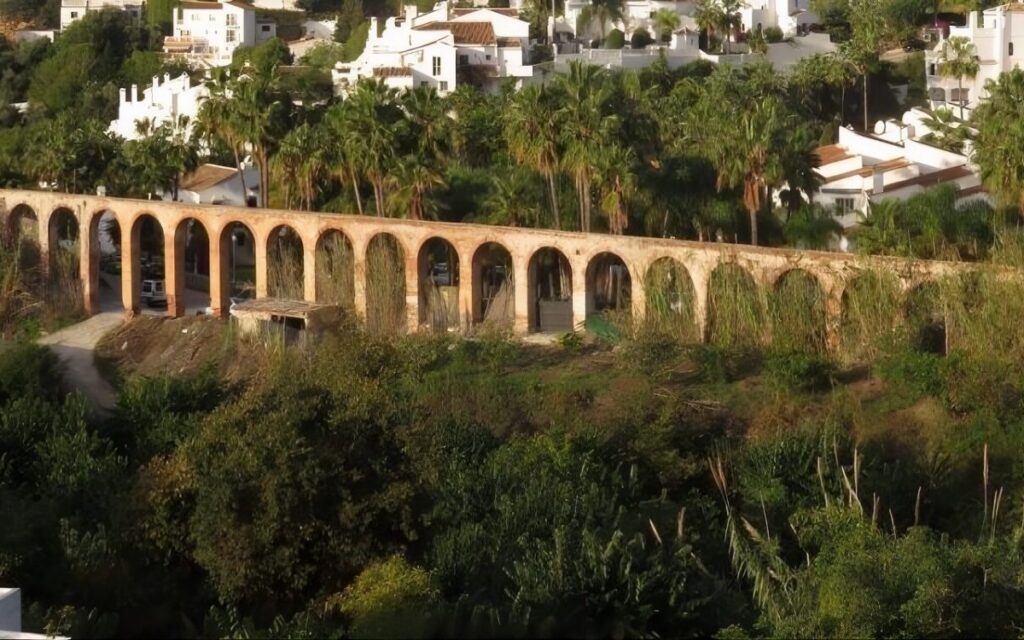
Nerja's historic iron and brick aqueduct. Credit: HN
Hispania Nostra has included the Agua de Hierro aqueduct, also called El Tablazo, in its emergency Red List. The NGO is in charge of protecting historic structures in Spain.
This hydraulic construction in Nerja, Malaga, suffers ongoing deterioration and misses specific legal safeguards. Such issues now jeopardise a major example of water architecture linked to local farming and industrial heritage.
Construction details and sugar industry history
Builders raised this structure probably in the last decade of the 19th century. It served sugar cane cultivation and the old San Joaquin factory, now known as the Maro factory. Located in the Las Mercedes area, the aqueduct formed part of a broader water capture and distribution network for agricultural plots and sugar processing.
Measuring around 100 metres with 25 semicircular arches of masonry and brick, the channel runs parallel to the former Burriana to Maro path beside the Burriana ravine. It connected to the Las Mercedes irrigation ditch between Maro and Las Mercedes lands.
Immediate conservation problems
Decayed bricks are falling from sections of the structure at present. Urban development pressure threatens to reshape the entire setting, potentially changing the monument and its historic landscape forever. This infrastructure once supplied water to farms and industry, yet it holds no specific protection status despite its value in explaining traditional irrigation systems in Nerja.
Hispania Nostra is now calling for urgent steps to document, protect and restore the site. Alfonso Muñoz Cosme, from the organisation’s scientific committee, stressed how such changes could affect both the aqueduct and its context irreversibly. The NGO also warns that continued neglect risks further damage to this testimony of local engineering history.
Regional heritage statistics
Malaga now counts 17 assets on the Red List. Andalucia reaches 230 entries overall, keeping its position as Spain’s second region with the highest number of threatened cultural and natural sites after Castilla y Leon. Jaen leads within Andalucia with 59 cases, followed by Granada with 57, while Cadiz and Seville each record 28, Almeria 20, Malaga 17, Cordoba 16 and Huelva five.
These numbers illustrate wider challenges across many Spanish heritage assets. Factors such as abandonment, poor maintenance and development pressures contribute to risks for more than 1,630 items nationwide. Hispania Nostra evaluates proposals from concerned citizens through its scientific committee, focusing on objective conditions of vulnerability.
Conservation advocates seek collaboration among authorities, owners and the public to prevent irreversible loss. This latest addition underscores calls for action to maintain industrial and agricultural landmarks that shaped Nerja’s development.
Follow Euro Weekly News on Google News
Get breaking news from Spain, travel updates, and expat stories directly on your Google News feed.
Follow on Google NewsSign up for personalised news
Subscribe to our Euro Weekly News alerts to get the latest stories into your inbox!
By signing up, you will create a Euro Weekly News account if you don't already have one. Review our Privacy Policy for more information about our privacy practices.



Adam Woodward
Adam is a writer who has lived in Spain for over 25 years. With a background in English teaching and a passion for music, food, and the arts, he brings a rich personal perspective to his work at Euro Weekly News. As a father of three with deep roots in Spanish life, Adam writes engaging stories that explore culture, lifestyle, and the everyday experiences that shape communities across Spain.
Comments