Driving in Spain this week? Expect more police alcohol and drug checks
By Farah Mokrani • Published: 14 Jul 2026 • 23:00 • 4 minutes read
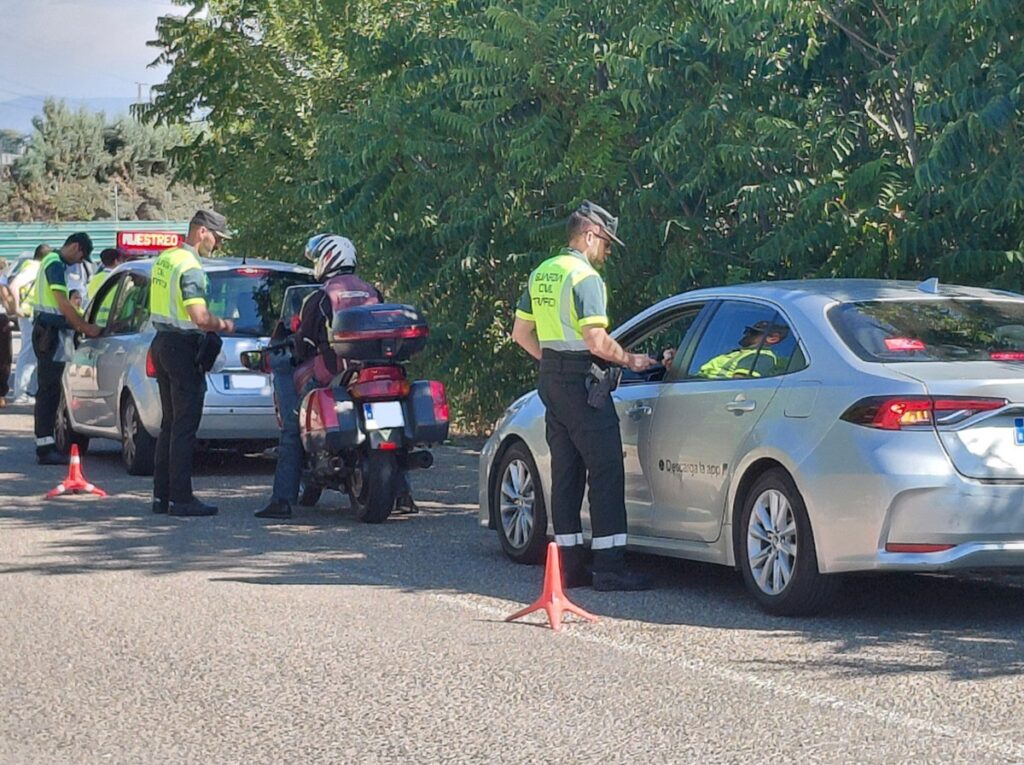
Police are increasing roadside alcohol and drug checks across Spain as part of a nationwide road safety campaign. Credit : DGT.ES
If you’re planning a road trip, heading to the beach or simply driving to work this week, there’s a much greater chance you’ll be stopped by police. Spain’s Directorate General of Traffic (DGT) has launched a nationwide campaign targeting drink and drug driving, with extra roadside checks taking place until 19 July.
The campaign comes after worrying new figures showed that alcohol was involved in 28 per cent of all fatal traffic accidents recorded by the DGT in 2024. Even more striking, the number of people killed in crashes where at least one driver tested positive for alcohol rose by 9 per cent compared with 2023 and by 24 per cent compared with 2019.
For drivers, whether you’re travelling across Spain for the summer holidays or making a short journey close to home, expect to see more police controls on both major roads and in towns and cities over the coming days.
Why Spain is increasing roadside alcohol and drug checks
The DGT says the campaign is designed to tackle one of the country’s biggest road safety problems.
Although awareness of the dangers of drink driving has improved over the years, alcohol continues to play a major role in fatal collisions.
According to official figures, 273 people died in fatal crashes linked to alcohol in 2024 within the areas covered by the DGT.
The statistics suggest the problem is not getting smaller. Not only has the number of alcohol related deaths increased, but alcohol is also appearing in a higher proportion of serious accidents than in previous years.
The DGT believes preventive roadside checks remain one of the most effective ways to reduce that risk.
In fact, almost 89 per cent of positive alcohol tests are detected during routine roadside controls rather than after accidents. From the authorities’ perspective, that means thousands of potentially dangerous drivers are being removed from the roads before a collision happens.
The campaign is being carried out by the Guardia Civil Traffic Group, with regional and local police forces joining the operation in many parts of Spain to increase checks in urban areas as well.
Drivers may therefore encounter alcohol and drug controls almost anywhere, from motorways to local roads.
The figures behind the campaign
The DGT’s concerns are supported by data from the National Institute of Toxicology and Forensic Sciences.
Its latest report found that 34 per cent of drivers who died in road accidents and underwent toxicology testing had alcohol in their system, while 16.4 per cent tested positive for drugs.
In nearly one in four cases, the alcohol level exceeded 1.20 mg/l, well above the threshold that can lead to criminal prosecution in Spain.
According to Álvaro Gómez, director of the DGT’s National Road Safety Observatory, scientific evidence continues to point in the same direction.
He said that the only truly safe alcohol level when driving is zero, adding that many international road safety organisations recommend lowering legal alcohol limits because of their proven impact on reducing serious crashes.
Research shows that the risks begin increasing long before a driver reaches the criminal limit.
At 0.5 g/l of alcohol in the blood, the risk of being involved in a collision roughly doubles.
At 0.8 g/l, the risk becomes around five times higher.
At 1.5 g/l, it can increase by as much as twenty times.
Alcohol also affects reaction times, coordination, judgement and vision, making it harder for drivers to respond quickly even when they believe they remain in control.
What penalties could drivers face?
For anyone tempted to take the risk, Spain’s penalties remain among the toughest in Europe.
Drivers who record more than 0.25 mg/l but up to 0.50 mg/l in breath alcohol face a €500 fine and the loss of four licence points.
Anyone above 0.50 mg/l faces a €1,000 fine and six points.
Repeat offenders can also receive a €1,000 fine, together with the loss of four or six points depending on the alcohol level recorded.
Testing positive for drugs carries a €1,000 fine and the loss of six points.
The consequences become much more serious when criminal thresholds are reached.
Drivers who record more than 0.60 mg/l of alcohol in breath or 1.2 g/l in blood may face between three and six months in prison, a substantial fine or community service, together with a driving ban lasting between one and four years.
Refusing to take an alcohol or drug test is itself a criminal offence and can result in six months to one year in prison, along with the same driving disqualification.
According to Spain’s Road Safety Prosecutor’s Office, 47,103 drivers were convicted in 2025 for driving under the influence of alcohol or drugs.
A campaign built around real life stories
As in previous years, the DGT is working alongside ASPAYM, Spain’s National Federation of People with Spinal Cord Injuries and Other Physical Disabilities.
Volunteers who were themselves seriously injured in road accidents will accompany traffic officers at selected roadside checks across Spain.
Their role is not to enforce the law but to speak directly with motorists about the lifelong consequences a single decision can have.
The campaign’s message, ‘Don’t speed, don’t drink… don’t change the wheels,’ is intended to remind drivers that road safety is not only about avoiding fines.
For many families, one poor decision lasts far longer than any penalty issued at the roadside.
As millions of people continue travelling across Spain during the busy summer period, the DGT says its advice remains unchanged. If you’re driving, the safest amount of alcohol is none at all.
Follow Euro Weekly News on Google News
Get breaking news from Spain, travel updates, and expat stories directly on your Google News feed.
Follow on Google NewsSign up for personalised news
Subscribe to our Euro Weekly News alerts to get the latest stories into your inbox!
By signing up, you will create a Euro Weekly News account if you don't already have one. Review our Privacy Policy for more information about our privacy practices.



Farah Mokrani
Farah is a journalist and content writer with over a decade of experience in both digital and print media. Originally from Tunisia and now based in Spain, she has covered current affairs, investigative reports, and long-form features for a range of international publications. At Euro Weekly News, Farah brings a global perspective to her reporting, contributing news and analysis informed by her editorial background and passion for clear, accurate storytelling.
Comments