Cataluña waste scandal: 46,000 tonnes of French waste buried in Spain
By Molly Grace • Published: 14 Jul 2026 • 23:12 • 3 minutes read
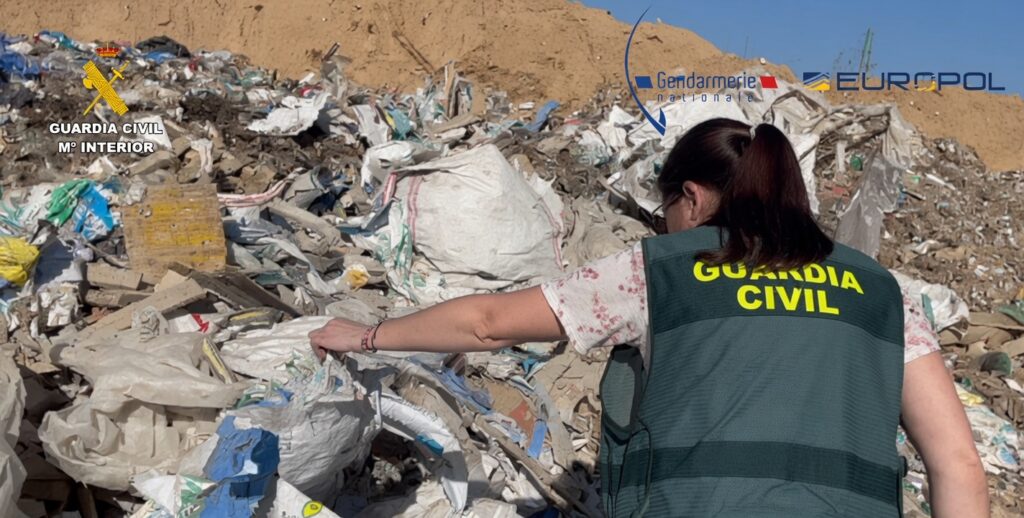
The investigation remains ongoing as authorities work to establish the full scale of the operation. Photo credit: Guardia Civil/Ministerio de Interior
What if the ground beneath farmland was hiding thousands of tonnes of waste that should never have been there? That is the question facing authorities in Cataluña after four people were arrested over an alleged illegal waste operation involving up to 46,000 tonnes of rubbish brought from France and buried in Spain.
The investigation has uncovered what police describe as a major environmental crime operation, with concerns that some of the buried material included potentially dangerous substances such as hydrocarbons and heavy metals. For residents, farmers and environmental groups, the case raises a worrying question: how much damage can happen when waste disappears underground and out of sight?
Thousands of tonnes allegedly brought across the border
The investigation, known as Operation Franger, was carried out by the Guardia Civil with support from Europol and the French Gendarmerie. According to investigators, the group allegedly introduced at least 46,000 tonnes of urban and industrial waste from France into Cataluña, using false documentation to disguise the material as other types of products or soil.
Authorities say the waste was then allegedly deposited illegally, without the necessary environmental safety measures, in agricultural land and unsuitable landfill sites. The investigation began in 2022, when officers inspected a waste management facility after detecting suspicious activity linked to the handling of materials from contaminated areas.
A hidden environmental threat
Unlike rubbish piled up in the open, illegally buried waste can remain invisible for years. Experts warn that waste hidden underground can create long-term problems, potentially affecting soil quality, groundwater and surrounding ecosystems, particularly when hazardous substances are involved.
Authorities will now assess the full environmental impact and determine whether any contamination risks remain. Some of the waste allegedly contained substances including hydrocarbons and heavy metals, raising concerns about possible consequences for the environment and nearby communities. While the extent of any damage has not yet been confirmed, the investigation highlights the difficulty of tackling illegal waste trafficking, where materials can cross borders and disappear before authorities are alerted.
Why would waste be moved between countries?
Illegal waste trafficking is often driven by one simple motive: money. Proper treatment and disposal of industrial waste can be extremely expensive, creating opportunities for criminals to cut costs by avoiding regulations and environmental controls. Investigators believe false documentation was used to make the waste appear legitimate, allowing it to enter Spain and be disposed of incorrectly. The case also highlights how environmental crime has become an international issue, requiring cooperation between countries to track waste movements and identify those responsible.
Four arrested as investigation continues
The four detainees, two men and two women, are accused of a series of alleged offences including crimes against natural resources and the environment, document falsification, fraud, money laundering, tax offences and belonging to a criminal organisation. Authorities carried out searches at homes and businesses, collecting documents, accounting records and electronic devices as part of the investigation.
A large part of the alleged dumping took place around Sant Esteve Sesrovires in Barcelona province, with reports indicating that some of the waste was buried in agricultural areas. The investigation remains ongoing as authorities work to establish the full scale of the alleged operation.
A warning for Spain’s environmental future
Environmental crimes do not always leave obvious signs, there may be no visible rubbish piles, no immediate warning and no obvious indication that anything is wrong, but what is buried underground can have consequences that last for decades. The case has raised concerns about Spain becoming a destination for illegal waste disposal and the need for stronger controls to protect the country’s countryside and natural resources.
For Cataluña, the issue is not simply about 46,000 tonnes of waste. It is about who pays the price when environmental rules are allegedly ignored. As investigators continue examining the case, one question remains at the centre of the scandal: What exactly has been left beneath the land, and what impact could it have in the years to come?
Follow Euro Weekly News on Google News
Get breaking news from Spain, travel updates, and expat stories directly on your Google News feed.
Follow on Google NewsSign up for personalised news
Subscribe to our Euro Weekly News alerts to get the latest stories into your inbox!
By signing up, you will create a Euro Weekly News account if you don't already have one. Review our Privacy Policy for more information about our privacy practices.




Molly Grace
Molly is a British journalist and author who has lived in Spain for over 25 years. With a background in animal welfare, equestrian science, and veterinary nursing, she brings curiosity, humour, and a sharp investigative eye to her work. At Euro Weekly News, Molly explores the intersections of nature, culture, and community - drawing on her deep local knowledge and passion for stories that reflect life in Spain from the ground up.
Comments