New car number plates are appearing across Spain this month – here’s what they actually mean
By Farah Mokrani • Published: 18 Jul 2026 • 19:41 • 3 minutes read
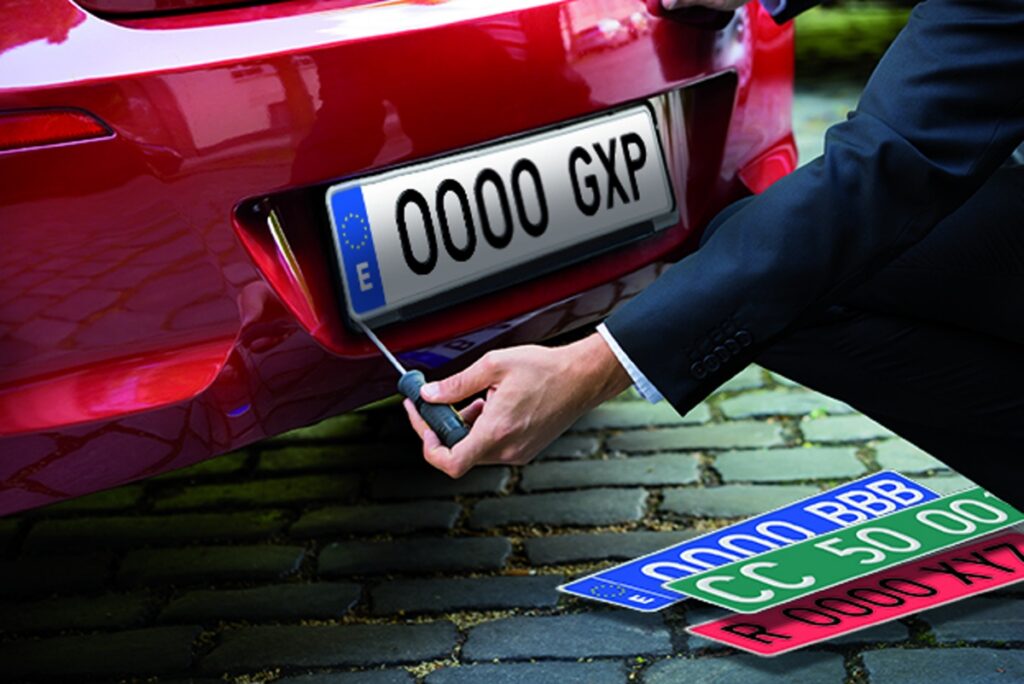
Spain's latest vehicle registration letter series is now appearing on newly registered cars across the country. Credit : Dgt.es
If you’ve spotted a Spanish car with an unfamiliar combination of letters on its number plate recently, you’re not imagining things. Actually, since 1 July 2026, a new sequence of registration letters has started appearing on newly registered vehicles across the country.
The change has prompted plenty of questions online, with some drivers wondering whether the new plates signal a change in the law or whether existing vehicles will need to replace their registration plates.
The answer is much simpler.
Nothing is changing for the millions of cars already on Spain’s roads. The Directorate General of Traffic (DGT) has simply moved on to the next combination in its existing registration system, something that happens naturally as previous letter combinations are used up.
For most motorists, there’s nothing they need to do. But if you’re buying a new car or browsing the second hand market, understanding how Spain’s registration system works can still be useful.
Why Spain’s number plates are changing
Spain’s current registration system has been in place since 2000. Unlike the old provincial system, today’s number plates consist of four numbers followed by three letters, with combinations assigned in chronological order across the whole country.
That means a vehicle registered in Madrid follows exactly the same sequence as one registered in Seville, Valencia or Bilbao.
As registrations continue year after year, the available letter combinations gradually run out.
When one sequence is completed, the DGT simply starts the next one. That’s exactly what has happened this July.
Drivers will now begin seeing registrations that start with the new letter series, reflecting the next stage in Spain’s national numbering system.
The important point is that the format itself has not changed. There are still four numbers followed by three letters. There are no new symbols, colours or regional identifiers.
It’s simply the next available combination. Some motorists also wonder why certain letters never appear on Spanish number plates.
That’s intentional. The DGT excludes all vowels, along with characters such as Ñ and Q, to avoid accidentally creating offensive words or combinations that could cause confusion internationally.
Can you tell how old a car is from its number plate?
Many buyers use registration plates as a quick way to estimate a vehicle’s age. To some extent, that’s possible. Because registrations are issued in sequence, a newer letter combination usually means the vehicle was registered more recently than one displaying an earlier series.
However, the plate only provides an approximate indication. It does not reveal the exact date the vehicle first entered circulation.
For anyone considering a used car, relying solely on the registration can therefore be misleading.
The official registration date remains one of the most important details to check before buying.
Knowing when the vehicle was first registered helps buyers assess whether the mileage appears reasonable for its age. It also provides useful context when considering maintenance.
Components such as tyres, batteries, timing belts and fluids often need replacing after a certain number of years, regardless of how many kilometres the vehicle has covered.
That’s why experienced buyers usually compare the registration date with the service history and MOT records rather than relying only on the appearance of the number plate.
Who does the new registration series affect?
This is where many drivers can relax. If your vehicle was registered before 1 July 2026, nothing changes.
You do not need to replace your registration plate. You do not need to update any documents. And you do not need to contact the DGT.
The new letter series applies only to vehicles registered from the beginning of July onwards. That includes new cars, motorcycles and any other vehicles entering the registration system for the first time.
Everything else remains exactly as before. The arrival of a new letter combination is simply part of the normal life cycle of Spain’s registration system.
One thing every driver should remember
Although the new series does not create any new obligations, the DGT is reminding motorists of one rule that never changes.
Registration plates must always remain clean, clearly visible and fully legible.
Drivers are not allowed to cover, alter or modify them in any way that makes identification more difficult. Plates that have become damaged through age or wear should be replaced as soon as they become difficult to read.
Failing to do so can lead to an administrative fine. The consequences become much more serious if a plate has been deliberately altered to avoid detection by speed cameras or police controls.
For most drivers, though, July’s new registrations are simply another reminder of how Spain’s vehicle registration system quietly keeps moving forward.
As newer cars begin appearing with the latest letter combinations, there’s no need to worry that new rules are coming into force or that existing vehicles need updating.
The change is entirely administrative, affecting only vehicles entering the system from 1 July 2026 onwards.
So, if you notice an unfamiliar registration while driving this summer, you’re simply looking at one of Spain’s newest vehicles rather than the start of a new number plate system.
Follow Euro Weekly News on Google News
Get breaking news from Spain, travel updates, and expat stories directly on your Google News feed.
Follow on Google NewsSign up for personalised news
Subscribe to our Euro Weekly News alerts to get the latest stories into your inbox!
By signing up, you will create a Euro Weekly News account if you don't already have one. Review our Privacy Policy for more information about our privacy practices.





Farah Mokrani
Farah is a journalist and content writer with over a decade of experience in both digital and print media. Originally from Tunisia and now based in Spain, she has covered current affairs, investigative reports, and long-form features for a range of international publications. At Euro Weekly News, Farah brings a global perspective to her reporting, contributing news and analysis informed by her editorial background and passion for clear, accurate storytelling.
Comments