Why London became Europe’s capital of the ‘Quiet Tweakment’
By Guest Writer • Published: 20 Jul 2026 • 9:36 • 4 minutes read
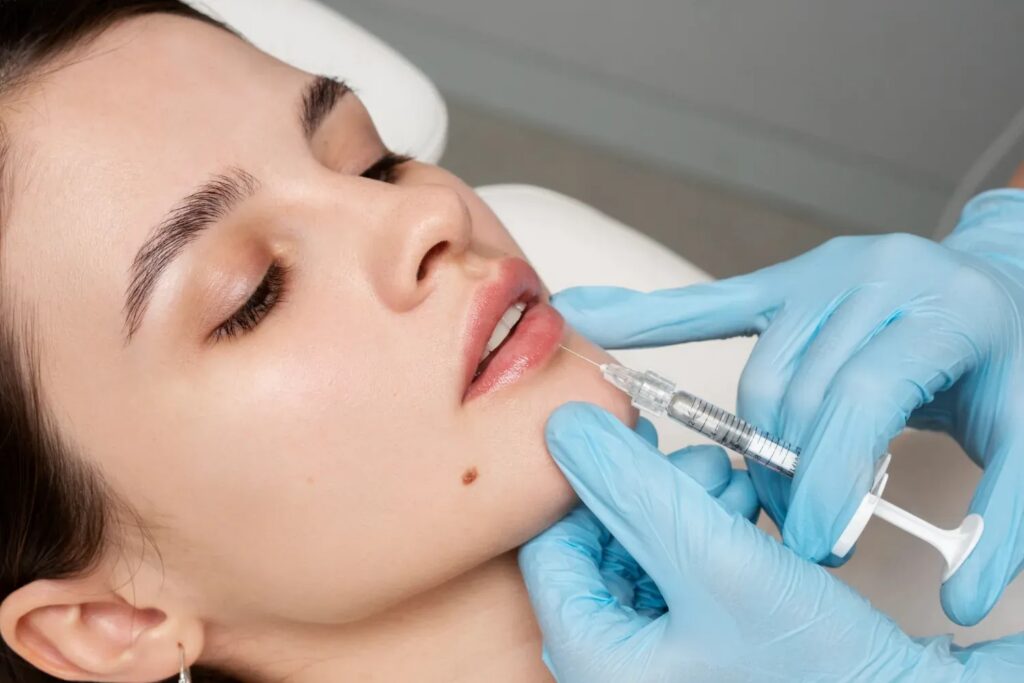
Image: PRP-London.com
The overfilled look is out, the medical consultation is in — and the shift explains why patients from across Europe now book their aesthetic treatments in the British capital.
Something has changed in the world of aesthetic medicine, and you can see it — or rather, you can’t. The overfilled “trout pout” that defined the 2010s has quietly disappeared from London’s clinics, replaced by a philosophy the industry has nicknamed the “quiet tweakment”: subtle, almost undetectable enhancement that leaves people looking rested rather than done.
Nowhere is the shift more visible than in the lip filler market. Industry data suggests the UK now performs among the highest volumes of dermal filler treatments in Europe, and London has become the destination of choice not just for Britons but for patients flying in from Dublin, Paris and further afield. The question is why — and the answer says a great deal about how the industry is growing up.
From volume to architecture
Ask any experienced practitioner what has changed and they will tell you the conversation in the consultation room is unrecognisable from five years ago. Patients no longer arrive asking for “a millilitre” as if ordering a coffee. They ask about lip architecture: the balance between upper and lower lip, the definition of the Cupid’s bow, whether their result will still look natural when they laugh.
The technical approach has evolved to match. Modern practitioners work with smaller volumes — often half a millilitre or less in a first session — building gradually across appointments rather than transforming a face in an afternoon. Technique choice has become a discipline in itself: sharp-needle work with ultra-fine 30-gauge needles for precision border definition, blunt-tip micro-cannulas for safer volume placement, and specialised approaches such as the “Russian lip” vertical tenting method for patients seeking a defined, heart-shaped profile without projection. The products themselves — premium hyaluronic acid ranges such as Juvéderm®, Restylane® Kysse and Teosyal® — are also reversible: an enzyme called hyaluronidase can dissolve poorly placed filler, a safety net that simply did not exist in the collagen era.
The regulation gap — and how patients responded
Here is the uncomfortable truth about the British market: injectables remain surprisingly lightly regulated. In the UK, dermal fillers can legally be administered by people with no medical qualifications at all — a situation that has alarmed professional bodies for years and prompted repeated calls for licensing schemes.
The market’s response has been telling. Rather than waiting for legislation, patients have voted with their feet, and the winners have been doctor-led clinics — practices where treatments are performed or directly overseen by GMC-registered physicians who can handle complications, screen for contraindications, and turn patients away when treatment is not in their interest. It is precisely this clinical standard that has concentrated demand in London’s medical districts.
The capital’s Harley Street area, home to specialist medicine since the nineteenth century, has adapted to the aesthetic era with characteristic pragmatism. Clinics there increasingly publish their doctors’ General Medical Council registration numbers on their websites — one Cavendish Square practice publishes verifiable GMC numbers alongside documented cases, such as a classic 1ml treatment split evenly between upper and lower lip, photographed only once settled. Its lead aesthetic doctor, Dr Mohamed Nafei (GMC 7520509), trained to Level 7 at London’s Harley Academy in both needle and cannula techniques, describes an approach rooted in “evidence-based practice, patient safety, and delivering natural-looking results” — language that would have sounded like niche positioning a decade ago and now sits at the centre of the market. For patients researching lip filler treatments in London, that transparency has become the de facto quality signal: if a clinic will not tell you who is holding the needle and what qualifies them to hold it, the modern patient simply books elsewhere.
What the informed patient now asks
Practitioners at the doctor-led end of the market report that patient literacy has risen dramatically. The questions they field today would have been unheard of a decade ago:
- “Who treats me if something goes wrong?” Vascular occlusion — filler accidentally injected into or compressing a blood vessel — is rare but serious, and managing it requires immediate access to dissolving agents and clinical expertise. Careful practitioners describe layered prevention: anatomical mapping, cannula selection, slow low-pressure technique and aspiration checks — while being frank that no single manoeuvre is fail-safe, which is exactly why the injector’s anatomical training and ability to recognise and treat a complication immediately matter more than any checklist.
- “Can I see healed results, not day-one photos?” Swelling flatters. Reputable clinics photograph outcomes around day fourteen, when the true, settled result has emerged.
- “What won’t you do?” Perhaps counterintuitively, patients increasingly treat a clinic’s willingness to say no as its strongest credential.
Pricing has stabilised too. In central London, doctor-administered lip treatments typically start from around £250–£350 depending on volume and complexity — not the cheapest option on the market, and deliberately so. As one industry observer puts it: in aesthetics, the bargain is rarely the bargain.
A market growing up
None of this means the sector’s problems are solved. Unregulated providers still operate, complications from budget treatments still fill the caseloads of the doctors who fix them, and the licensing scheme consulted on by government has yet to materialise. Organisations such as regenerative medicine specialists PRP London Clinic sit at the medical end of a spectrum that still, at its other end, includes filler administered in kitchens.
But the direction of travel is clear. The era of maximal filler is over; the era of the medical consultation is here. London did not become Europe’s aesthetic capital by being the cheapest place to get lips done. It became the capital by being the place where you can verify exactly who is doing them.
Follow Euro Weekly News on Google News
Get breaking news from Spain, travel updates, and expat stories directly on your Google News feed.
Follow on Google NewsSign up for personalised news
Subscribe to our Euro Weekly News alerts to get the latest stories into your inbox!
By signing up, you will create a Euro Weekly News account if you don't already have one. Review our Privacy Policy for more information about our privacy practices.





Guest Writer
Comments