40,000 evacuated as France’s wildfires trap tourists, forcing dramatic boat escapes
By Molly Grace • Published: 25 Jul 2026 • 1:48 • 3 minutes read
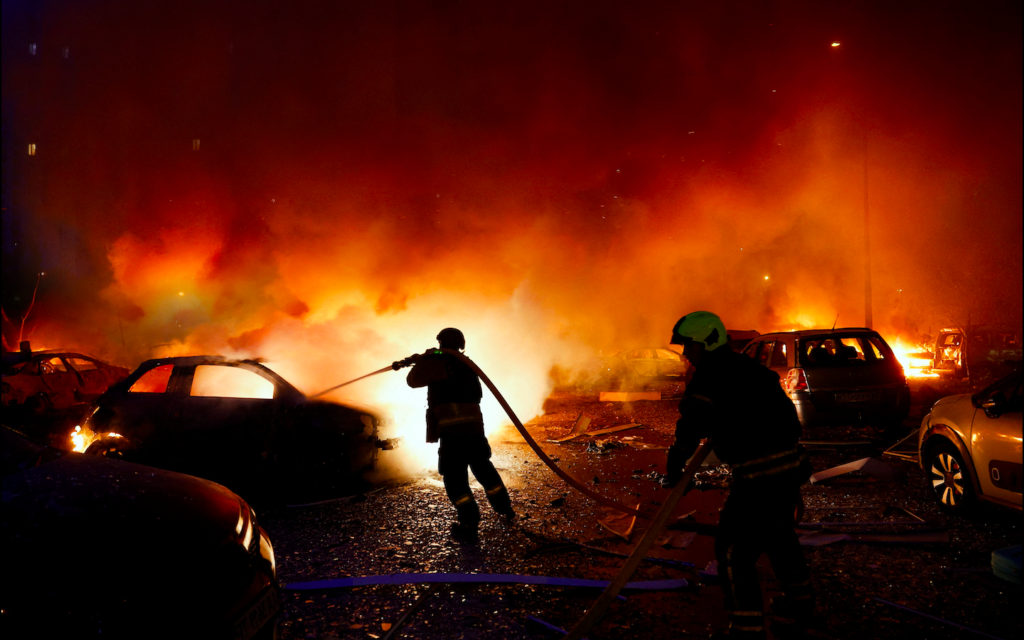
Many holidaymakers were forced to leave behind caravans, tents and holiday accommodation. Photo credit: ataurrahmanstudio/Shutterstock
Families have fled their homes, holidaymakers have escaped by boat and thousands of firefighters remain locked in a desperate battle as three major wildfires continue to rage across southwestern France. More than 40,000 people have now been evacuated as the fires sweep through the Gironde and Landes departments, forcing French authorities to call on the European Union for emergency aerial support in one of the country’s largest wildfire responses in recent years.
With flames advancing towards homes, campsites and popular tourist destinations, President Emmanuel Macron confirmed that France had activated the EU Civil Protection Mechanism, bringing firefighting aircraft and helicopters from across Europe into the battle.
Holiday paradise turns into an evacuation zone
One of the worst-hit areas is the Cap Ferret peninsula on France’s Atlantic coast, a destination that normally attracts thousands of visitors during the summer season. Instead of beaches filled with tourists, roads became packed with vehicles leaving the area as thick smoke darkened the sky and flames advanced through pine forests. Many holidaymakers were forced to leave behind caravans, tents and holiday accommodation with little more than the belongings they could carry. Others escaped by boat across Arcachon Bay after authorities organised evacuations from the peninsula as conditions deteriorated.
The largest blaze has already destroyed thousands of hectares of woodland, while firefighters continue working to stop it reaching more homes and businesses. Further south, another major fire near Biscarrosse has continued to spread despite the efforts of hundreds of emergency crews, while a third large wildfire has stretched resources even further across the region. Together, the three fires have created one of France’s biggest wildfire emergencies this summer.
France turns to Europe for help
As the scale of the disaster grew, France requested assistance through the European Union’s Civil Protection Mechanism. The appeal brought an immediate response, two firefighting aircraft from Croatia and Portugal were deployed alongside Black Hawk helicopters supplied by the Czech Republic and Slovakia, providing vital aerial support to exhausted French crews battling the fast-moving fires. The reinforcements arrive as firefighters face extreme conditions created by high temperatures, dry vegetation and shifting winds capable of changing the direction of a wildfire within minutes.
French Interior Minister Laurent Nuñez warned that emergency services were dealing with exceptionally difficult conditions as crews worked around the clock to protect towns and prevent the flames from spreading into new areas. Local farmers have also joined the effort, using tractors and water tankers to help firefighters reach remote locations where every minute can make the difference between containing a blaze and losing control of it.
Communities caught in the path of the flames
Beyond the dramatic images of smoke and burning forests, thousands of people remain uncertain about when they will be able to return home. Residents have been forced to leave properties with little warning, while campsite owners, tourism businesses and local shops face an uncertain future during what should be the busiest weeks of the summer season.
For many families, the evacuation is not simply an inconvenience. It means leaving behind homes, pets, businesses and livelihoods without knowing what they will find when it is safe to return. Authorities have urged people to stay away from affected areas, warning that changing weather conditions could quickly place more communities at risk. Air quality has also deteriorated across parts of southwestern France as thick smoke continues to spread far beyond the active fire zones.
Another devastating summer for southern Europe
France’s wildfire emergency comes as several southern European countries continue battling destructive blazes driven by prolonged heat and exceptionally dry conditions. Spain has also endured major wildfires in recent days, including the massive blaze that merged across Madrid and Ávila, forcing tens of thousands of evacuations and prompting its own request for European assistance.
Portugal, Greece and other Mediterranean countries have also faced repeated outbreaks, leaving Europe once again relying on shared firefighting resources as multiple countries battle simultaneous emergencies. The growing need for cross-border support reflects the scale of today’s wildfire seasons, where several nations can find themselves fighting major blazes at the same time.
A battle far from over
Despite the arrival of European aircraft and helicopters, firefighters have warned that the battle is far from won. Forecasts suggest hot, dry weather will continue over the coming days, raising fears that even small changes in the wind could push flames towards new communities or reignite areas that have already been brought under control. For the thousands forced from their homes and holidays, the immediate priority remains safety.
For firefighters on the front line, the mission continues around the clock. And for Europe, France’s wildfire emergency is another reminder that today’s fires are no longer isolated national disasters. They have become cross-border crises that demand a united response, with countries increasingly relying on one another as extreme wildfire seasons become an ever more familiar part of the European summer.
Follow Euro Weekly News on Google News
Get breaking news from Spain, travel updates, and expat stories directly on your Google News feed.
Follow on Google NewsSign up for personalised news
Subscribe to our Euro Weekly News alerts to get the latest stories into your inbox!
By signing up, you will create a Euro Weekly News account if you don't already have one. Review our Privacy Policy for more information about our privacy practices.


Molly Grace
Molly is a British journalist and author who has lived in Spain for over 25 years. With a background in animal welfare, equestrian science, and veterinary nursing, she brings curiosity, humour, and a sharp investigative eye to her work. At Euro Weekly News, Molly explores the intersections of nature, culture, and community - drawing on her deep local knowledge and passion for stories that reflect life in Spain from the ground up.
Comments