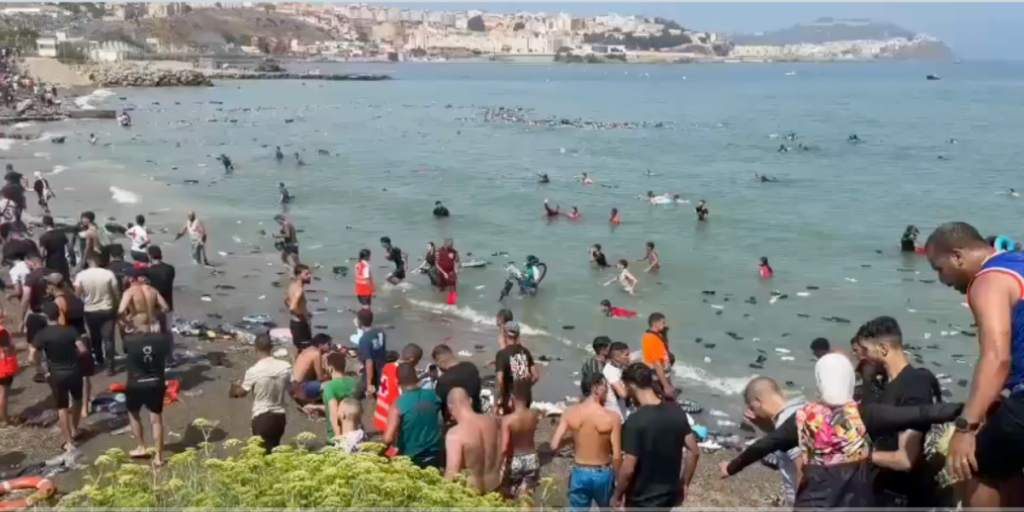
Spain has installed floating barriers off the coast of Ceuta after one of the deadliest migration tragedies in the enclave’s history left at least 72 people dead and tens of thousands crossing into the territory within days.
The new sea barrier, stretching around 500 metres near the Tarajal breakwater, is part of an urgent effort to prevent further crossings following the unprecedented influx from neighbouring Morocco. The move comes after authorities said the vast majority of migrants who entered Ceuta have now voluntarily returned to Morocco or been escorted back.
The humanitarian crisis has shocked Spain and reignited fierce debate across Europe over border security, migration policy and the safety of those attempting dangerous sea crossings.
Why Spain is installing floating barriers
The floating barrier has been deployed alongside a line of anchored buoys and increased patrols by the Guardia Civil, Spanish Navy and Moroccan security forces.
Spanish officials say the system is designed to make it significantly harder for migrants to swim around the breakwater, which became one of the main routes into Ceuta during the mass influx. The installation also follows a recent Spanish Supreme Court ruling that reinforced the legal conditions surrounding immediate returns at the border, prompting authorities to strengthen physical border infrastructure.
Officials insist the barrier is intended as a deterrent rather than a wall, but critics argue it highlights Europe’s increasingly militarised response to migration.
At least 72 lives lost
While order has gradually returned to Ceuta, the human cost continues to emerge.
Spanish authorities have said that at least 72 migrants died during the chaos, with many drowning while attempting to reach the enclave by sea and others reportedly crushed during desperate attempts to climb over border infrastructure. Recovery teams have continued retrieving bodies from the water in the days since the crossings.
Emergency services treated hundreds more people for injuries, exhaustion and dehydration as reception centres struggled to cope with the sudden arrival of tens of thousands of people.
The scale of the tragedy has prompted calls from humanitarian organisations for a renewed focus on safe migration routes and stronger action against criminal trafficking networks that encourage dangerous crossings.
Political tensions continue across Europe
Although the immediate crisis has eased, its political impact is still unfolding.
Prime Minister Pedro Sánchez has defended Spain’s handling of the emergency, arguing that the situation was rapidly brought under control with support from Moroccan authorities. The government has also blamed organised trafficking networks and misinformation spread through social media for fuelling the unprecedented movement of people.
The events have sparked criticism from opposition parties within Spain while also triggering wider European tensions. Several EU leaders have demanded tougher protection of the bloc’s external borders, and emergency discussions have been called at European level following the crisis.
For residents of Ceuta, however, the focus remains on recovery after days that transformed the small Spanish enclave into the centre of one of Europe’s most dramatic migration emergencies in recent years. The new floating barriers now stand as a visible reminder of both the tragedy that unfolded and the continuing challenge of managing one of Europe’s most sensitive borders.



Lottie Verrier
Lottie Verrier is a journalist and digital media specialist based in Mallorca. After a decade in London media, including a role as Deputy Editor for the MailOnline’s eCommerce division, she now combines her editorial expertise with a passion for the island to create engaging content that celebrates the best of life in Spain. Instagram @lottieinmallorca
Comments