Who organised the Ceuta migrant crisis? Spain’s top court wants answers
By Molly Grace • Published: 03 Aug 2026 • 17:42 • 3 minutes read
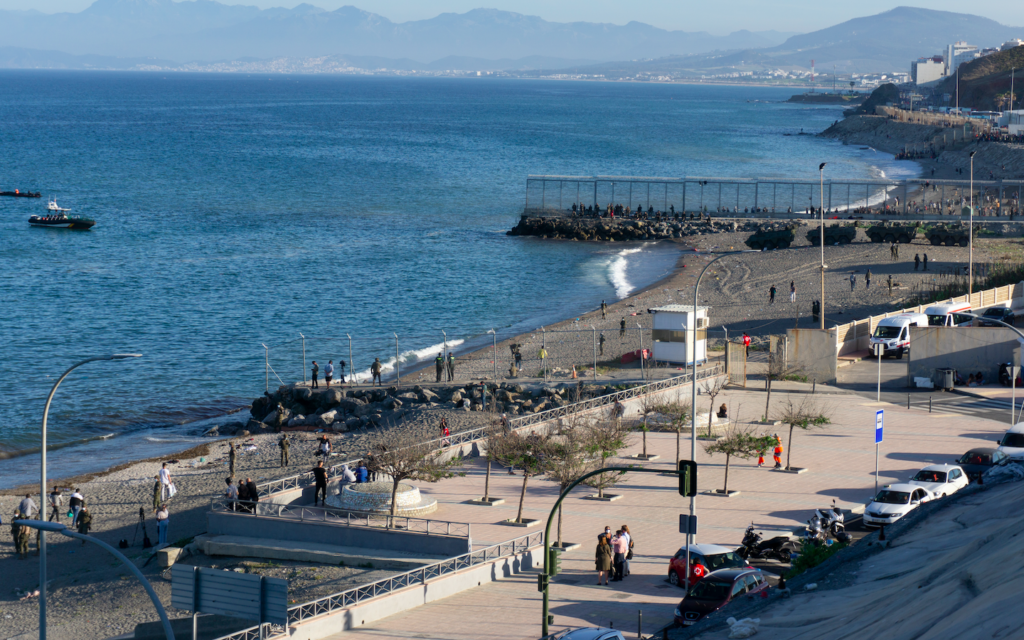
Thousands of migrants reached the Spanish territory within hours. Photo credit: Cristian Borrego Sala/Shutterstock
The migrant crisis that overwhelmed Ceuta has now reached Spain’s highest criminal court, with judges investigating whether the mass crossings were more than a desperate rush for Europe. The key question is whether thousands of people crossed the border spontaneously, or whether somebody organised it. The Audiencia Nacional has opened preliminary proceedings following the unprecedented migrant surge into the Spanish enclave on July 30 and 31, ordering police to determine whether the crossings were coordinated by a criminal organisation.
The move marks a significant new stage in one of Spain’s biggest migration crises in years. Rather than focusing solely on the migrants themselves, the investigation will examine whether criminal networks played a role in organising, directing or encouraging the crossings from neighbouring Morocco. At this stage, the court has reached no conclusion. It is seeking evidence to establish whether such an organisation existed.
A city overwhelmed in just two days
The scenes in Ceuta shocked Spain, thousands of migrants reached the Spanish territory within hours, overwhelming emergency services, security forces and reception centres already operating under intense pressure. Many crossed around the Tarajal border area, while others entered the sea in an attempt to reach Spanish soil. The humanitarian consequences were devastating.
Dozens of people lost their lives during the crisis, while rescue teams, police officers and volunteers worked around the clock to recover survivors and provide emergency assistance. The sheer scale of the crossings immediately raised questions. Could so many people have acted independently at the same time, or had somebody coordinated the operation? That is now the question before Spain’s National Court.
Police ordered to examine possible criminal involvement
Judge María Tardón has instructed the Comisaría General de Extranjería y Fronteras to prepare a detailed report examining what happened during the mass crossings. Investigators have been asked to determine whether the arrivals were “an action coordinated or directed by a criminal organisation.”
If evidence points towards organised criminal involvement, the report must also identify any individuals or groups believed to have planned or facilitated the crossings. The findings will help determine whether the Audiencia Nacional has jurisdiction to continue the criminal investigation,
The investigation follows a legal complaint
The proceedings were opened after a complaint was filed by Iustitia Europa, which alleges possible offences including crimes against state security, facilitating illegal immigration and involvement in a criminal organisation, opening preliminary proceedings does not mean the allegations have been proven.Under Spanish law, the purpose of these first steps is to establish whether there is enough evidence for a full criminal investigation to proceed, the Public Prosecutor’s Office has also been informed of the case.
Migration pressure remains a political flashpoint
The events in Ceuta have reignited one of Spain’s most sensitive political debates. The North African enclave has long been one of the European Union’s external borders, making it a focal point whenever migration pressure increases. Previous mass crossings have triggered diplomatic tensions between Spain and Morocco, prompted changes to border security and fuelled political arguments over immigration policy.
The latest crisis has once again placed Ceuta under intense national and international scrutiny. While emergency services dealt with the immediate humanitarian response, politicians argued over responsibility, border security and Spain’s ability to cope with large-scale arrivals. Now the focus is shifting from the border itself to the courts.
What happens next?
The police report requested by Judge Tardón will play a crucial role in deciding whether the Audiencia Nacional continues the investigation. If investigators conclude there are indications that organised criminal networks coordinated the crossings, the court could expand its inquiries into those responsible. If no evidence of organised criminal activity is found, the case could instead remain within the jurisdiction of other courts dealing with immigration-related offences.
For now, the investigation remains in its earliest stages, what began as a humanitarian emergency at Spain’s southern border has become a judicial investigation with potentially significant legal and political consequences. The central question is no longer only how thousands of migrants reached Ceuta. Spain’s highest criminal court now wants to know whether someone helped make it happen.
Follow Euro Weekly News on Google News
Get breaking news from Spain, travel updates, and expat stories directly on your Google News feed.
Follow on Google NewsSign up for personalised news
Subscribe to our Euro Weekly News alerts to get the latest stories into your inbox!
By signing up, you will create a Euro Weekly News account if you don't already have one. Review our Privacy Policy for more information about our privacy practices.


Molly Grace
Molly is a British journalist and author who has lived in Spain for over 25 years. With a background in animal welfare, equestrian science, and veterinary nursing, she brings curiosity, humour, and a sharp investigative eye to her work. At Euro Weekly News, Molly explores the intersections of nature, culture, and community - drawing on her deep local knowledge and passion for stories that reflect life in Spain from the ground up.
Comments