Older Britons in Spain face a painful choice as the retirement dream becomes harder to live
By Harry Dennis • Published: 04 Aug 2026 • 11:56 • 3 minutes read
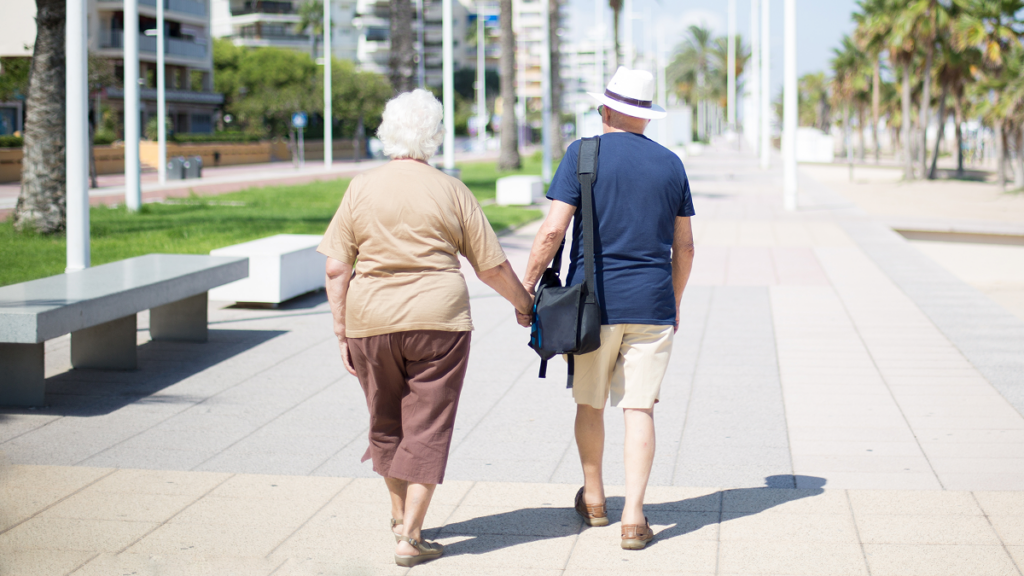
For some older residents, Spain’s summer heat can turn outdoor life into months spent indoors. Credit: Evgeniia Primavera / Shutterstock
Retiring beneath the Spanish sun is easy to picture at 65. The harder question is whether the same home, climate and distance from family will still feel manageable at 80, and official figures show that the balance among older Britons has already shifted towards departures.
How a Spanish retirement has started to feel like confinement
When Barbara Collins moved from London to Granada three years ago, she found the sunshine and change of pace she had been looking for. At 72, however, she is preparing to leave Spain when her rental agreement ends. Collins told the i Paper that the increasingly difficult summer heat had left her feeling “trapped inside my own house”. She avoids going outside during the hottest hours and says she now hides from the sun “like a vampire”. Visits to the Alhambra, meals out and regular meetings with friends have fallen away. Wildfires around Granada have also added another source of anxiety.
Collins plans to explore Lisbon as an alternative. Although, one person’s move shouldn’t establish that Portugal is replacing Spain as a retirement destination. And neither country has a single climate. Parts of Portugal also experience dangerous summer heat. However, the Atlantic breeze is whole-heartedly welcomed when it appears during the summer months.
Her most revealing conclusion was about not being tied down: “I’m so glad I never bought a house here.”
Official figures show the over-65 flow has reversed
Collins’s experience coincides with a wider demographic change. An Office for National Statistics analysis, drawing on Spanish migration data, found that more UK-born people aged 65 and over are now leaving Spain than arriving. The number of British-born people moving to Spain fell by 41 per cent between 2021 and 2024, from around 34,000 to 20,000. Spain’s British-born population also declined from approximately 298,000 in January 2022 to 282,000 in January 2025. Around 109,000 of those remaining were aged 65 or over, representing roughly 40 per cent of Spain’s British-born population. However, Spain nevertheless remains home to more British-born people than any other European country outside the UK.
Separate figures from Spain’s National Statistics Institute also show that the number of residents holding British nationality fell by 5,940, or 2.2 per cent, during 2024.
None of these datasets identifies a single, definitive reason why people are leaving. Changes in the overall population also reflect deaths within an ageing community. However, other indicators and public opinion point to several possible explanations for the shift.
This year’s heat makes the age divide impossible to ignore
Heat cannot be presented as the cause of the migration reversal, but Collins’s difficulty is far from an abstract concern. The first half of summer 2026, from June 1 to July 15, was the hottest recorded in Spain, according to the State Meteorological Agency, AEMET. June alone averaged 23.3°C across mainland Spain, some 3.2°C above the 1991–2020 average, making it the second-hottest June since records began. By late July, Spain had entered its fourth heatwave of the summer.
The health impact has again fallen overwhelmingly on older people. Provisional figures from Spain’s Daily Mortality Monitoring System, MoMo, attribute more than 3,000 deaths to excess heat between May and July 2026, approximately twice the number estimated during the same period of 2025. Almost 98 per cent involved people over 65, while close to two-thirds were over 85.
For context, the whole 2025 heat season ended with 3,832 estimated heat-attributable deaths. Before August had fully begun, the provisional 2026 total was already approaching that figure. It shows why a climate that feels liberating at one stage of retirement can become considerably harder to manage later.
A Spanish retirement can look very different at 80
Temperature is only part of the equation. A home reached mainly by car, steep stairs or a quiet out-of-season neighbourhood may feel very different after illness, bereavement or reduced mobility. The UK government’s later-life guidance for British residents says families are generally expected to provide social care in Spain. Support commonly associated with UK local authorities may not always be available, even where a resident has access to Spanish state healthcare. And for British families, post-Brexit travel and residency rules can also complicate extended stays by relatives when daily care becomes necessary.
Yet this is not a wholesale rejection of Spain. British buyers remained the largest foreign group in Spain’s housing market during the first half of 2025, completing 5,731 purchases, according to the General Council of Notaries.
For Collins, renting preserved the option to change course. Her relief at never buying may be the most consequential detail in her account. A retirement destination must feel right upon arrival, but it also needs to support ordinary life as health, mobility and family circumstances change.
Follow Euro Weekly News on Google News
Get breaking news from Spain, travel updates, and expat stories directly on your Google News feed.
Follow on Google NewsSign up for personalised news
Subscribe to our Euro Weekly News alerts to get the latest stories into your inbox!
By signing up, you will create a Euro Weekly News account if you don't already have one. Review our Privacy Policy for more information about our privacy practices.



Harry Dennis
Born in the UK and raised on the Cádiz coast, Harry brings his background in design, music, and photography to his writing for Euro Weekly News, sharing stories that celebrate culture and lifestyle across Spain and beyond.
Comments