Why Mijas road markings wear out so quickly – and how the town is fighting back
By Adam Woodward • Published: 07 Aug 2026 • 16:25 • 2 minutes read
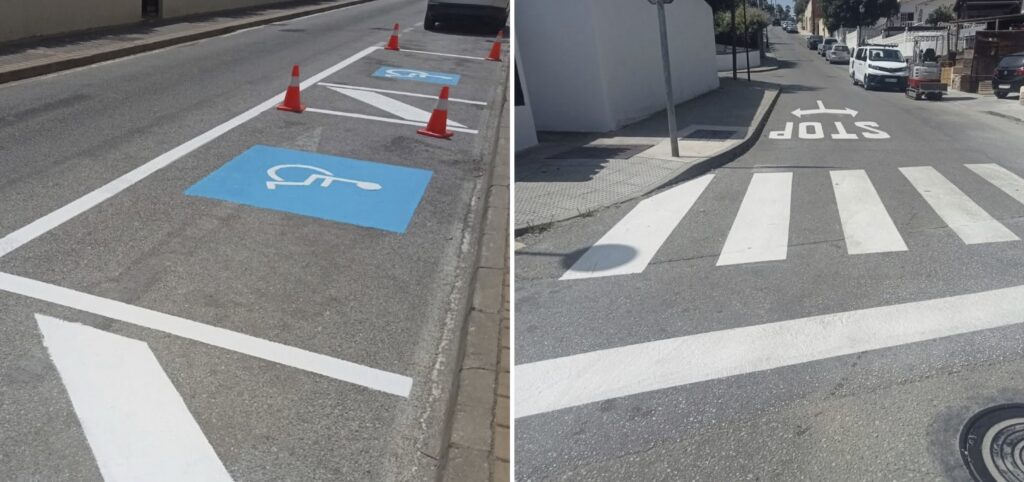
Mijas repaints the boundaries Credit: Ayto Mijas
Drivers and walkers across Mijas Pueblo and Mijas Costa keep noticing the same thing: white lines, zebra crossings and parking bay markings fade, flake or vanish far sooner than expected. Fresh paint appears, only for tyres, weather and cleaning crews to take their toll again within months. It’s a frequent complaint among local residents. Local operational services are now rolling out a fresh round of on-street signage upgrades to keep traffic and pedestrians safer.
Work has already transformed the parking layout at El Bombo beach on Avenida de El Descubrimiento. New markings are also reorganising existing spaces, freeing up extra bays and the smooth the flow of cars heading to the sand. Similar jobs have refreshed pedestrian crossings in La Ponderosa and Polarsol, while Calahonda has gained clearer motorcycle parking, vehicle entrances and spaces reserved for people with reduced mobility. Crews will next turn their attention to areas around schools ahead of the new term, then move into important spots in Mijas Pueblo near Plaza Virgen de la Peña. A specialist contractor will soon join the in-house teams so the programme can cover more ground.
Steep slopes put constant stress on the paint
Mijas Pueblo, clinging to a steep mountainside, means that cars accelerate hard uphill and brake sharply on the way down. Those repeated horizontal forces scrape paint off the surface much faster than on flat coastal roads. Narrow lanes full of tourist buses, delivery vans and everyday traffic only speed up the grinding process.
Smooth stones and tiles refuse to hold the coating
Many streets still use polished stone, traditional cobbles or tiles instead of open-textured asphalt. Paint sits on top rather than keying into the surface. Once tyres roll over it day after day the film lifts, cracks and peels away. Rough asphalt grips better; the older materials in the pueblo simply do not.
High-pressure cleaning keeps the village white but strips the lines
Mijas takes pride in its pueblo blanco look. Regular street washing with powerful jets, degreasers and industrial cleaners is part of that effort. The same pressure that shifts dirt also blasts road paint off the ground. Clean streets come at a cost to the markings.
Southern sun and heat finish the job
Intense ultraviolet light and high summer temperatures break down the polymer binders in both standard and thermoplastic paints. The coating turns brittle, loses colour and starts to crack. Research into pavement markings shows UV exposure and heat accelerate yellowing and loss of visibility, especially on lighter-coloured lines that need to stay bright for safety.
Traffic density across the municipality adds the final pressure. Narrow lanes see a constant mix of private cars, heavy vehicles and foot traffic that grinds the surface further.
Ongoing work and bigger plans for safer streets
The current programme forms part of routine maintenance carried out with local resources and coordinated with traffic and public-way teams. A new contract for specialised signage work is due shortly, allowing faster coverage of more neighbourhoods and urbanisations. Similar safety improvements have featured in earlier municipal efforts, including earlier road-safety packages and larger infrastructure packages that tackle parking shortages and street repairs across Mijas.
Drivers can expect clearer lines around school zones first, then improved visibility in the historic centre. Pedestrians will benefit from better-marked crossings and reserved bays. While the combination of slopes, surface materials, cleaning routines, strong sun and modern paint rules means the markings will never last forever, regular repainting remains the practical answer. Residents and visitors alike should find the roads easier to navigate as the teams continue their rounds through the rest of the summer and into the school year.
Follow Euro Weekly News on Google News
Get breaking news from Spain, travel updates, and expat stories directly on your Google News feed.
Follow on Google NewsSign up for personalised news
Subscribe to our Euro Weekly News alerts to get the latest stories into your inbox!
By signing up, you will create a Euro Weekly News account if you don't already have one. Review our Privacy Policy for more information about our privacy practices.


Adam Woodward
Adam is a writer who has lived in Spain for over 25 years. With a background in English teaching and a passion for music, food, and the arts, he brings a rich personal perspective to his work at Euro Weekly News. As a father of three with deep roots in Spanish life, Adam writes engaging stories that explore culture, lifestyle, and the everyday experiences that shape communities across Spain.
Comments