Buying a home in Spain is slipping further out of reach for expats and locals
By Harry Dennis • Updated: 09 Aug 2026 • 20:12 • 4 minutes read
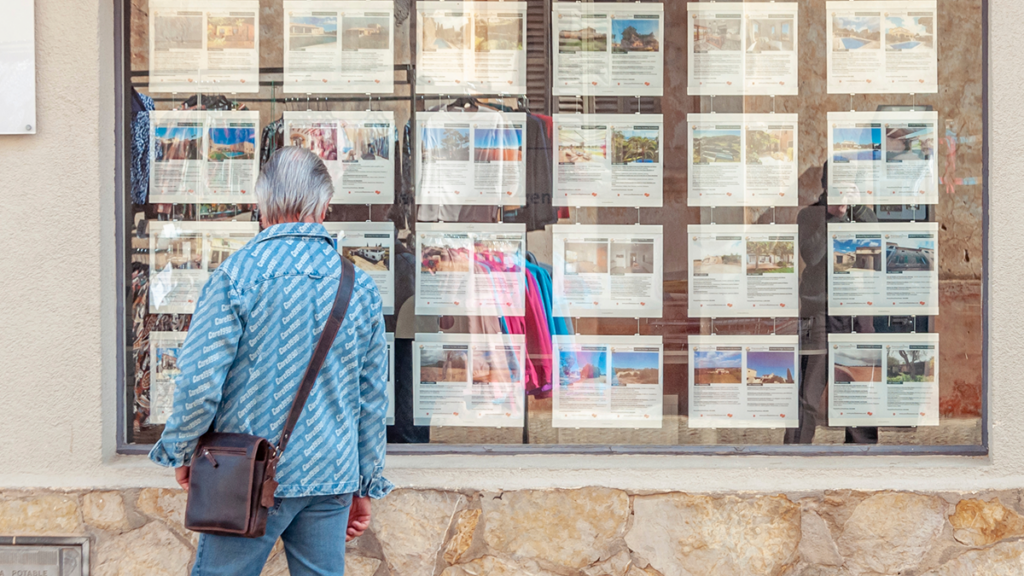
Location can change the income needed to buy a home in Spain by thousands of euros a month. Credit: Neme Jiménez / Shutterstock
Two incomes can be combined, but moving a few hundred kilometres can alter the mortgage calculation by thousands of euros each month. Coastal hotspots popular with foreign buyers sit among Spain’s toughest markets, while several inland capitals tell a very different story.
San Sebastián, Madrid and Barcelona break the €4,000 barrier
A person or household needs an average net income of €1,999 a month to buy a typical home in Spain without allowing the mortgage payment to swallow more than 35 per cent of that income, according to Accumin Intelligence’s analysis of 60 Spanish cities. This national figure, however, hides a huge geographical divide. The modelled requirement rises to €5,074 in San Sebastián, €4,574 in Madrid and €4,485 in Barcelona. They are the only three cities analysed where the threshold exceeds €4,000.
The study, using first-quarter 2026 housing data, models the purchase of a main home with 100 square metres of built space. It assumes an 80 per cent mortgage, fixed repayments and a maximum housing burden of 35 per cent of net income. Crucially, the amount refers to the combined monthly income of the buyer or household. A couple can add both incomes together; it is not the amount that each person must earn.
The monthly income needed across Spain’s property markets
The figures reveal obvious high thresholds in the major capitals, their surrounding municipalities and many coastal destinations.
Highest income requirements:
- San Sebastián: €5,074 net a month
- Madrid: €4,574
- Barcelona: €4,485
- Marbella: €3,532
- Palma de Mallorca: €3,477
- Bilbao: €3,185
Major cities, suburbs and coastal markets:
- Getafe: €2,950
- L’Hospitalet de Llobregat: €2,896
- Málaga: €2,832
- Benidorm: €2,813
- Badalona: €2,705
- Valencia: €2,675
- Seville: €2,566
- Almería: €1,727
- Murcia: €1,526
- Castellón de la Plana: €1,338
Lowest income requirements
- Zamora: €1,279
- Lugo: €1,322
- Ciudad Real: €1,323
- Palencia: €1,339
Overall, 14 of the 60 cities require more than €2,500 in monthly net household income under the study’s findings. The difference between San Sebastián and Zamora reaches a stunning €3,795 gap every month.
For those thinking that simply moving beyond Madrid or Barcelona could make a huge difference, it doesn’t exactly resolve the problem. Places like Getafe still approach €3,000, while L’Hospitalet and Badalona remain well above the national figure.
The deposit still remains a separate and costly barrier
Reaching the stated income threshold only addresses the monthly mortgage payment. Households then still have to worry about having enough money to complete the purchase. The calculation assumes that a bank finances 80 per cent of the property’s value. Spain’s Banco de España says mortgage lending is normally limited to a maximum of 80 per cent of the appraised value, leaving the buyer to provide the remainder.
Accumin’s analysis explicitly excludes that 20 per cent contribution, along with purchase taxes and other initial costs. If the bank’s valuation comes in below the agreed price, the amount that must be provided in cash can become larger still.
Some first-time buyers can access 100 per cent financing
Some qualifying buyers may not need to fund the usual 20 per cent deposit entirely from savings. Spain’s ICO First Home Guarantee allows a participating bank to finance up to 100 per cent of the lower of the property’s purchase price or appraised value.
The scheme is not a grant and approval is not automatic though. The state guarantees the portion of the mortgage above the bank’s usual 80 per cent limit, while the lender still decides whether the applicant can afford the repayments and sets the interest rate and fees. Taxes and other purchase costs still remain excluded.
Under the youth programme, every buyer must be 35 or younger when the mortgage is signed. Applicants must also have lived legally in Spain continuously for the previous two years, be buying their first permanent home and have net assets of no more than €150,000 each. Families with dependent children can apply without an age limit.
Income ceilings now vary by province. Based on the current IPREM reference, the limit reaches €63,000 a year per applicant in Madrid, Barcelona, Málaga, Gipuzkoa, Bizkaia and the Balearic Islands. It stands at €46,200 in provinces including Alicante and Valencia, and €37,800 in Almería, Seville, Murcia, Zamora and many others. ICO publishes the complete provincial table.
The property must also fall below a regional price ceiling, ranging from €200,000 in Extremadura to €325,000 in Madrid. Andalucía’s limit is €225,000, while it is €275,000 in the Balearic Islands and €300,000 in Cataluña and the Basque Country.
The rules require legal residency rather than Spanish nationality, meaning qualifying British and other foreign residents can apply. Non-residents buying a holiday home cannot. Applications must be made through an ICO-participating bank, with the current deadline set at December 31, 2027.
Rising 2026 prices could move the target higher
The income map is a snapshot based on the first three months of 2026, but Spain’s housing market has continued climbing since. Tinsa’s second-quarter index found that new and existing home values increased by 3.7 per cent over three months and 15.2 per cent over the year. It was the strongest annual rise recorded by that index since the third quarter of 2006.
This doesn’t indicate that the required income has risen by exactly 15.2 per cent in every city. Mortgage rates, loan terms and local price movements also affect the calculation. It does, however, suggest that the financial pressure facing buyers hasn’t eased since the period covered by the salary study.
The price map provides a useful first affordability test, but the real calculation starts when discussing a specific property, its bank valuation and the financing offered. Even where the monthly income appears sufficient, deposits, taxes and buying costs can add a large chunk of cash for people already finding it hard to purchase a household in Spain.
Follow Euro Weekly News on Google News
Get breaking news from Spain, travel updates, and expat stories directly on your Google News feed.
Follow on Google NewsSign up for personalised news
Subscribe to our Euro Weekly News alerts to get the latest stories into your inbox!
By signing up, you will create a Euro Weekly News account if you don't already have one. Review our Privacy Policy for more information about our privacy practices.




Harry Dennis
Born in the UK and raised on the Cádiz coast, Harry brings his background in design, music, and photography to his writing for Euro Weekly News, sharing stories that celebrate culture and lifestyle across Spain and beyond.
Comments