Electric planes in Spain: Could Barcelona-Ibiza soon be flown without jet fuel?
By Molly Grace • Published: 09 Aug 2026 • 22:39 • 3 minutes read
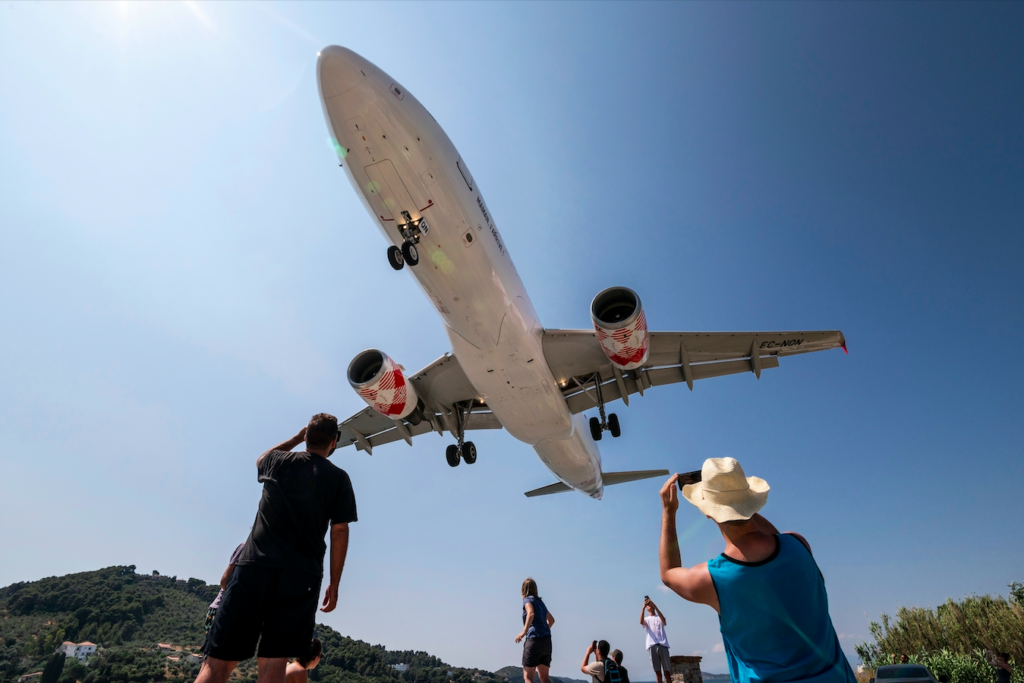
Barcelona and Ibiza are the kind of destinations that demonstrate why short-range electric aviation is being explored. Photo credit: Giannis Papanikos/Shutterstock
For anyone travelling around Spain, some journeys are so familiar that the idea of changing the aircraft itself might seem unnecessary. But what if a future flight between Barcelona and Ibiza could be made without conventional aviation fuel? Or if smaller aircraft could connect Spanish cities and islands while producing no emissions during the flight?
That is the idea behind technology being developed for regional aviation, with Spanish airlines Volotea and Air Nostrum backing work on electric aircraft. The technology is already being tested, while Spain’s Aviation Safety and Security Agency (AESA) and the European Union Aviation Safety Agency (EASA) are involved in the regulatory process needed before passengers could ever board one.
The short flights that could change first
Electric aircraft are not being developed as a replacement for the large jets used on long-distance routes. The initial opportunity is much closer to home: short regional journeys where smaller aircraft carrying fewer passengers could make better use of electric propulsion. Dovetail Electric Aviation, the company developing the technology, is working on converting existing small aircraft rather than designing an entirely new aircraft from scratch.
Its battery-electric system is initially aimed at aircraft carrying fewer than 20 passengers and flights of around 100 to 150 kilometres. Longer-range versions using hybrid technology could eventually extend that distance considerably. That makes some Spanish routes more realistic candidates than others. A short connection between mainland Spain and a nearby island could potentially suit an electric aircraft, provided the final aircraft range, passenger load and certification requirements allow it.
Volotea and Air Nostrum have backed the technology
Volotea and Air Nostrum are not newcomers to the idea. In 2021, the airlines joined aviation technology company Dante Aeronautical in a project to develop a 100 per cent electric aircraft by converting existing planes. The proposed aircraft was designed for nine to 19 passengers, putting it firmly in the regional aviation category. The project also looked at the potential for electric aircraft to serve island connections, an area where Spain has a large number of short-haul flights.
The two airlines subsequently invested in Dante Aeronautical, which later developed into Dovetail Electric Aviation. Their involvement is significant because the technology is being considered from the perspective of airlines that already operate regional services rather than solely as an engineering experiment.
Could Barcelona-Ibiza become an electric route?
Barcelona and Ibiza are the kind of destinations that demonstrate why short-range electric aviation is being explored. The distance is far shorter than many of the journeys flown by conventional passenger jets, while demand for connections between mainland Spain and the Balearic Islands remains high. A future electric aircraft with sufficient range and passenger capacity could potentially serve such a route. But that does not mean an electric Barcelona-Ibiza service is about to launch.
The aircraft currently being developed for battery-electric operation have limited range compared with conventional commercial aircraft. Battery weight is one of the biggest obstacles, as carrying enough energy for a longer flight also means carrying more weight, which itself affects how efficiently the aircraft can operate.
Palma-Madrid is a different challenge
The idea of flying electrically between Palma and Madrid is considerably more complicated. The distance is far beyond the initial range being targeted for fully battery-powered aircraft. A future hybrid-electric aircraft could potentially cover much longer distances, but that technology is at a different stage from the smaller battery-electric aircraft currently being tested.
It would therefore be misleading to suggest that Palma-Madrid is about to become an electric flight. Instead, the route illustrates the wider challenge facing the industry: the technology may work particularly well for some regional journeys long before it becomes practical for longer domestic flights.
Spain is already testing the technology
Dovetail has been carrying out ground testing of its batteries and electric motors and has received authorisation from AESA for experimental flights in Spain. That is an important step, but experimental approval is not the same as permission to carry passengers.
Before an electric aircraft can enter commercial service, the aircraft, propulsion system and other components must pass the same rigorous aviation safety process required for conventional aircraft. EASA is also developing the regulatory framework needed to certify electric and hybrid aircraft. The agency has been working on adapting existing aviation rules to propulsion systems that do not rely on conventional jet engines.
When could passengers actually fly electric?
The technology still has several hurdles to overcome before an electric aircraft could appear on a scheduled Spanish service. Range, battery capacity, aircraft weight, charging infrastructure and passenger capacity all have to work together, while certification remains essential. Dovetail’s work is therefore aimed at developing aircraft that can eventually operate commercially rather than simply proving that an electric aircraft can get off the ground.
For passengers, the change is unlikely to happen overnight. There is no electric Barcelona-Ibiza or Palma-Madrid service that can currently be booked with Volotea or Air Nostrum. But Spain’s short domestic routes could eventually provide one of the first practical testing grounds for electric passenger aviation. If the technology reaches certification and the aircraft can deliver the required range, the familiar regional flight could one day involve a very different kind of aircraft.
Follow Euro Weekly News on Google News
Get breaking news from Spain, travel updates, and expat stories directly on your Google News feed.
Follow on Google NewsSign up for personalised news
Subscribe to our Euro Weekly News alerts to get the latest stories into your inbox!
By signing up, you will create a Euro Weekly News account if you don't already have one. Review our Privacy Policy for more information about our privacy practices.





Molly Grace
Molly is a British journalist and author who has lived in Spain for over 25 years. With a background in animal welfare, equestrian science, and veterinary nursing, she brings curiosity, humour, and a sharp investigative eye to her work. At Euro Weekly News, Molly explores the intersections of nature, culture, and community - drawing on her deep local knowledge and passion for stories that reflect life in Spain from the ground up.
Comments