Polish swimmer conquers Baltic after 55 hours then doctors make strange request
By Molly Grace • Published: 11 Aug 2026 • 23:55 • 3 minutes read
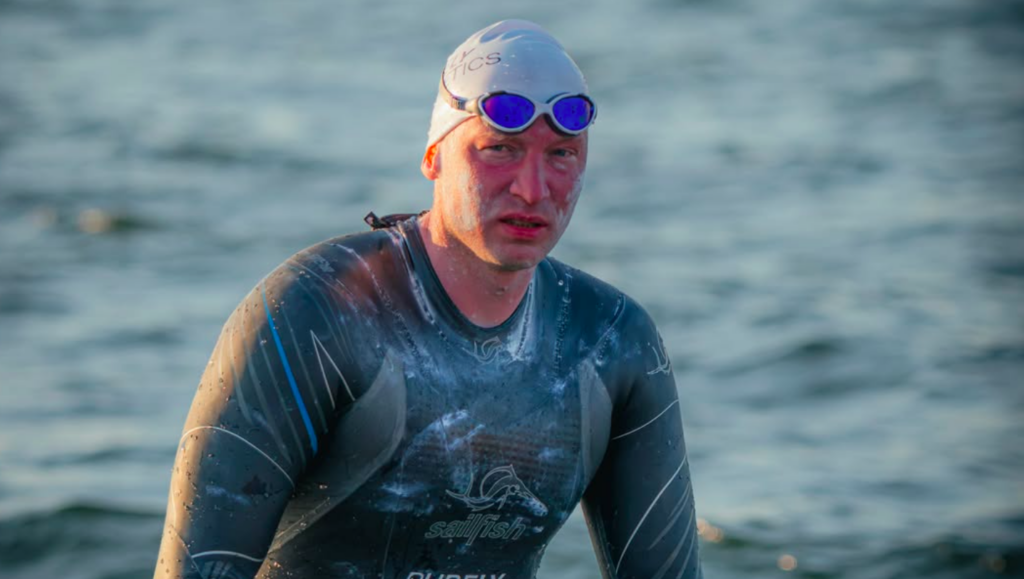
Bartłomiej Kubkowski had spent more than two days in open water. Photo credit:Bartłomiej Kubkowski on Instagram
What would happen to your body after almost 55 hours swimming through the Baltic Sea without sleep? One Polish athlete has now given scientists a rare chance to find out, after an extraordinary request was made following his latest challenge. Bartłomiej Kubkowski had spent more than two days in open water during his attempt to swim from Sweden to Poland. The request came after he finally reached the Polish coast, following a journey of more than 160 kilometres.
Doctors asked if they could freeze samples of his blood for scientific research, Kubkowski agreed. The unusual request followed a feat that pushed him through exhaustion, sleep deprivation, cold water and difficult conditions. He completed the crossing on his fifth attempt, becoming the first person to swim from Sweden to Poland across the Baltic Sea.
A fifth attempt finally succeeds
Kubkowski set off from Kåseberga in southern Sweden and reached Dziwnów on Poland’s Baltic coast. The journey covered just over 160 kilometres and took around 55 hours. Reports put his completion time at approximately 55 hours and 10 minutes.
He remained in the water throughout the crossing, a support boat accompanied him, but he was not allowed to touch it. Food and drinks could be provided from the boat, meaning he had to keep swimming rather than climbing aboard to rest. He also went without sleep during the crossing.
The achievement came after four previous attempts over five years. His previous effort ended when he was only around 11 kilometres from the Polish coast. Exhaustion and worsening conditions forced him to stop before reaching land. This time, he made it all the way to Dziwnów.
His body became the next question
After the swim, medical staff carried out tests on Kubkowski, the results prompted the unusual request to preserve his blood for research. The samples could give scientists an opportunity to examine the physical effects of an endurance effort lasting more than two days. Kubkowski’s experience is particularly unusual because the crossing combined prolonged physical exertion with a lack of sleep and exposure to open water.
According to reports, the head doctor told Kubkowski that his blood results resembled those of someone who had just completed a marathon. That comparison came after a swim roughly four times the distance of a standard marathon, performed continuously through the Baltic. The samples will now be frozen rather than simply discarded after routine medical testing, allowing them to be used for further scientific work.
The final kilometres were the hardest
Getting to the Polish coast was not simply a matter of continuing at the same pace until the finish. Kubkowski said that around 11 kilometres from the end, he began losing consciousness and became unsure of where he was. A change in the weather added another difficulty during the final part of the crossing.
After spending more than two days awake and swimming, he still had to maintain enough concentration and strength to complete the remaining distance. He eventually reached the beach at Dziwnów, where supporters were waiting. The finish marked the end of a challenge that had occupied him for years.
The swim also raised money
Kubkowski’s Baltic challenge was linked to a fundraising campaign for Cancer Fighters, a Polish foundation supporting children with cancer. The campaign had raised more than one million Polish złoty by the time of the latest reporting. That means the crossing was not solely a personal sporting challenge. Money was being raised for children receiving cancer treatment while Kubkowski attempted a route that nobody had previously completed in the same way.
Now the achievement has another potential legacy. The frozen blood samples could allow researchers to study what happens inside the body after an extreme endurance effort lasting almost 55 hours. Kubkowski set out to conquer the Baltic Sea after four failed attempts, He succeeded on the fifth. But after 160 kilometres in the water, the most unusual part of the story may only just be beginning, because scientists now want to see what his body went through.
Follow Euro Weekly News on Google News
Get breaking news from Spain, travel updates, and expat stories directly on your Google News feed.
Follow on Google NewsSign up for personalised news
Subscribe to our Euro Weekly News alerts to get the latest stories into your inbox!
By signing up, you will create a Euro Weekly News account if you don't already have one. Review our Privacy Policy for more information about our privacy practices.



Molly Grace
Molly is a British journalist and author who has lived in Spain for over 25 years. With a background in animal welfare, equestrian science, and veterinary nursing, she brings curiosity, humour, and a sharp investigative eye to her work. At Euro Weekly News, Molly explores the intersections of nature, culture, and community - drawing on her deep local knowledge and passion for stories that reflect life in Spain from the ground up.
Comments