Polish beachgoers form human chain in seconds to search for missing toddler: That’s community spirit
By Adam Woodward • Published: 06 Aug 2026 • 21:32 • 3 minutes read
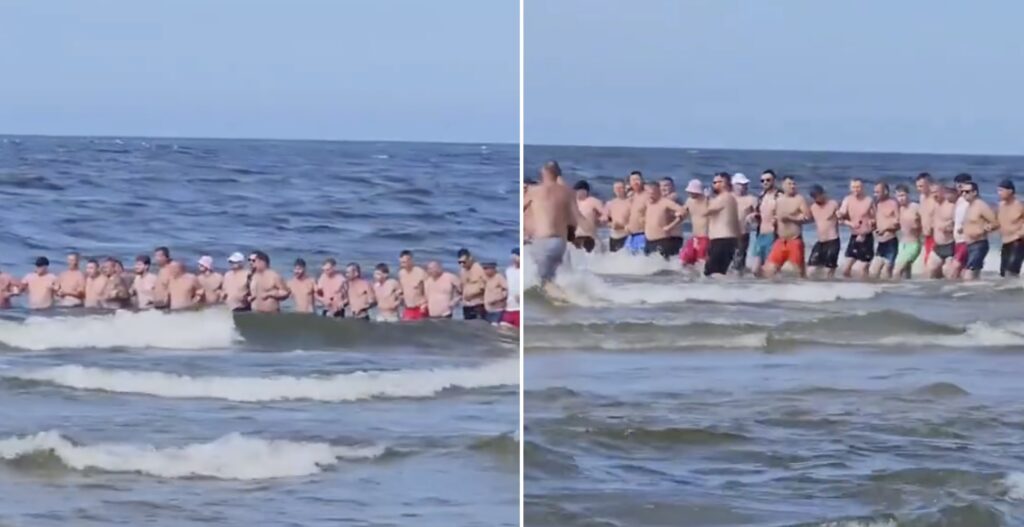
Instant human chain in Polish shores. Credit: @CaseyKrol - X
Hundreds of ordinary holidaymakers on a busy Baltic beach in Stegna dropped everything at a moment’s notice on June 29 when a worried mum feared her husband and little boy had vanished into the sea. Lifeguards had already raised the red flag because the waves were rough, so swimming was off the cards. In a second, people climbed out of the water, but Bogusia could not spot her husband or their two-and-a-half-year-old son. The pair had said they were heading for a dip and left their phones behind on the blanket. Panic set in fast.
Hundreds of Polish people unite to find lost 2 year old child in Stegna, Poland. Thankfully, the child was found safe and unharmed.
Be like Poland 🇵🇱 pic.twitter.com/6XWBnuu8vy
— Casey Krol (@CaseyKrol) August 5, 2026
Beachgoers did not hang about waiting for official orders. Strangers linked arms and formed a long human chain, what Poles call a “łańcuch życia” or chain of life, stretching through the shallow water and along the shoreline in a sweep for anyone under water and in trouble.
Lifeguards joined in straight away. Someone grabbed a megaphone to direct the search. ATVs rolled across the sand to cover more ground. Everyone knew time mattered if anyone really had got into trouble in those conditions. No one stood around watching. They organised themselves on the spot, ready to pull a child or adult from the water if needed.
Selfless action takes priority over any doubt
It turned out the fears were unfounded. The father had seen the red flag and decided against the water. Instead, he took his son up into the dunes to collect shells. He had no idea a full-scale search was under way for them both. After several dozen minutes the pair turned up safe and sound. Relief flooded through the crowd. Yet that happy ending does not change the most remarkable part of the story.
What counted was the instant willingness of ordinary people to put their own afternoon on hold. Locals and tourists who had never met each other formed ranks in a second and without hesitation. They acted because a child’s safety was on the line and every second could matter. Polish community life often works exactly like this. When something goes wrong, people pull together fast. No standing on ceremony. No waiting for someone else to take the lead. They just get on with it.
How the search unfolded on the spot
Once the alarm went up, the chain moved steadily through the shallows, scanning metre by metre. Rescuers checked the water while others covered the sand and dunes. Communication stayed clear thanks to the megaphone. The whole effort stayed calm and organised even though tension ran high. After the father and son were located, everyone could finally breathe again. Bogusia later admitted she had already pictured the worst possible outcome. Her relief was huge once the truth became clear.
This kind of rapid, selfless response is not unusual on Polish beaches. Similar human chains have appeared elsewhere along the Baltic when a child briefly goes missing or someone gets into difficulty in the water. Holidaymakers understand the risks of strong currents and sudden changes in conditions. They also understand that waiting can cost lives. So they act first and sort the details later.
Practical advice if you lose sight of someone on the beach
Stay as calm as you can and look around carefully. Try calling or shouting. If there is any chance someone has gone into the water, raise the alarm with lifeguards and nearby beachgoers immediately. Seconds count in those situations. Official bathing sites in Poland display clear flags and have trained staff ready. Checking the current water quality and safety information before you swim is always sensible. You can find official updates for places like Stegna through the national bathing water service.
Follow Euro Weekly News on Google News
Get breaking news from Spain, travel updates, and expat stories directly on your Google News feed.
Follow on Google NewsSign up for personalised news
Subscribe to our Euro Weekly News alerts to get the latest stories into your inbox!
By signing up, you will create a Euro Weekly News account if you don't already have one. Review our Privacy Policy for more information about our privacy practices.



Adam Woodward
Adam is a writer who has lived in Spain for over 25 years. With a background in English teaching and a passion for music, food, and the arts, he brings a rich personal perspective to his work at Euro Weekly News. As a father of three with deep roots in Spanish life, Adam writes engaging stories that explore culture, lifestyle, and the everyday experiences that shape communities across Spain.
Comments