Spain’s new cold-call rule: the number to watch and how you could silence it
By Harry Dennis • Published: 11 Aug 2026 • 11:39 • 3 minutes read
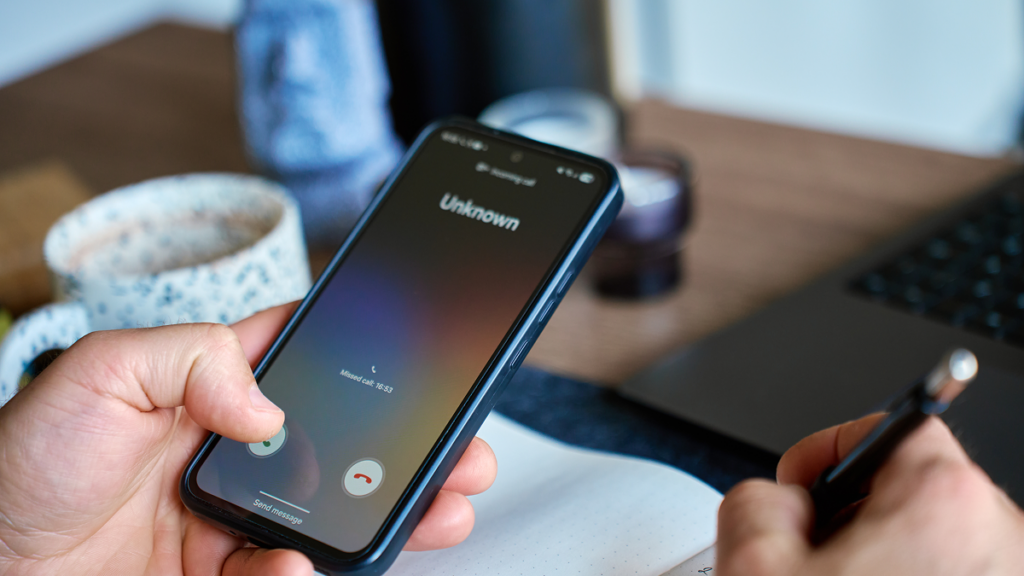
From October, Spain's sales calls will carry a number that cannot be rung back. Credit: Lazy_Bear / Shutterstock
An unknown mobile number is a small daily gamble: the parcel, the clinic, a friend in trouble, or another company trying to sell something. From October the sales calls have to declare themselves in their first three digits, and phone companies can offer to silence the whole range at once.
Nine digits beginning with 400, and no way to ring back
From Saturday October 17, any company making a commercial call in Spain must place it from a nine-digit national number beginning with the code 400. Telephone operators are also required to block commercial calls made from anything else.
The rule comes from a resolution signed on Tuesday April 14 by the government’s telecoms department, and published in Spain’s official state gazette, two days later. Companies and operators were given six months to adapt.
One of the biggest adaptations is the implementation of the new 400 code. Numbers in the 400 range are outgoing only, and a missed call from one cannot be returned because operators have to block incoming traffic to the range.
The Ministerio para la Transformación Digital y de la Función Pública, the digital transformation ministry, said that design removes the risk of ringing back an unknown number and landing on a fraudulent line.
Phone companies can offer to switch off the whole range
The resolution also reminds operators that they may offer customers the option of disconnecting commercial calls delivered through the 400 range. That’s the part with the biggest everyday effect. Once every sales call sits inside one identifiable block of numbering, a single filter can remove all of them at once, something that was impossible while marketing calls were mixed in with ordinary geographic and mobile numbers.
Anyone who still receives a commercial call from a number outside the 400 range after October 17 can report it to the telecoms user complaints office, or to the Comisión Nacional de los Mercados y la Competencia (CNMC), Spain’s markets and competition regulator.
A second resolution published the same day sets out where customer service calls may come from too: specific short numbers, the free 800 and 900 ranges, or ordinary geographic numbers. A ministerial order in force since March 2025 had already banned firms from using mobile numbering for either purpose.
Contact centre firms are fighting the rule in the Audiencia Nacional
The industry that makes those calls has gone to court. On Wednesday June 3 the Asociación Española de Expertos en la Relación con Clientes (AEERC), which represents customer contact companies, filed a challenge at the Audiencia Nacional, Spain’s national court, and asked for the resolution to be suspended while the case is heard. The association said the measure causes irreversible damage by placing purely advertising calls and calls a customer has already agreed to receive behind the same prefix. It wants consented calls reclassified as customer service and left on ordinary numbering.
Its central practical complaint is the one-way design. The AEERC argued that a customer who misses a call confirming a suspicious bank transaction, reporting a fault on a utility supply or following up a medical appointment would have no way of calling back.
The court has admitted the case, and the resolution has not been suspended. As things stand, the October 17 date holds.
Charities, pollsters and smaller firms fall outside the rule
The obligation follows the scope of Ley 10/2025, Spain’s customer service law, approved in December 2025. It covers providers of essential services and companies or groups with more than 250 employees, €50 million in turnover or a balance sheet above €43 million.
Smaller telemarketing operations calling on their own account fall outside it. Charities ringing for donations and pollsters asking about voting intention are not making commercial calls under the definition used, so they are not expected to appear on 400 either.
The resolution also only assigns numbering. It does not cap how many calls a company can make, so the volume arriving on Spanish phones need not fall at all. What changes is that the calls become identifiable, and therefore blockable in bulk.
More than 300 million calls blocked before the range even opens
Speaking on Monday August 10, the minister for digital transformation, Óscar López, said operators had already blocked more than 300 million calls and 26.6 million text messages under the government’s anti-scam plan, which began in March 2025. The 400 range is the final piece of that plan, following the text message register that starts blocking unregistered sender names on Tuesday September 15.
Until the Audiencia Nacional rules on the request for suspension, the date to watch remains Saturday October 17, when the first calls starting with 400 should start arriving.
Follow Euro Weekly News on Google News
Get breaking news from Spain, travel updates, and expat stories directly on your Google News feed.
Follow on Google NewsSign up for personalised news
Subscribe to our Euro Weekly News alerts to get the latest stories into your inbox!
By signing up, you will create a Euro Weekly News account if you don't already have one. Review our Privacy Policy for more information about our privacy practices.




Harry Dennis
Born in the UK and raised on the Cádiz coast, Harry brings his background in design, music, and photography to his writing for Euro Weekly News, sharing stories that celebrate culture and lifestyle across Spain and beyond.
Comments