Terrifying train derailment in southern England as 20 rushed to hospital
By Molly Grace • Updated: 14 Aug 2026 • 0:00 • 3 minutes read
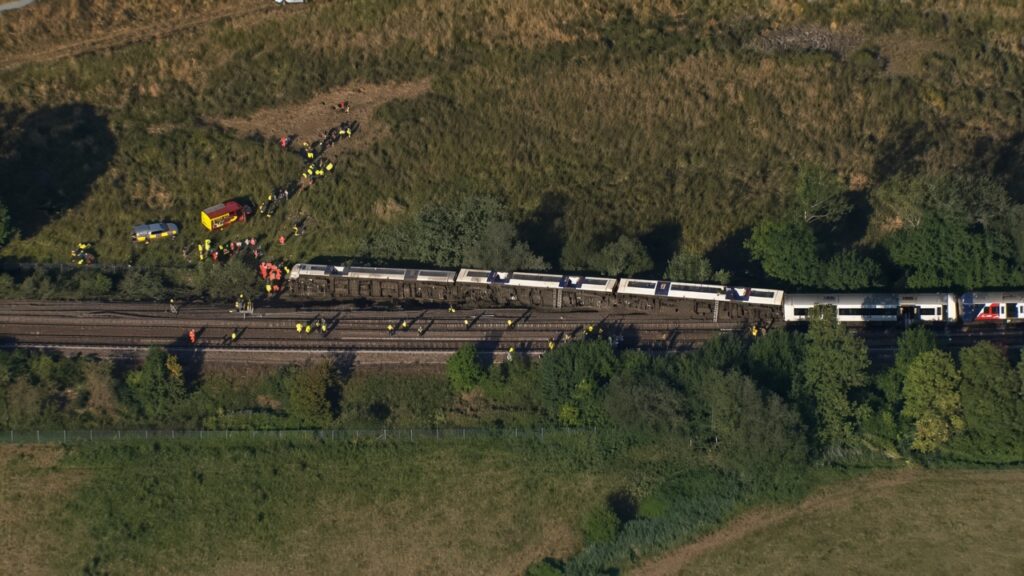
Images from the scene have raised questions about possible damage or buckling to the railway track. Photo credit: Basil the Great on X
Passengers have been thrown into chaos after a Southern train carrying around 150 people has derailed near Lewes in East Sussex, leaving three carriages on their sides and around 20 people injured, including two serious cases. The train was travelling from London Victoria to Eastbourne when it came off the tracks shortly before 04:00pm on Thursday.
The rear three carriages of the eight-carriage service overturned, with some passengers trapped inside until emergency crews could reach them. All passengers were eventually evacuated safely, but the scale of the derailment has triggered a major emergency response involving police, firefighters, ambulance crews and air ambulances.
Passengers trapped as carriages overturn
Those on board have described the sudden movement as the train began to derail. One passenger said the carriage appeared to jump upwards before the brakes were applied, sending luggage and personal belongings flying through the carriage. Some passengers were trapped in the overturned carriages and needed assistance from emergency crews.
Others were able to get out themselves, while people who did not require hospital treatment were taken to a nearby community centre for support. All passengers had been evacuated by the evening. Footage from the scene showed the overturned carriages lying beside the railway line, while emergency vehicles and helicopters were brought in to assist the rescue operation.
Major incident declared near Lewes
The derailment has been declared a major incident, bringing a large-scale emergency response to the area. British Transport Police said all passengers had been safely evacuated and officers were working alongside other emergency services at the scene. The force also confirmed that it was supporting the Rail Accident Investigation Branch as investigators began establishing what caused the train to leave the tracks.
The incident caused major disruption to rail services through Lewes, with routes affected between the Sussex towns and towards Brighton and other destinations. Passengers were warned to expect cancellations and delays while the damaged train and track were dealt with.
What caused the train to derail?
The cause remains under investigation, and authorities have not confirmed what made the train leave the tracks. Images from the scene have raised questions about possible damage or buckling to the railway track, particularly after an extended period of extreme heat across parts of the UK. However, this remains a possibility rather than an established cause.
Network Rail has previously warned that very high temperatures can cause railway tracks to expand, potentially creating buckles. That does not mean heat caused Thursday’s derailment, and investigators will need to examine the track, train and surrounding infrastructure before reaching any conclusion. The Rail Accident Investigation Branch has deployed inspectors to the scene to establish what happened.
Emergency crews faced huge rescue operation
The response involved emergency workers from across the region, with ambulances, firefighters, police and air ambulances attending the derailment. Some passengers were able to leave the train themselves, while others required assistance after the carriages overturned. People who did not need hospital treatment were taken to a nearby community centre. Local residents also helped passengers following the crash, providing assistance where needed while the emergency operation continued.
The incident has occured during a period of exceptionally high temperatures in the UK, adding another challenge for emergency crews working at the scene. The exact number of people taken to hospital has varied between updates, with later reports stating that around 20 people have been hospitalised with injuries of varying severity. The ambulance service’s confirmed injury breakdown remains two serious and around eighteen less serious cases.
Rail disruption expected to continue
The derailment has left passengers facing significant disruption across the Sussex rail network. Services through Lewes were suspended following the crash, affecting journeys involving Brighton, Eastbourne, Seaford and Haywards Heath. Travellers were advised to check their journeys before setting out as emergency and railway crews continued working at the scene.
The disruption is particularly significant because Lewes is an important connection between several destinations in East Sussex and the wider Brighton area. The damaged train and railway infrastructure must be examined before normal services can safely resume.
Investigation now under way
Transport Secretary Heidi Alexander said she was deeply concerned by the derailment and that the government is working with the rail industry and local partners to assist those affected. For the passengers on board, the journey from London to Eastbourne ended with a major rescue operation, hospital treatment for some and a long wait for others to leave the scene.
As of now there have been no reports of fatalities, and all passengers have been evacuated from the train. The focus now turns to the 11 confirmed injuries, the condition of those seriously hurt and the investigation into why the train derailed. Until that investigation establishes the cause, suggestions about buckled rails or extreme heat remain just that. What is known is that a train carrying around 150 people came off the tracks near Lewes, three carriages overturned and 20 people were injured, two of them seriously.
Follow Euro Weekly News on Google News
Get breaking news from Spain, travel updates, and expat stories directly on your Google News feed.
Follow on Google NewsSign up for personalised news
Subscribe to our Euro Weekly News alerts to get the latest stories into your inbox!
By signing up, you will create a Euro Weekly News account if you don't already have one. Review our Privacy Policy for more information about our privacy practices.



Molly Grace
Molly is a British journalist and author who has lived in Spain for over 25 years. With a background in animal welfare, equestrian science, and veterinary nursing, she brings curiosity, humour, and a sharp investigative eye to her work. At Euro Weekly News, Molly explores the intersections of nature, culture, and community - drawing on her deep local knowledge and passion for stories that reflect life in Spain from the ground up.
Comments