New 4.8 magnitude quake rocks Granada leaving three injured and forcing partial Alhambra closure
By Adam Woodward • Updated: 18 Aug 2026 • 13:19 • 3 minutes read
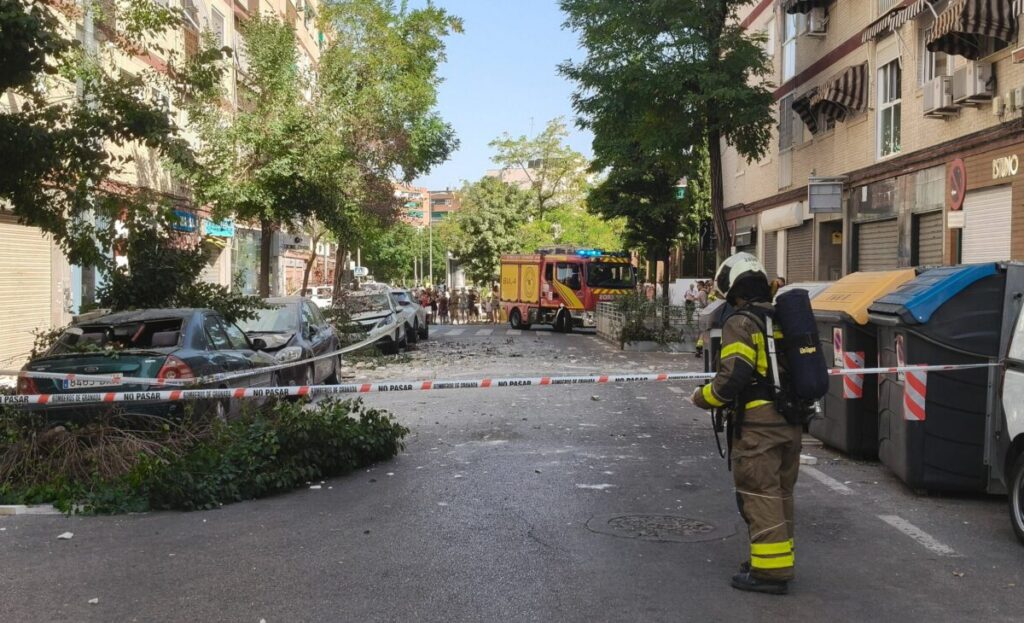
Granada shaken by several large quakes. Credit: @luzarcsan X
Granada Province residents felt walls and ceilings shake for several seconds on Tuesday morning as another powerful earthquake struck the city’s metropolitan area. Spain’s National Geographic Institute recorded the tremor at 10.37am local time with a provisional magnitude of 4.8 and an epicentre in Gojar, making it the strongest event since the seismic series began last Friday.
People across the capital and surrounding towns reported the ground moving sharply. Reports also came in from parts of Almeria and Malaga provinces. Early measurements put the epicentre near Alhendin before specialists revised the location to neighbouring Gojar. Cars suffered damage, building facades cracked and some awnings collapsed in the immediate aftermath.
Efectos en un Mercadona ⚠️
Área Metropolitana de Granada
Vídeo reenviado por WhatsApp pic.twitter.com/MEGHFLGrmG— 𝕄𝖊𝖙𝖊𝖔𝔸𝖑𝖍𝖆𝖒𝖇𝖗𝖆⚠️ (@MeteoAlhambra) August 18, 2026
Toda Granada en las calles. Imágenes de los daños causados por el último #terremoto en #Granada Calle Poeta César Vallejo. Cedo su uso a medios bajo mención. pic.twitter.com/rMH7hy2A00
— Luz Arcos✨ (@luzarcsan) August 18, 2026
Aftershocks keep nerves on edge across the metro belt
Even more tremors followed in quick succession. One aftershock at 10.53am measured magnitude 4 with an epicentre in Armilla or Churriana de la Vega and was felt widely once more. Another at 11.34am reached magnitude 4.2 near Alhendin. Smaller events registered in Padul and Las Gabias as well. Emergency services received around fifty calls to the 112 number after the main shock and its strongest aftershocks.
This latest activity forms part of a sequence that has already produced hundreds of events. By Monday the National Geographic Institute had counted 348 tremors since Friday, most of them small and all of them very shallow. Thirty-seven of those earlier shocks had been felt by the public. The biggest previous jolt came in the early hours of Saturday with a magnitude of 4.8 centred on Alhendin.
Three people left with minor injuries
Vice-president and emergencies minister Antonio Sanz confirmed three people suffered light injuries in Granada and the surrounding area. One of them, a young girl, was taken to hospital. All three cases were described as minor. Sanz said the Andalusian emergency plan for seismic risk remains activated at operational level 1, the same status declared after Friday’s stronger quake. An advisory committee for the plan will meet imminently.
Andalucian regional president Juanma Moreno called for maximum caution. Experts have indicated further movement remains possible, he noted on social media, and urged people to stay calm while following official advice.
Alhambra shuts key areas as precaution while checks continue
Staff at the Alhambra emptied the Nasrid Palaces and the Alcazaba on a preventive basis and halted public visits to those sections. Specialists are examining the structures continuously. Visits to the Partal and Generalife gardens continue for now while the assessment goes on. The historic complex ranks among Spain’s most visited monuments, so the temporary restrictions affect many tourists.
Grietas en La Alhambra de Granada que hoy permanece cerrada al público. pic.twitter.com/qfmaKOmbZX
— República Novata (@azoteTrevijano) August 15, 2026
Provincial authorities also closed all administrative buildings belonging to the Diputacion, plus museums and the sports complex. Building inspections are under way across the affected towns.
Residents report damage while officials stress vigilance
Local accounts described wrecked vehicles, fallen debris from facades and disruption to street furniture. Firefighters and other emergency teams responded to multiple calls. No serious structural collapses have been reported so far, yet the shallow nature of the quakes means even moderate magnitudes can produce strong shaking at the surface.
🚨 BREAKING: 4.8-magnitude #earthquake hits near Granada, #Spain.
⚠️ At least 3 injured; parts of the Alhambra evacuated as aftershocks continue.
It follows a 5.2-magnitude quake just days ago.#terremoto #ykssonuç #WWERaw pic.twitter.com/9sNQHxebOi
— Eyes on the Globe (@eyes_globe) August 18, 2026
Officials continue to remind people to stay clear of walls, cornices and balconies that might still shed material. Anyone who feels further movement should follow standard safety steps: drop, cover and hold on if indoors, and move away from buildings once outside if it is safe to do so.
Granada sits in one of mainland Spain’s more seismically active zones because of its network of faults and soft sedimentary ground that can amplify shaking. The current series began with smaller events on Friday before the main Saturday shock and has kept emergency services busy ever since. Readers can find earlier coverage of the initial magnitude 5 event that struck near Alhendin overnight on August 15 at this Euro Weekly News report.
For the latest official data on locations, magnitudes and intensities, the National Geographic Institute publishes updates on its website at ign.es. Details of the Alhambra’s visitor arrangements appear on the monument’s own site at alhambra-patronato.es. Regional emergency guidance is available through the Junta de Andalucia’s channels.
Local authorities stress that the situation remains under close watch. Further aftershocks cannot be ruled out in the coming hours and days, so prudence remains the order of the day for everyone living or staying in the Granada Province area.
Daños en la Iglesia de San Pedro, Albaicín Granada ⚠️
Vídeo reenviado por WhatsApp pic.twitter.com/i6JBSmvgHU
— 𝕄𝖊𝖙𝖊𝖔𝔸𝖑𝖍𝖆𝖒𝖇𝖗𝖆⚠️ (@MeteoAlhambra) August 18, 2026
Follow Euro Weekly News on Google News
Get breaking news from Spain, travel updates, and expat stories directly on your Google News feed.
Follow on Google NewsSign up for personalised news
Subscribe to our Euro Weekly News alerts to get the latest stories into your inbox!
By signing up, you will create a Euro Weekly News account if you don't already have one. Review our Privacy Policy for more information about our privacy practices.




Adam Woodward
Adam is a writer who has lived in Spain for over 25 years. With a background in English teaching and a passion for music, food, and the arts, he brings a rich personal perspective to his work at Euro Weekly News. As a father of three with deep roots in Spanish life, Adam writes engaging stories that explore culture, lifestyle, and the everyday experiences that shape communities across Spain.
Comments